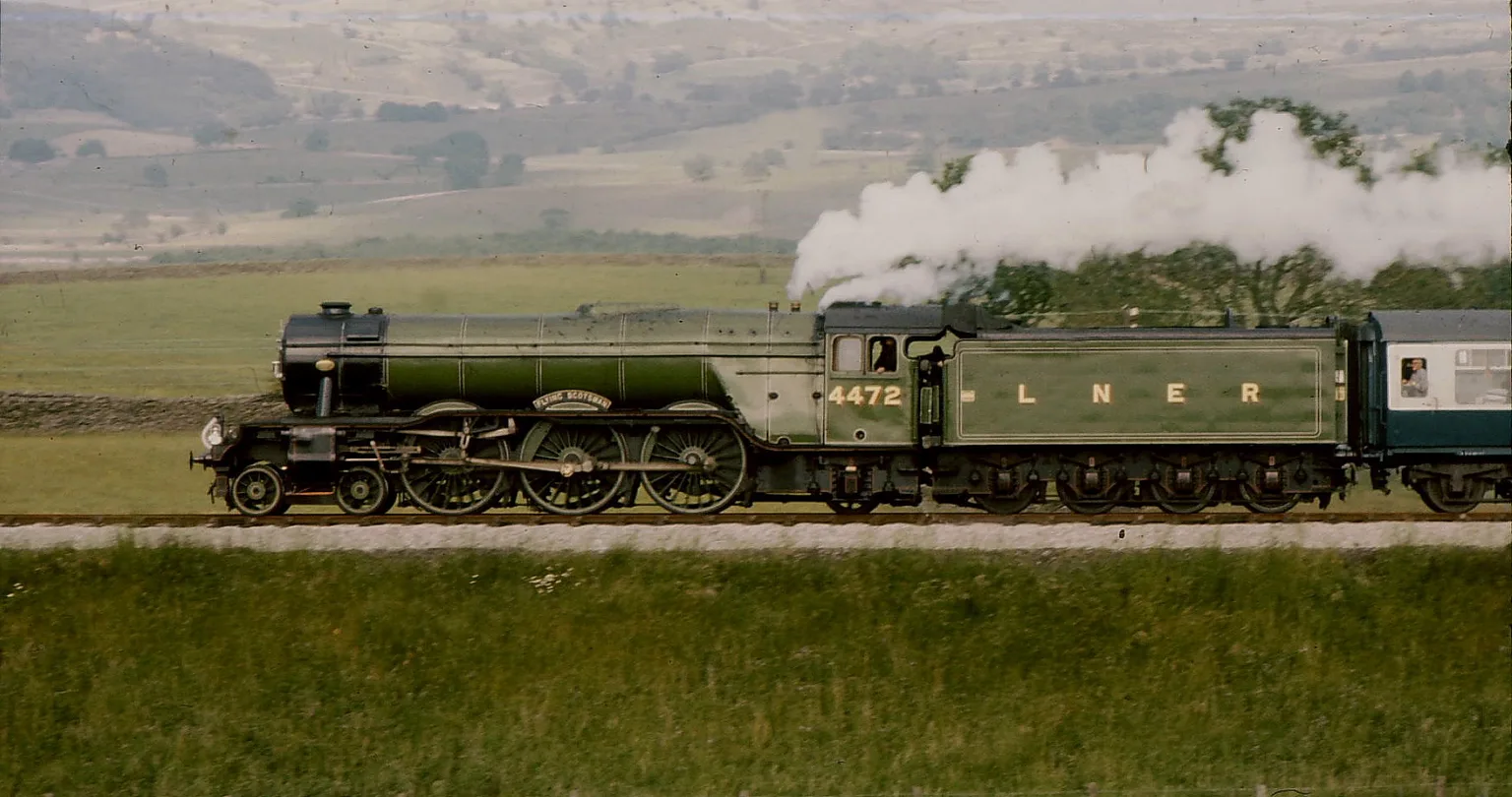
Built in Loughborough and Crewe
The Science Museum Group’s record says the Brush Sulzer diesels “were first introduced in 1962. A total of 512 were built and employed on a wide variety of duties, including heavy freight traffic and express passenger services” (Science Museum Group collection, read 20 November 2026). The 47401 Project, which owns the first one, says 310 were built at Loughborough and the other 202 under contract at British Railways’ own Crewe Works (47401 Project). Brush’s works there was the Falcon Works (GWSR, 47105).
They started out with D numbers. D1500 became 47401 in October 1973 (47401 Project), D1693 became 47105 in January 1974 (Brush Type 4 Fund, 47105) and D1895 became 47376 in February 1974 (Brush Type 4 Fund, 47376). Our locomotive class lookup sets the 47 beside the other main-line classes in the national collection.
D1500 and the Generators
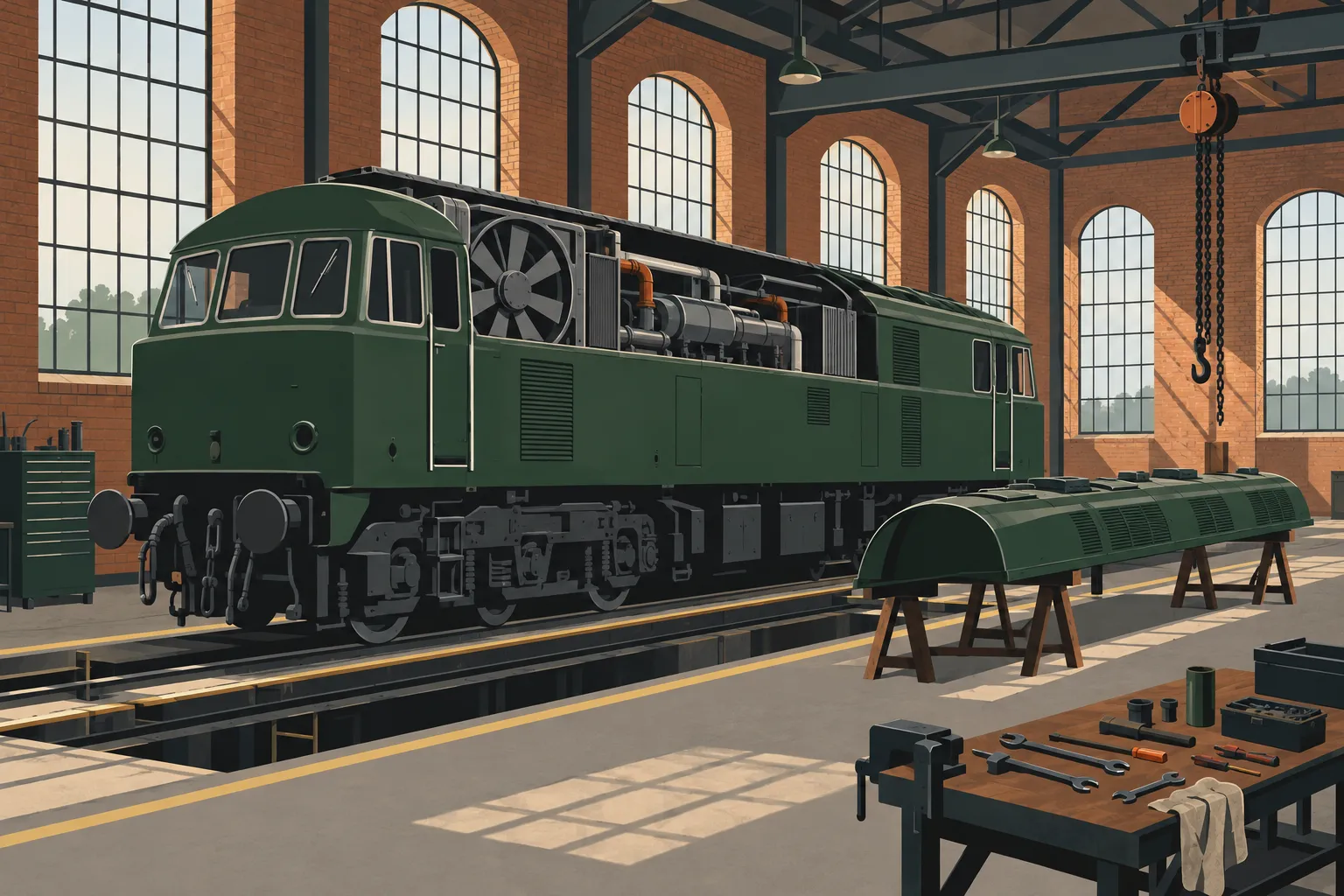
The first Brush Type 4 entered traffic on 28 September 1962 as D1500 and went to Finsbury Park depot in north London. It spent much of its working life on expresses on the East Coast Main Line. The first batch, D1500 among them, was fitted with an extra generator to supply electric train heating, which earned the batch the nickname Generators (47401 Project history).
Renumbered 47401, it was named North Eastern at Gateshead on 16 December 1981, and it worked its last passenger train, the Brush Refiner railtour, on 26 October 1991. It was withdrawn on 5 June 1992. In the late 1980s the National Railway Museum had said it would not claim the engine, so the 47401 Project raised the money and bought it in early 1993. It reached the Midland Railway at Butterley on 7 July 1993 and ran its first passenger train in preservation ten days later. Today it is under overhaul. The group’s July 2026 update says they have re-plated the base of the radiator header tank, made welding repairs to the number two fan mounting plate and put right corrosion in the roof. It adds that they are “getting nearer to the point where reassembly of some of the key components can start to take place” (47401 Project news, July 2026).
Prince William, in the national collection
The Science Museum Group, which runs the National Railway Museum, holds 47798 Prince William. It was built at Crewe in 1965 as D1656. It became 47072 in 1974, then 47609 in 1984, when it was given an electric train heat supply and an alternator in place of its main generator. It was named Fire-fly in August 1985, and in May 1995 it became 47798 and took the name Prince William (Science Museum Group).
Two at work in the Cotswolds
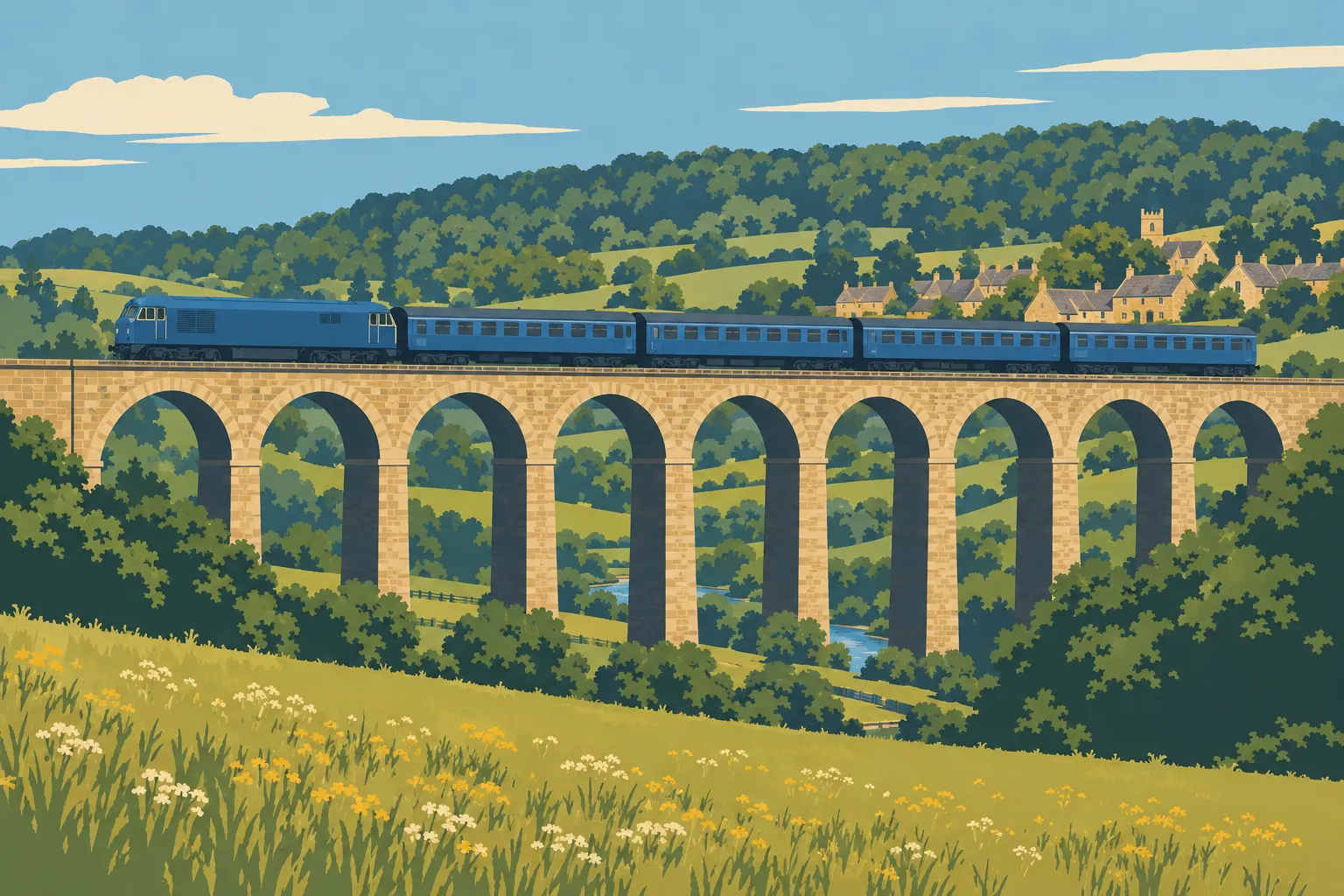
The Gloucestershire Warwickshire Railway lists two of them as operational, 47105 and 47376, both owned by the Brush Type 4 Fund (GWSR locomotives).
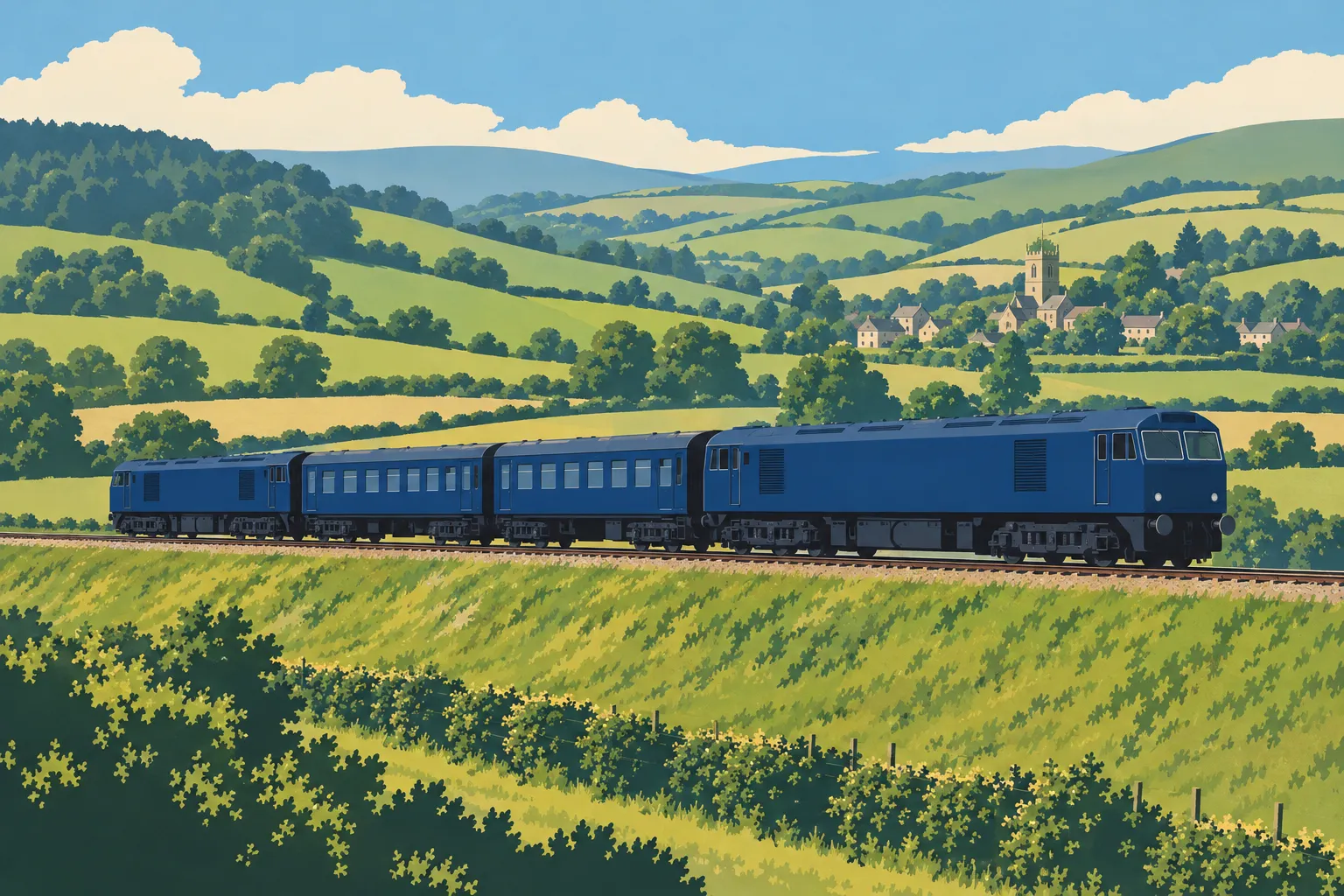
47105 entered traffic on 6 December 1963 as D1693, straight from the Falcon Works. It was based at Bristol Bath Road from new and spent ten years at Cardiff Canton, from 1975 to 1985. It was withdrawn on 13 December 1993 and the fund bought it on 24 January 1994. Its steam heat boiler was put back into use in 2000, and after a ten-year overhaul it returned to passenger service in BR blue on 16 July 2021 (GWSR, 47105).
47376 entered traffic on 1 September 1965 as D1895. It was built with no train heating. In August 1995 it became the first engine painted in Freightliner’s triple grey. Its main-line days ended near Oxford on 8 June 2001, when a piston dropped into the sump and wrecked its Sulzer 12LDA28C engine. The fund bought it in November 2002 and fitted the engine from 47295 in June 2003 (GWSR, 47376). Our Gloucestershire Warwickshire guide covers the line itself.
Photographing a Class 47
The railway publishes a locomotive roster, and warns that it sometimes has to swap engines at short notice (locomotive roster), so check it the week you go. A diesel’s long side looks strong taken square on, as our Class 37 guide says. A wide shot like that suits a framed canvas.
Sources: Science Museum Group, 47798; 47401 Project history; GWSR, 47105; GWSR, 47376; Brush Type 4 Fund, 47105; Brush Type 4 Fund, 47376; Midland Railway, Butterley (all read 20 November 2026).