What makes a railway poster art deco
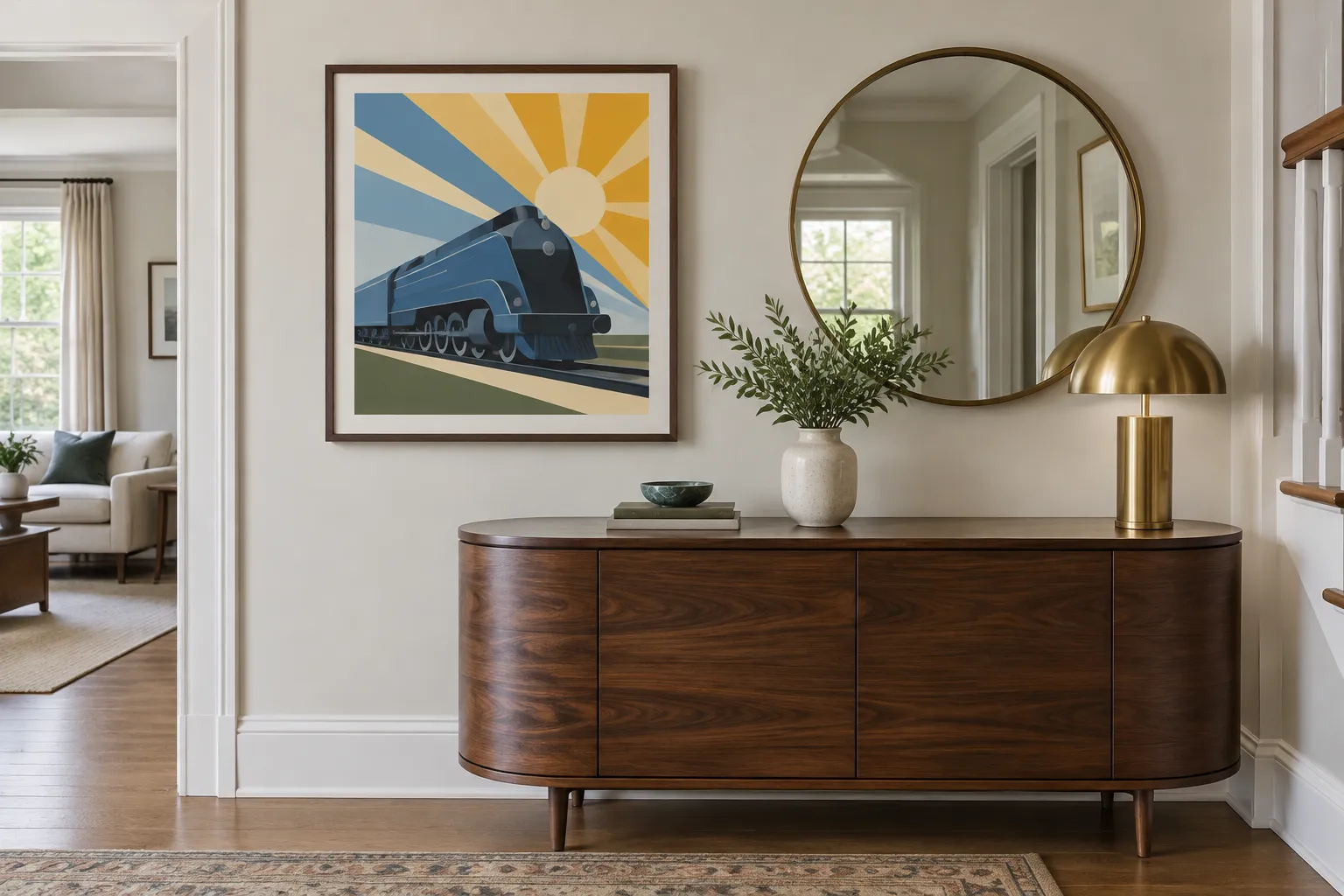
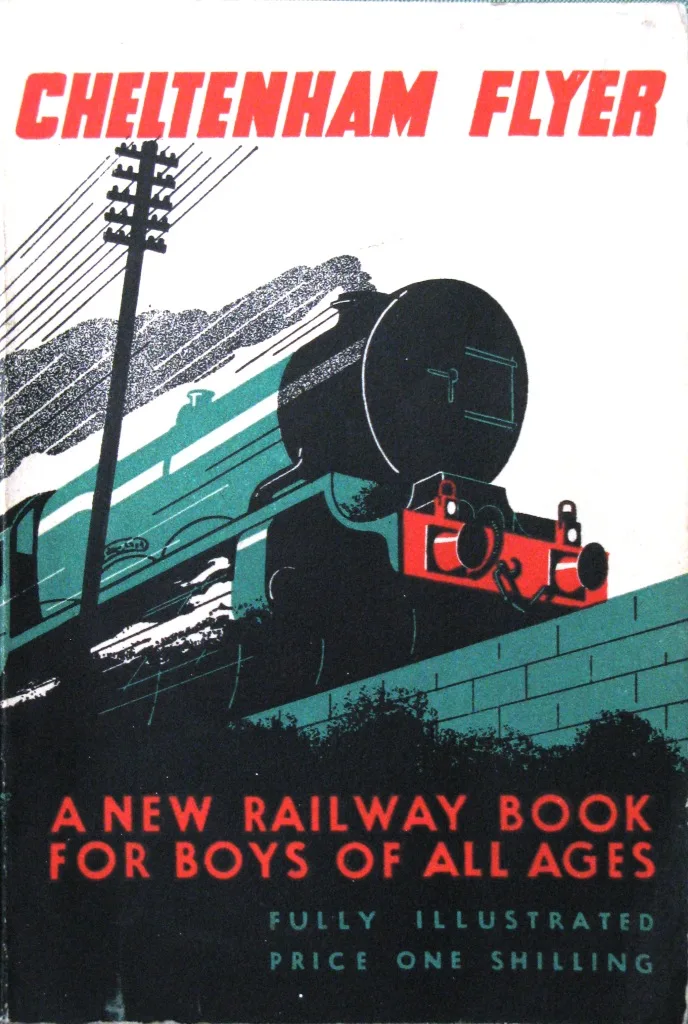
Art deco is easier to spot than to define, so here are the habits to look for. The subject is drawn as shapes, not scenery: an engine becomes a wedge, a viaduct becomes a row of arches. There is usually one strong diagonal pulling your eye across the sheet. The colours are few and flat. And the lettering is part of the design, often a clean sans serif, not a caption tacked on underneath.
Not every 1930s railway poster is deco. Plenty were still painted landscapes in the old way. The deco ones are the ones that look as if they were designed rather than painted, and on British railways they cluster around the streamlined trains of 1935 to 1937.
Where the style came from
It came from the Continent. The National Railway Museum’s history of the poster names Cassandre and Edward McKnight Kauffer among the artists who did their finest work in this period, and says British railway posters picked up “more general artistic influences from Europe”. Cassandre’s posters for French railways, such as Nord Express from 1927, show the idea at its purest: a locomotive reduced to wheels, rods and speed lines. Kauffer, an American working in London, brought the same thinking to the Great Western in 1933 with a set of six Devon and Cornwall posters that, the museum notes, were “not to everyone’s taste”.
The lettering came from closer to home. In 1929 the LNER adopted Eric Gill’s new sans serif, Gill Sans, across its posters and publicity. Clean letters like that are half of what makes a 1930s poster read as deco (the National Railway Museum’s history of the British railway poster; Nord Express, Science Museum Group; Gill Sans, read 22 October 2026).
The streamliners, and their posters
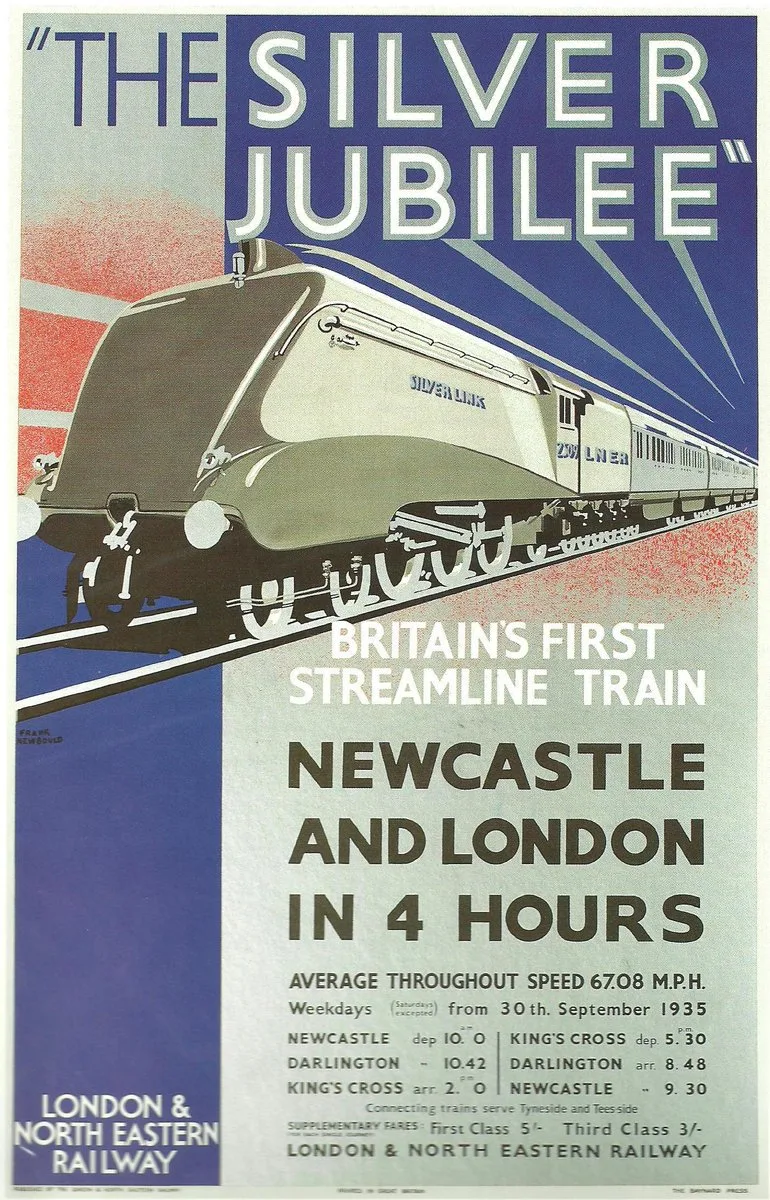
Three trains carried the style in Britain. The first was the LNER’s Silver Jubilee of 1935, the country’s first streamlined train. Frank Newbould’s poster for it, at the top of this page, does everything the style asks: the silver train cuts the sheet from corner to corner, rays of light fan out behind it, and the copy is short and confident. It promises Newcastle and London in four hours, at an average of 67.08mph all the way, from 30 September 1935.
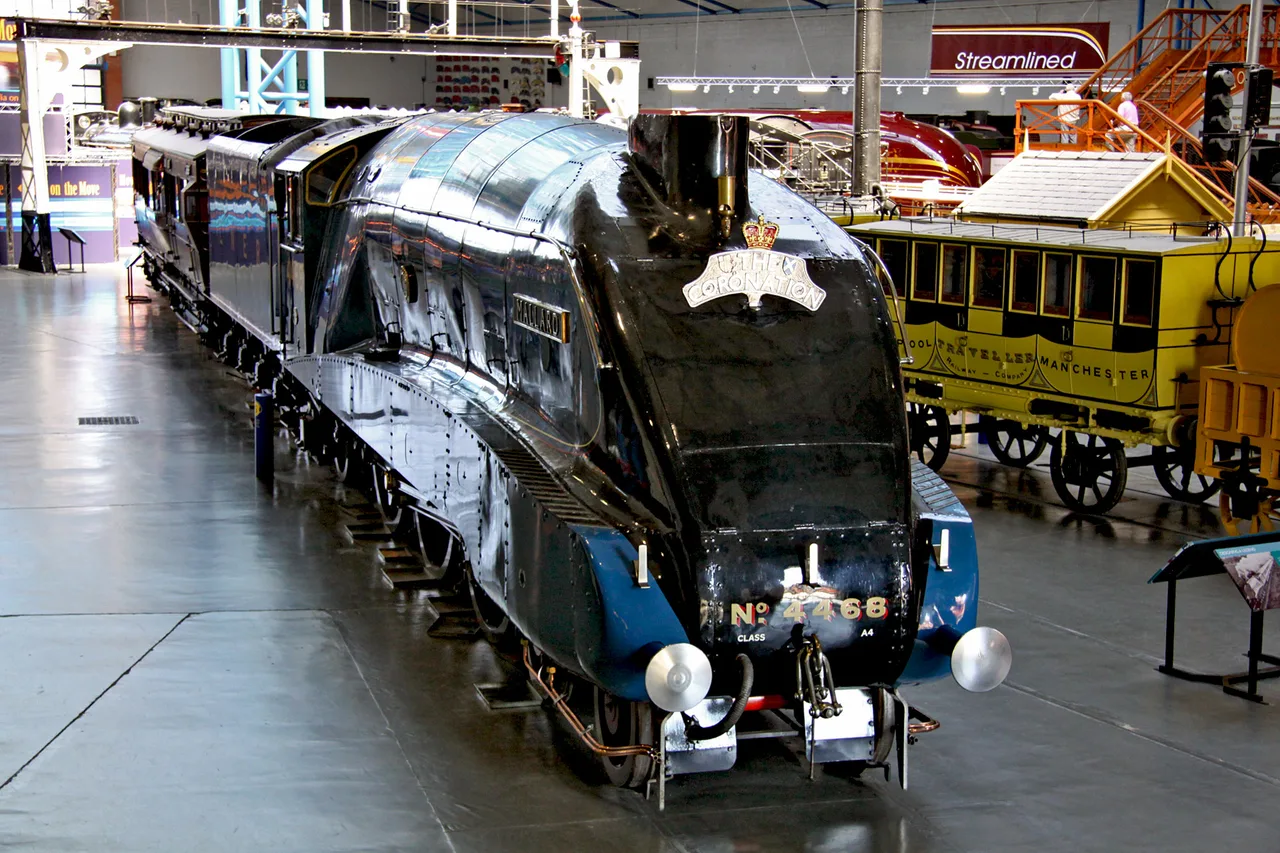
Two years later the LNER launched the Coronation, London to Edinburgh in six hours, and Doris Zinkeisen drew its poster, sending a blue train through the countryside. The LMS answered the same year with its own blue streamliner, the Coronation Scot, and Bryan de Grineau put it on the front of the poster. The engines matched the art. Nigel Gresley’s A4s, the class that pulled the LNER streamliners, wore a wedge-shaped casing, and one of them, Mallard, set the world speed record for steam at 126mph in 1938 (The Silver Jubilee; The Coronation; The Coronation Scot; the National Railway Museum’s history of the British railway poster; NRM, read 22 October 2026).
Telling the real thing from a modern pastiche
If you are buying, it helps to know what an original looks like. Railway posters were printed by lithography to set sheet sizes. The double royal, roughly 102cm tall and 64cm across, stood upright on platform boards; the quad royal, roughly 102cm by 128cm, lay on its side for the big hoardings. An original names its railway company and usually its printer along the bottom edge. Onslows, the specialist auctioneers, name art deco among the styles collectors seek out, and say the best railway posters fetch £2,000 to £5,000.
A modern reproduction is fine on a wall, but it is a reproduction, and a new design “in the style” is something else again. That is what we make, from your own photograph (Onslows, collecting travel posters, read 22 October 2026).
Your photograph, the deco way
The style suits photographs with one big shape in them. A locomotive side-on or three-quarter front. A platform canopy that makes a strong diagonal. A viaduct with the train crossing. If your photo has that, the restyle keeps it and simplifies everything around it: fewer tones, harder edges, colour that reads across a room. A streamlined A4 on a railtour is the obvious subject, but a modern train taken at the right angle works too. Preparing the photograph covers what the file needs first, and the LNER guide tells the rest of the company’s story.