
Most people arrive here having typed something like vintage railway poster into a search box, and what they'll usually get back is a shop. This stage is the reading instead. What those posters physically were, who kept them, and why the style still looks the way it does. Nothing on this page is for sale, and these guides cite the national collection rather than repeating what everyone else has written.
What this stage covers
The first guide sets out what a railway travel poster was: a sheet commissioned by a railway company to sell journeys, pasted up at stations and replaced when the season changed. The next pages follow the companies that shaped the look, from the Great Western's coast and countryside to the east coast's taste for speed, then the art deco decade and the years after nationalisation in 1948, when British Rail carried the tradition on. Each page links the national collection, where surviving originals can be seen for free.
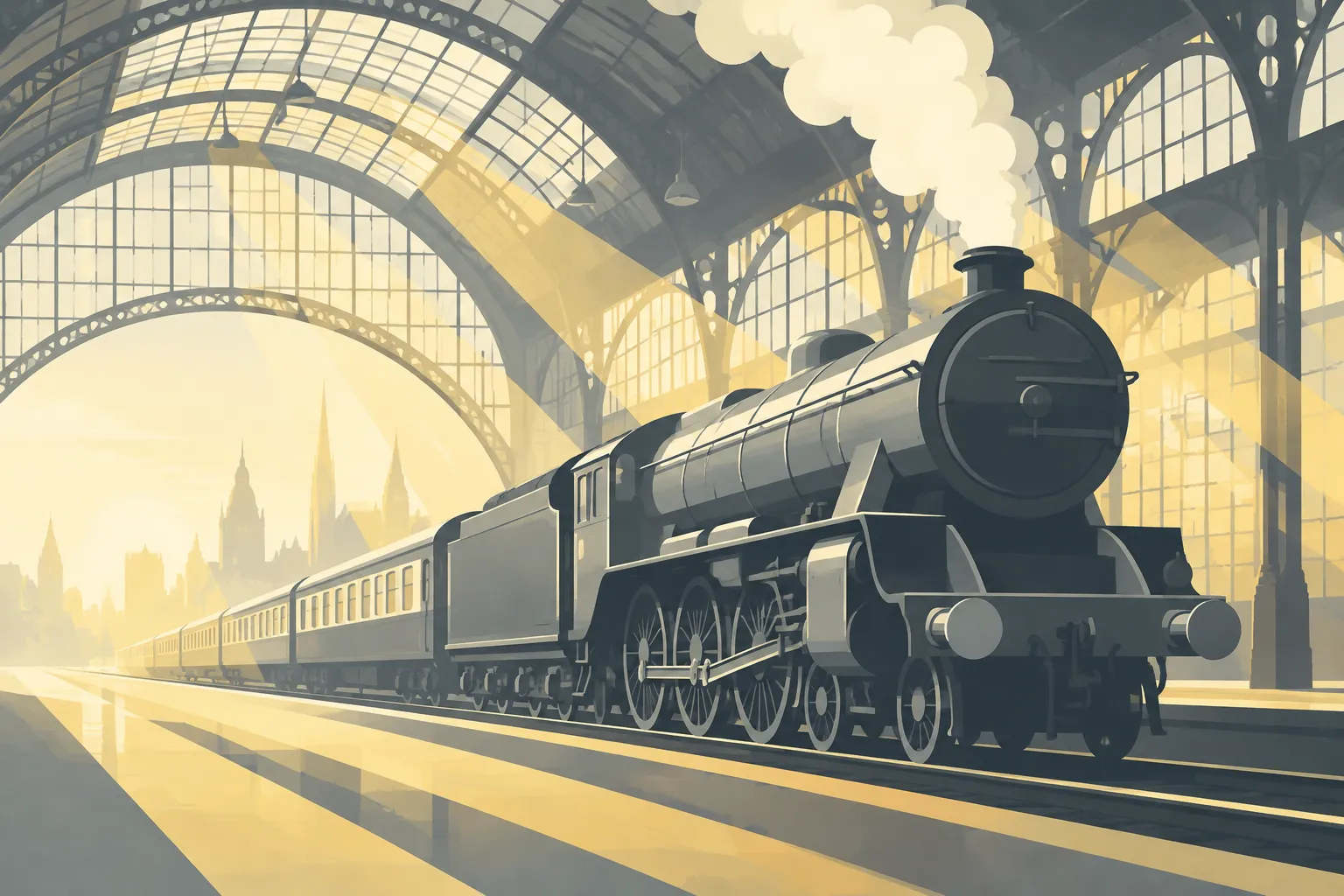
How to read a railway poster
Three things carry almost every design in the tradition. The colour is flat, laid down in a handful of inks, because each colour meant another lithographic stone or plate. The composition is simple, often one locomotive, one viaduct or one stretch of coast, since the sheet had to work from across a platform. And the words sat in a fixed band, usually the destination and the company. Once those three are clear, it becomes easy to see why some photographs restyle well in this manner and others do not.
The sheets were made to last a season. Paste, rain and the next poster saw to most of them, so a clean original from the 1930s is now a collector's piece, and many of the copies that survive were kept in railway company archives and never pasted up at all. The national collection holds thousands of them.
Looking, and owning
Surviving originals are scarce, since most sheets were pasted over, and good ones sell through specialist dealers and auction houses. Reproductions of famous designs are easy to find. These guides add a third route for anyone with railway photographs of their own: the same visual language of flat colour and strong composition, applied to a picture that is theirs. The conventions come first, so you know what a restyle is aiming at before you see one.
The reading, in order
Read the 6 pages in this order, since each one builds on the page before it: Vintage railway posters, Railway posters, the whole tradition, Art deco railway posters, The Great Western look, The LNER decade, and The British Rail years.
And after that
Your photograph comes next. Getting the file right comes first. Then the styles, then the size.