

Start in the shoebox
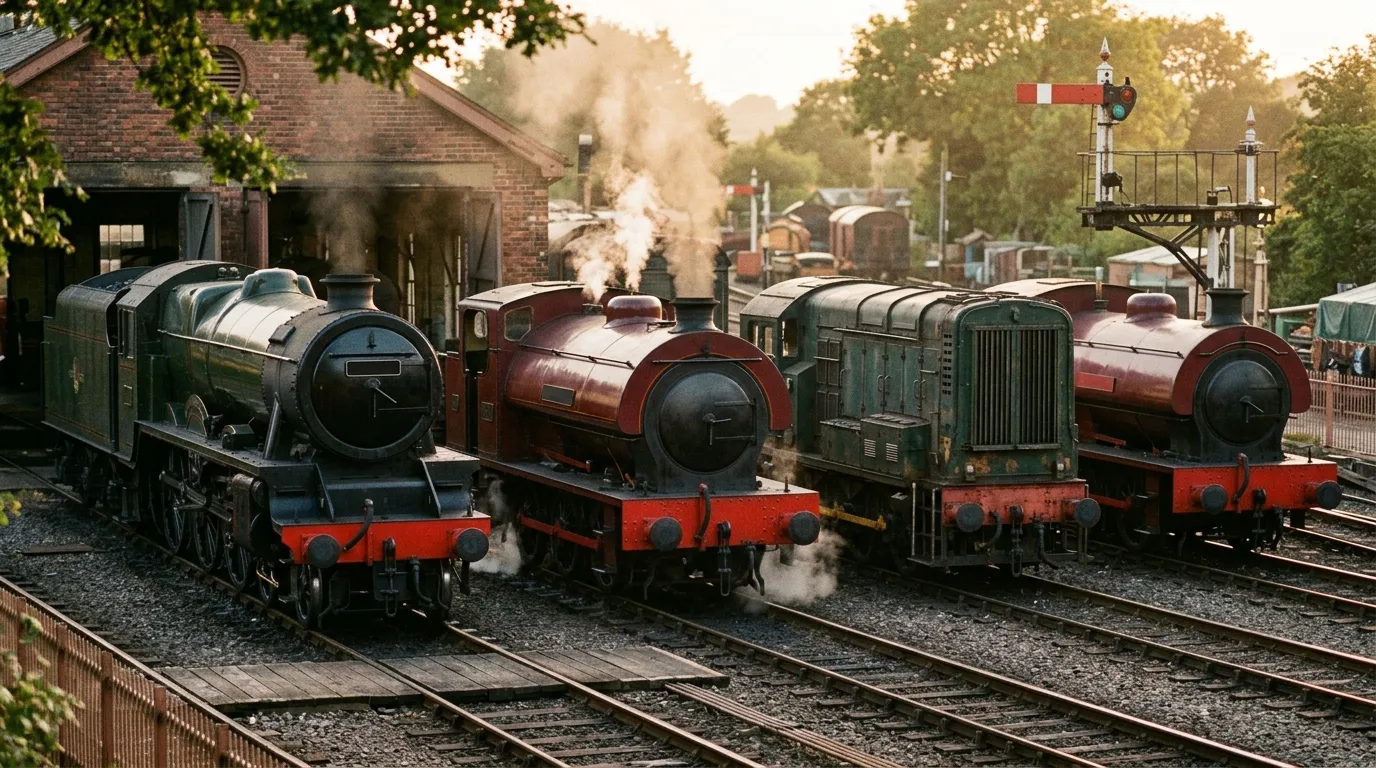
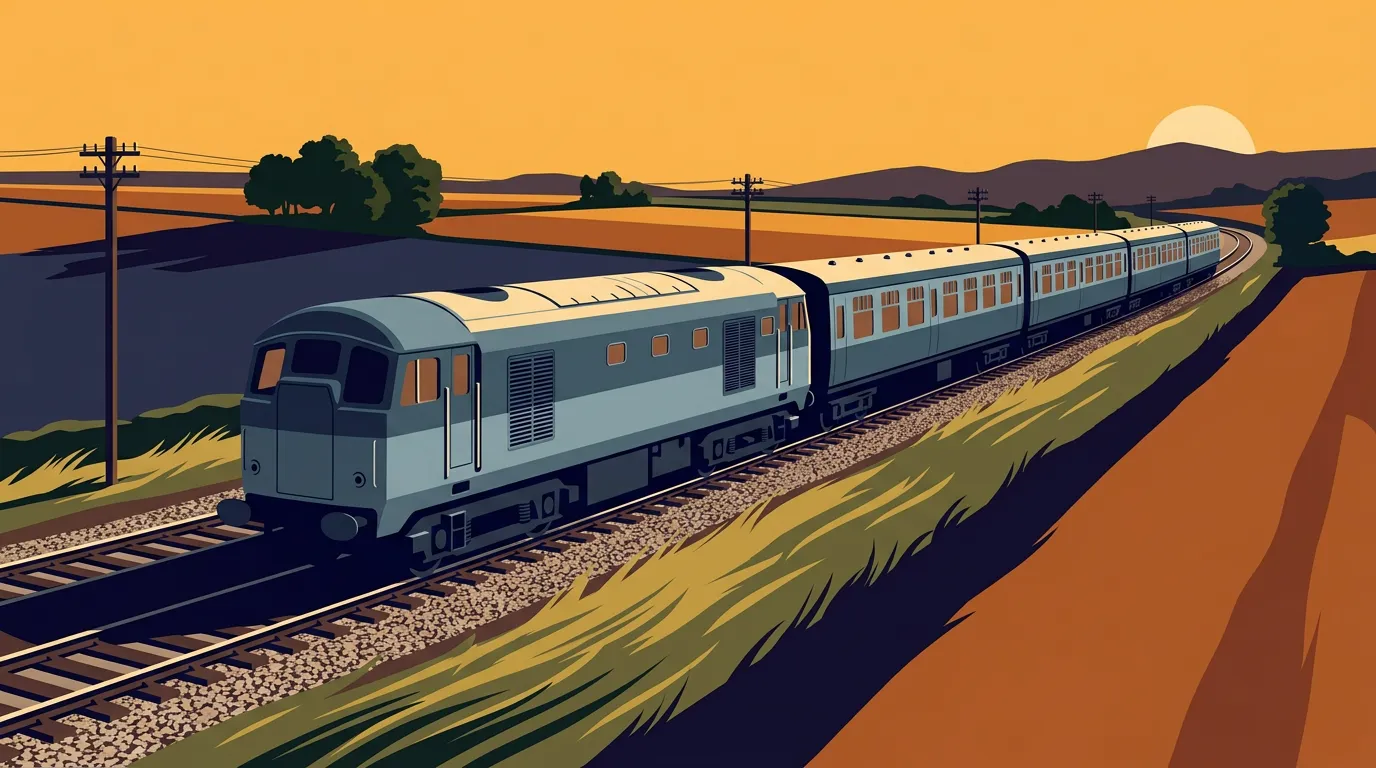
If you can find the physical prints, you have a better gift than anything in a camera roll, because they have not been seen for years. A photograph he took as an apprentice, or on the line he commuted on, or of a class that has not run since before you were born, hits differently from anything current.
You will need it as a file. A flatbed scanner does a far better job than a phone, and if there are negatives, a photo shop can scan those and get more out of them than any print holds. Whatever you do, do not photograph a print with a phone at an angle: the distortion is not fixable and it shows the moment there is a frame edge next to it.
What old photographs need
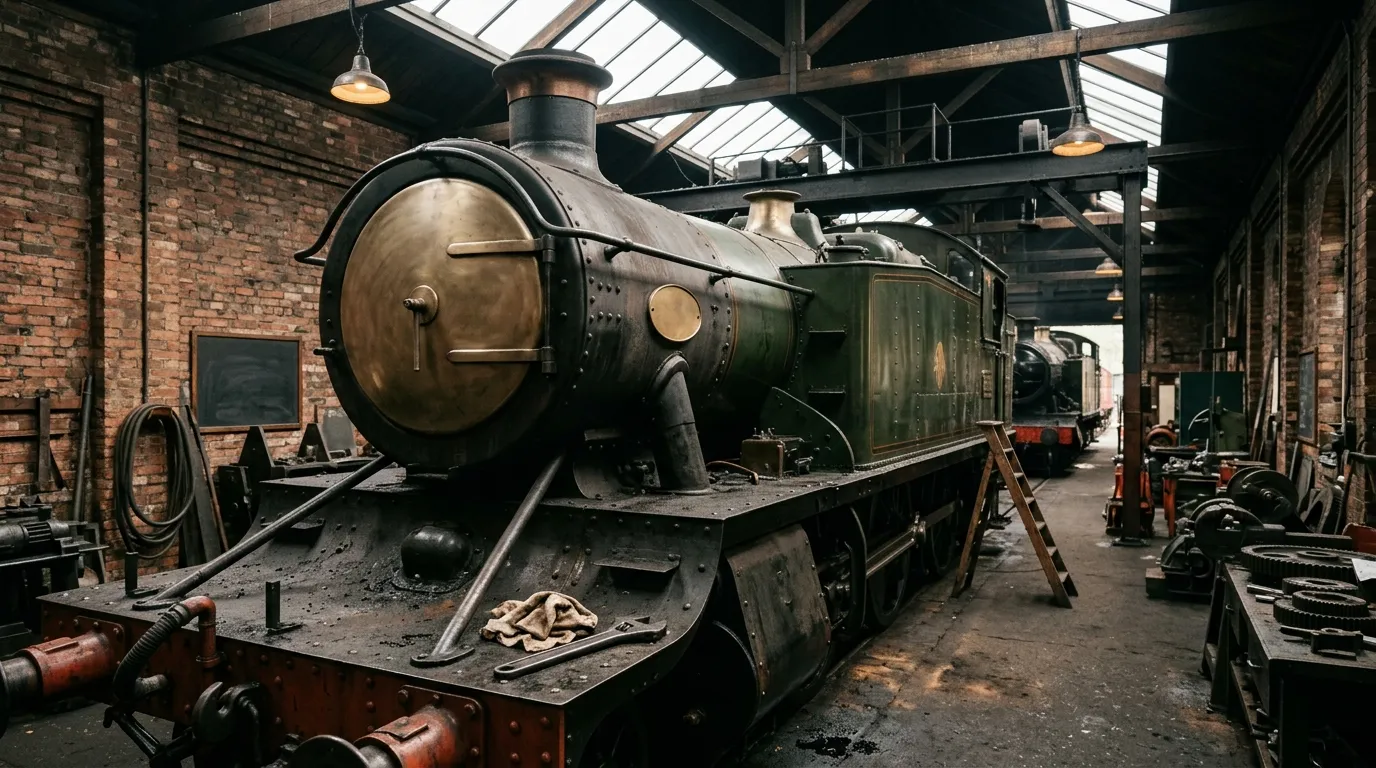
Prints from the seventies and eighties are usually small, often faded, and sometimes stained. That is fine. Two of the studio's five treatments exist for exactly this: one aims at an archival fine-art finish, lifting the tonal range and steadying the contrast, and the other is a straight clean-up of exposure, white balance and shadow detail.
Neither invents detail that is not there, so a soft scan stays soft. Print those smaller. The size guide gives the minimum for each size, and the list you are offered at upload does the arithmetic for you.
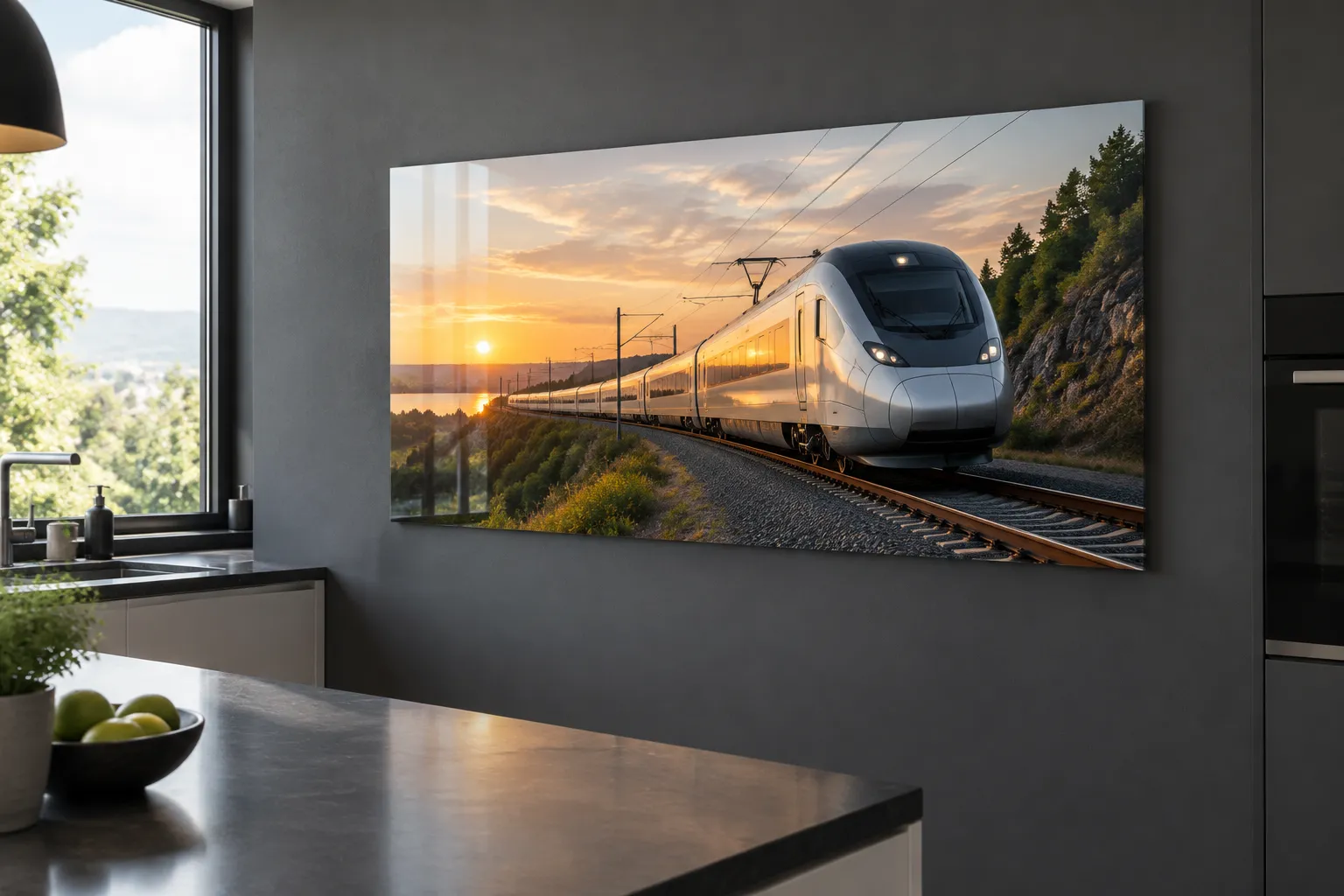
When there is no photograph at all
Sometimes there simply isn't one, and this is where we are of limited use. We print what you upload, so an idea, a description or a locomotive number is not something we can work from. What some people do instead is take the photograph themselves: a preserved example of the class he drove, on a day out you both go on. That turns the gift into an afternoon, which is usually the better present anyway.
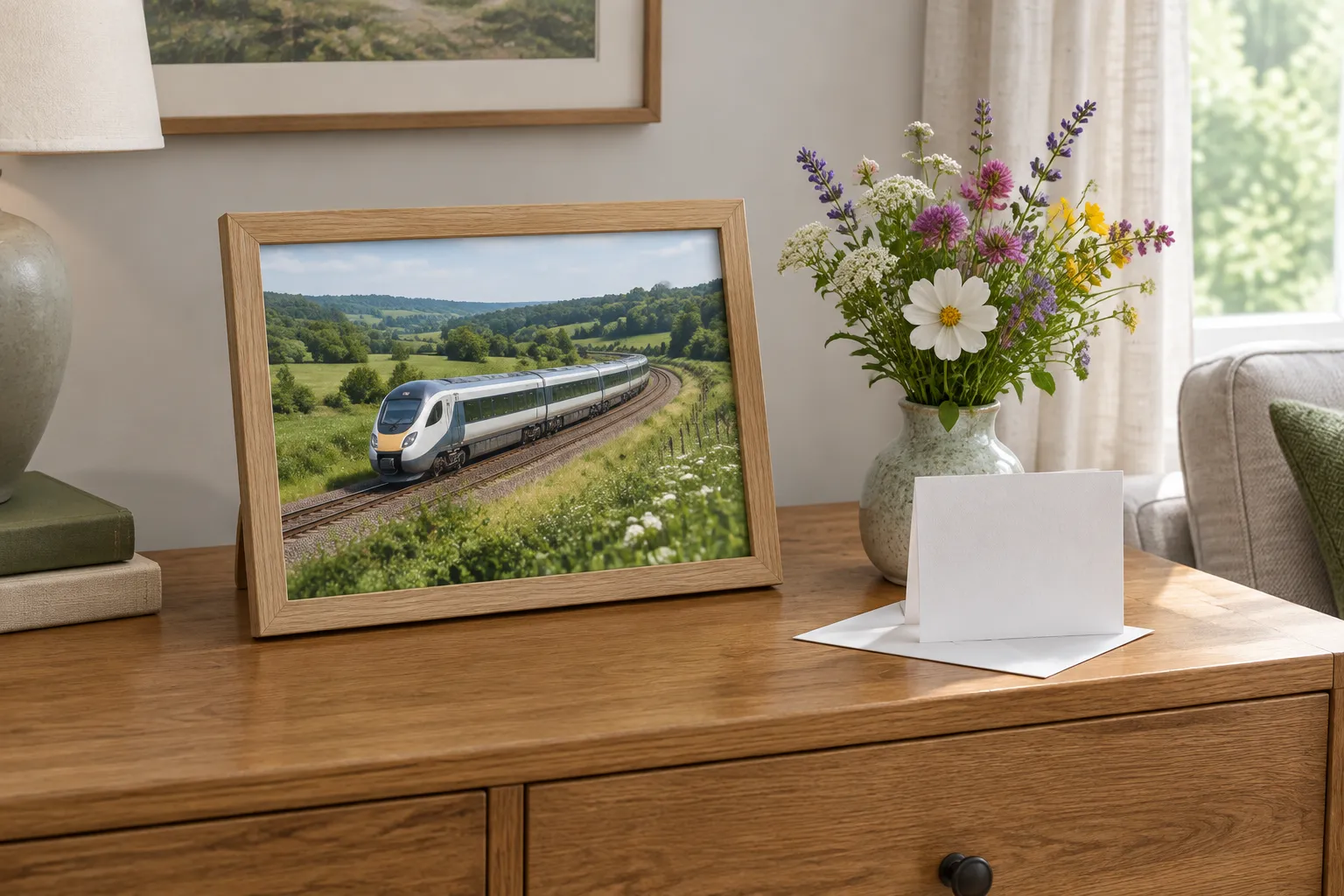
What to put it on
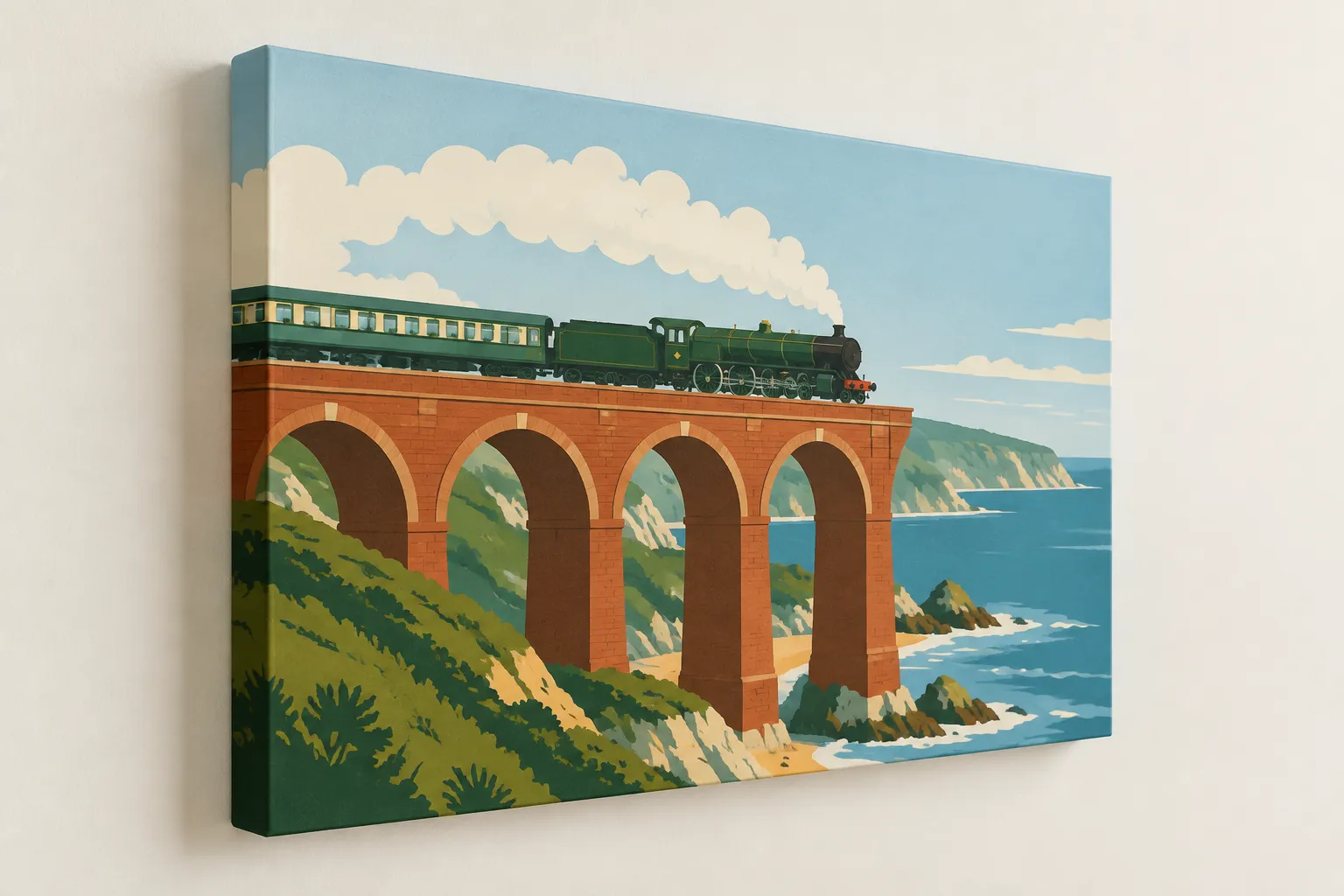
For a milestone, a birthday with a nought in it or a retirement, framed paper at A3 or A2 in black or natural wood is the format that reads as an occasion. It sits behind plexiglass with the print filling the opening, so there is no mount.
For a shed, a garage or a home office, a paper print without a frame is the practical answer, and an 11oz mug or a 500ml bottle is the everyday version that gets used, not just admired. The format pages describe each one.
Elsewhere in this stage
If he is still out photographing, the spotter page is the closer fit, and the steam page if that is his half of the hobby. The stage holds the lot, and the opening page makes the general argument.
If it is for Christmas, train Christmas gifts is the seasonal version of this page.