


This is the last stage, and it's deliberately the plainest. One page per format, each saying what the thing physically is, which pictures suit it, and the sizes it comes in. The prices in the grid above are read live from the catalogue, so none of them can quietly go out of date.
Choosing a format in a minute
Paper comes in five sizes up to 70x100 cm, bare or framed at A3 and A2. Canvas suits big landscape pictures and needs no glass, and framed canvas adds a float frame round it. Metal gives bright colour and sharp detail on a thin panel, which suits modern trains. Wood lets the grain show through the pale areas and warms up an older picture. The mug and the bottle carry the same photograph for everyday use, and make the easiest small gift.
Which picture for which material
A photograph with a lot of sky or soft detail looks best on paper or canvas, where the surface is matt. One with strong colour and hard edges, a modern unit in sunlight or a restyle in flat colour, suits metal. Old black and white or sepia pictures sit well on wood. If the picture is small or slightly soft, choose a smaller size or a mug, since no material can add detail the file does not have. Each wall format page draws its sizes to scale above a sofa, so you can judge the size before you order.
Measuring the wall first
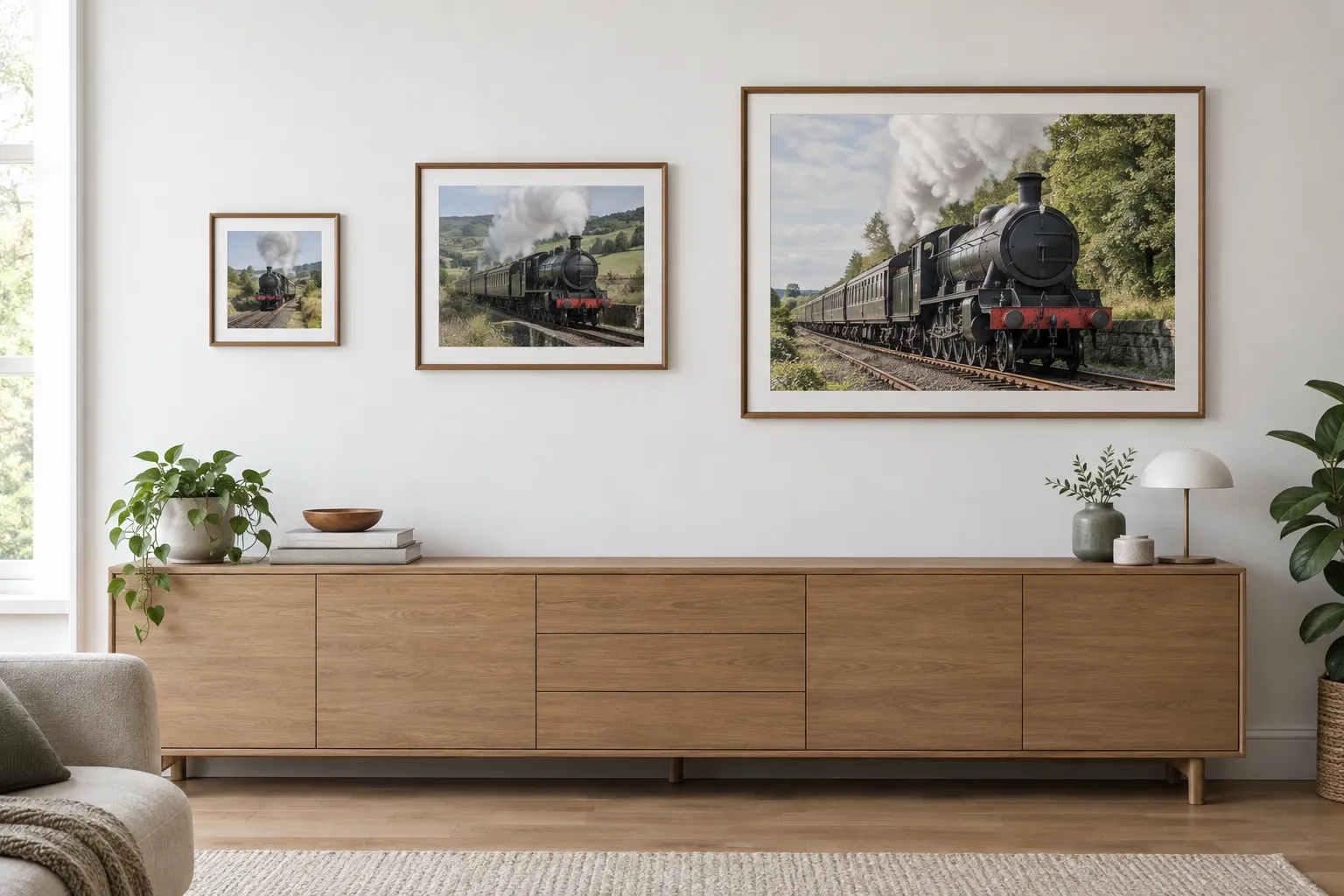
Tape a sheet of newspaper to the wall where the picture will go before settling on a size. A print usually looks best when it spans about two thirds of the furniture beneath it, so a sideboard 150 cm wide takes a 70x100 cm print comfortably, while a narrow hallway suits A3. Allow about 20 cm between the bottom of the frame and the back of a sofa. If two sizes both look right, the larger one usually wins, provided the file can carry it.
Hang it so the middle of the picture sits about 150 cm up the wall, close to eye level for most adults. For a pair or a group, keep the gaps between frames equal and line up either the tops or the centres. Two pictures from the same day, a train approaching and the same train leaving, make a stronger pair than two unrelated favourites. Use picture hooks rated above the weight of the frame, especially on plasterboard.
The reading, in order
Read the 8 pages in this order, since each one builds on the page before it: Poster, Framed poster, Canvas, Framed canvas, Metal, Wood, Mug, and Bottle.
The whole path
The path ends here. The poster-history section covers the poster tradition, and the guides index holds every piece of writing on this site.