
What it physically is
A 10mm lined plywood panel, printed directly, with the grain running horizontally. There's no frame and no glazing, and it hangs as it comes. Because the ink sits on wood, not on a white ground, the panel colour is part of the finished picture.
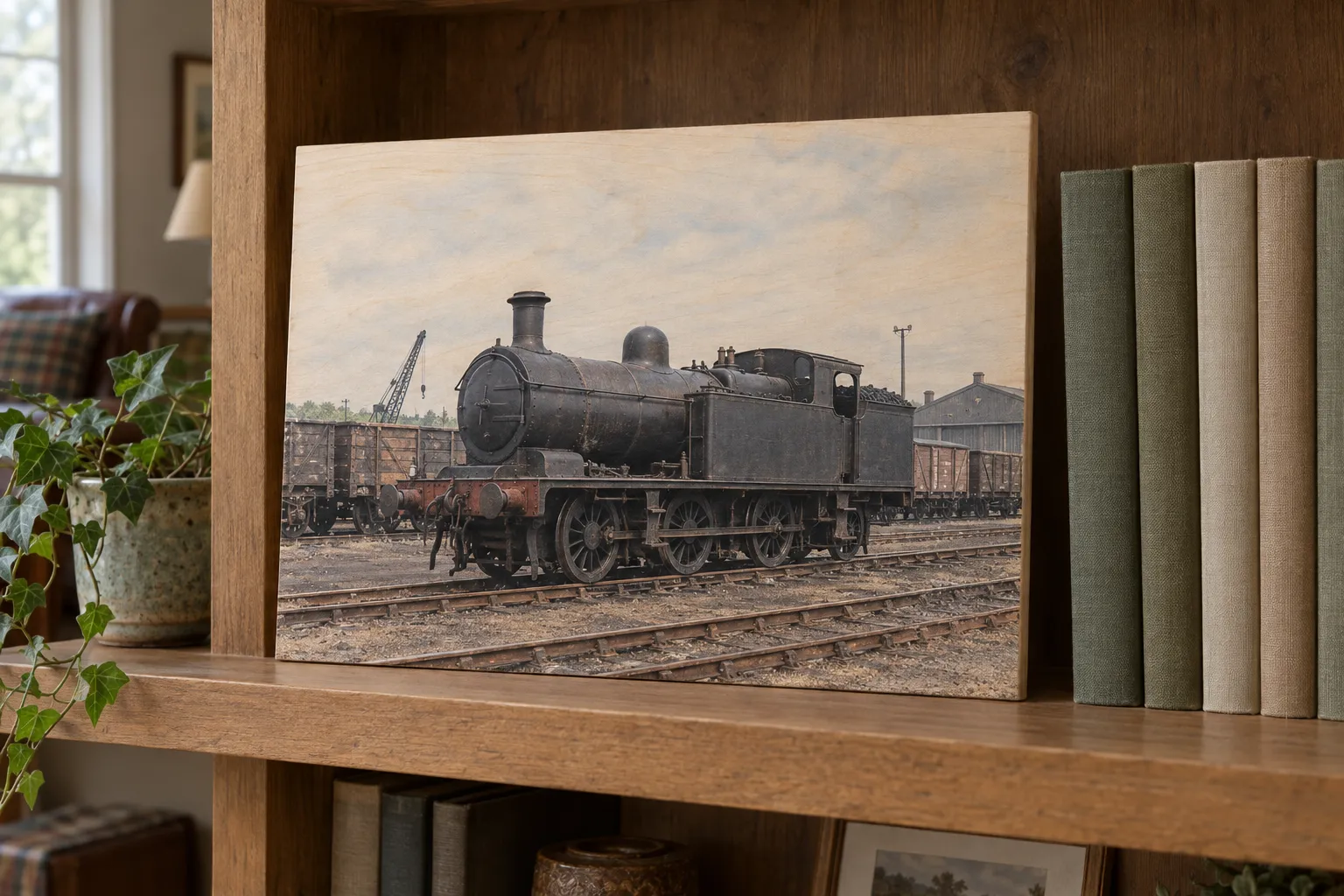
The sizes
30x40 and 40x50 cm. Two, and that is genuinely the range: this is a smaller format by nature, and it works better as a piece you come close to than as something seen from the other side of a room.
Which photographs suit it
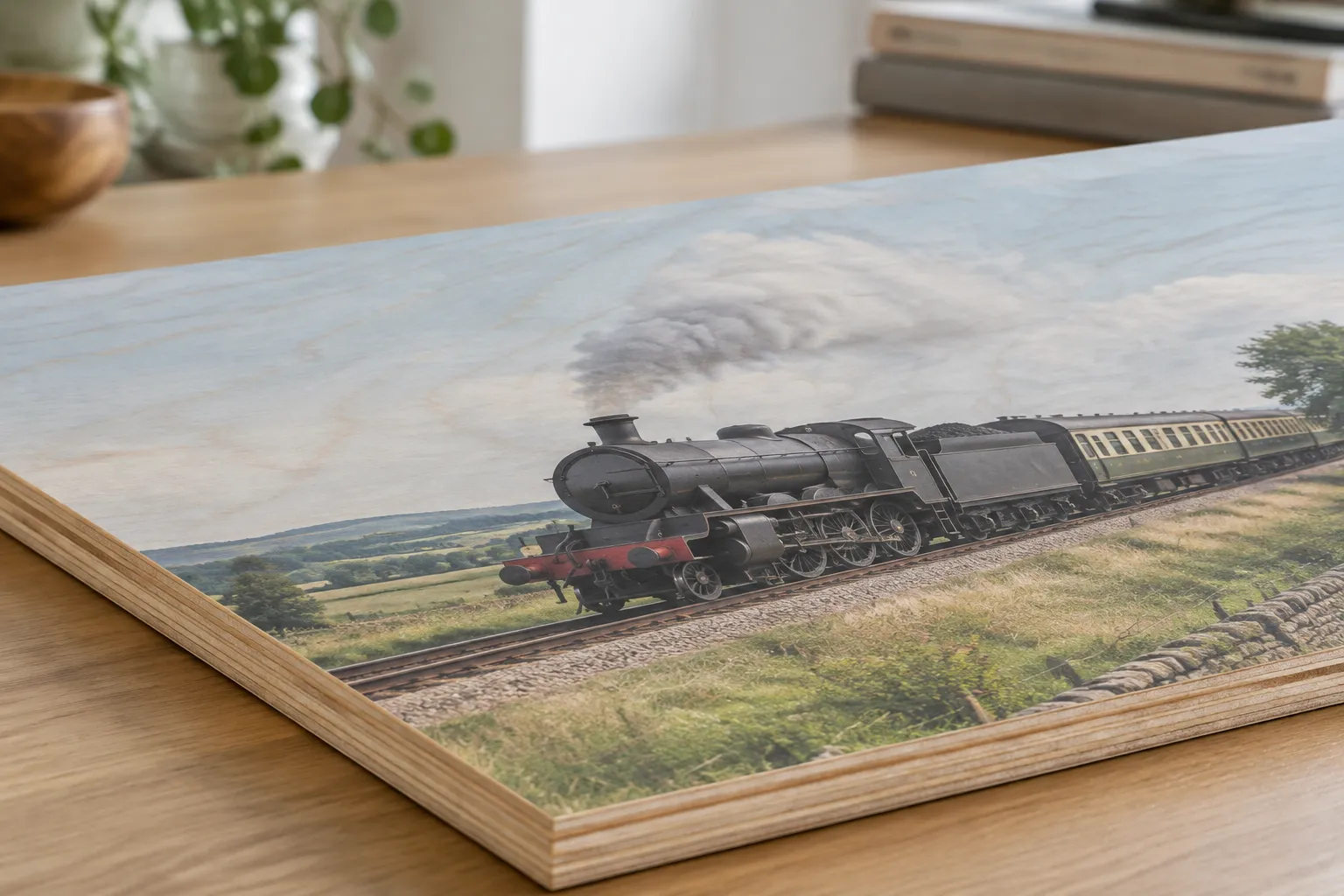
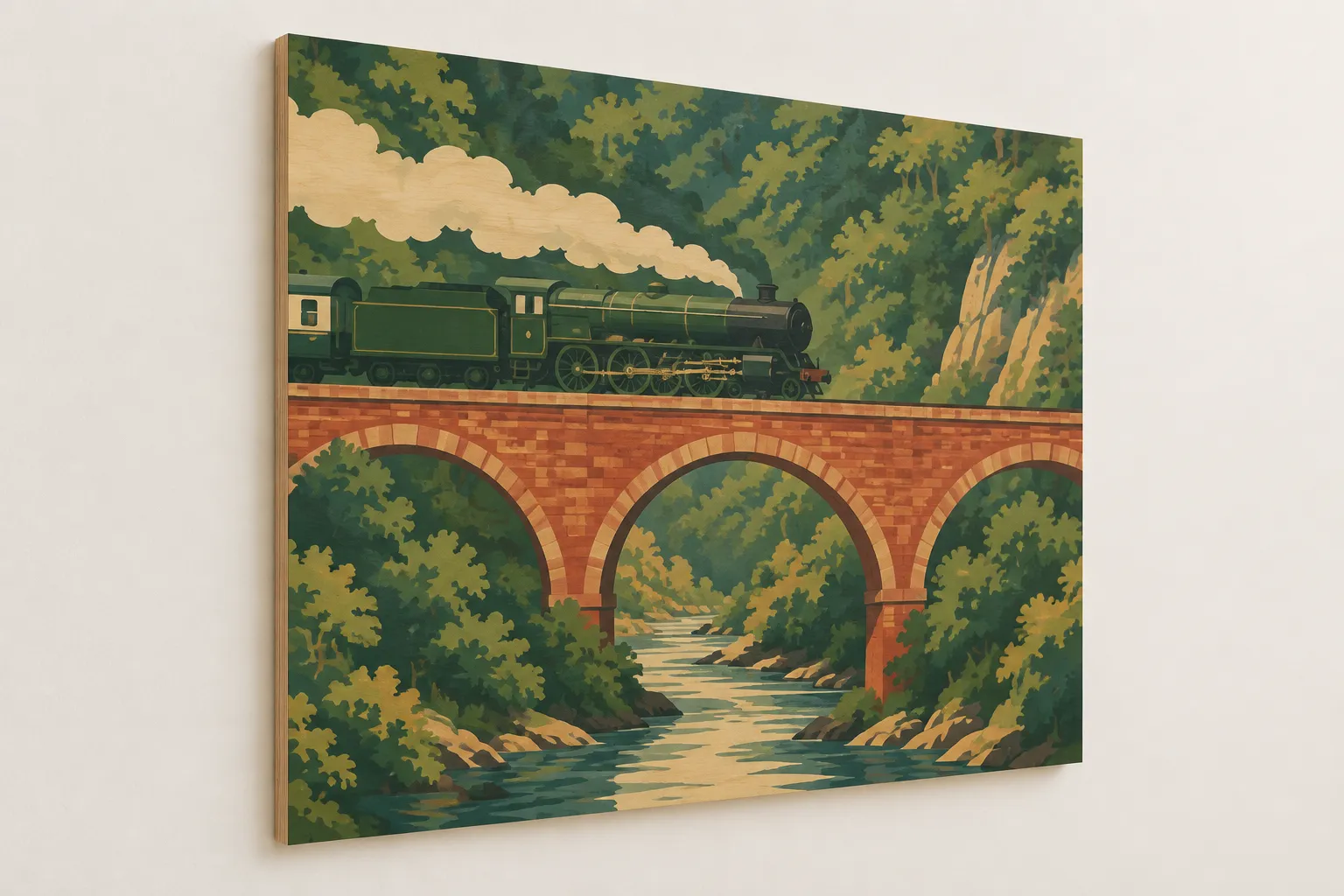
Anything warm, and anything already going towards a painting. The grain reads through highlights, so a sepia-leaning scene, a sunlit gala line-up or one of the studio's ink and wash treatments gains texture from the material instead of fighting it.
What it won't do is behave like white paper. A photograph that depends on clean white highlights, snow or a bright overcast sky, will pick up the panel underneath. That is either the point or the problem, depending on the picture.
Old family photographs
Wood is the natural home for a railway picture taken on film decades ago: a grandparent on a footplate, a holiday line-up at a branch station, a black and white shot of a shed long since closed. Scan the print at 600 dpi or more, or have a high-street lab do it, and upload the scan as it comes, with no filters. Fading and a little grain look right on plywood in a way they seldom do on bright white paper.
If the original print is very small, start with the 30x40 panel. The upload check tells you which sizes the scan can carry, so you are not offered a size the scan cannot hold.
The alternatives
For the same frameless idea with punch instead of warmth, metal. For texture with more scale, canvas goes up to 60x80 cm. The stage page lists every format.
