
What it physically is
One sheet of 250 gsm uncoated off-white archival paper, printed edge to edge and trimmed. Uncoated means no gloss and no glare, so it doesn't fight strip lighting in a loft any more than it does a lamp in a sitting room. There is no frame and no backing board: it arrives as a print, and what you do with it is up to you.
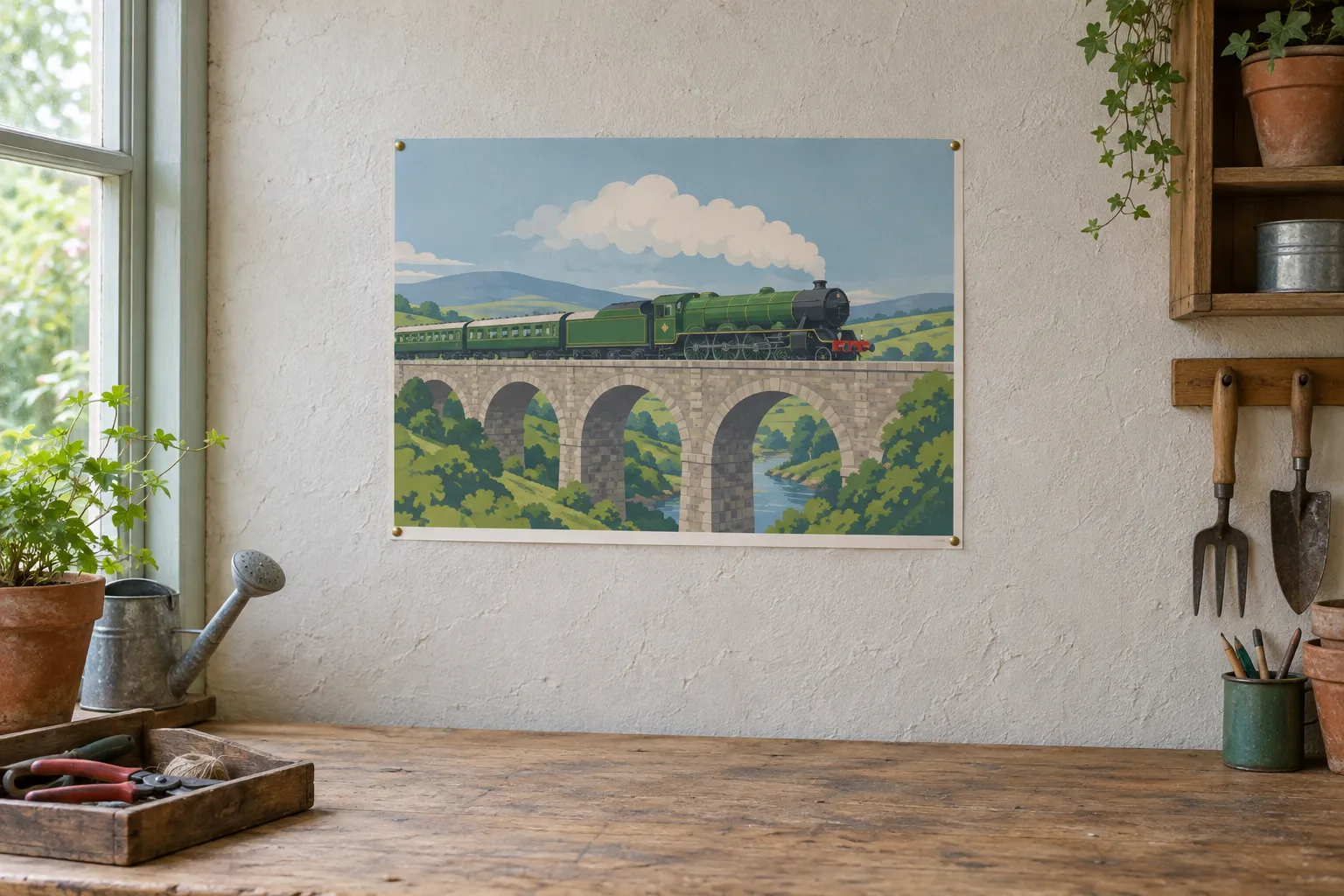
How big it goes
Five options, starting at a sheet of office paper and running up to a metre tall. A2 is what most people mean when they say a print for the wall. The top two hold a room from across it, and they're also the two that want real resolution behind them, which the size guide works out against your own file.
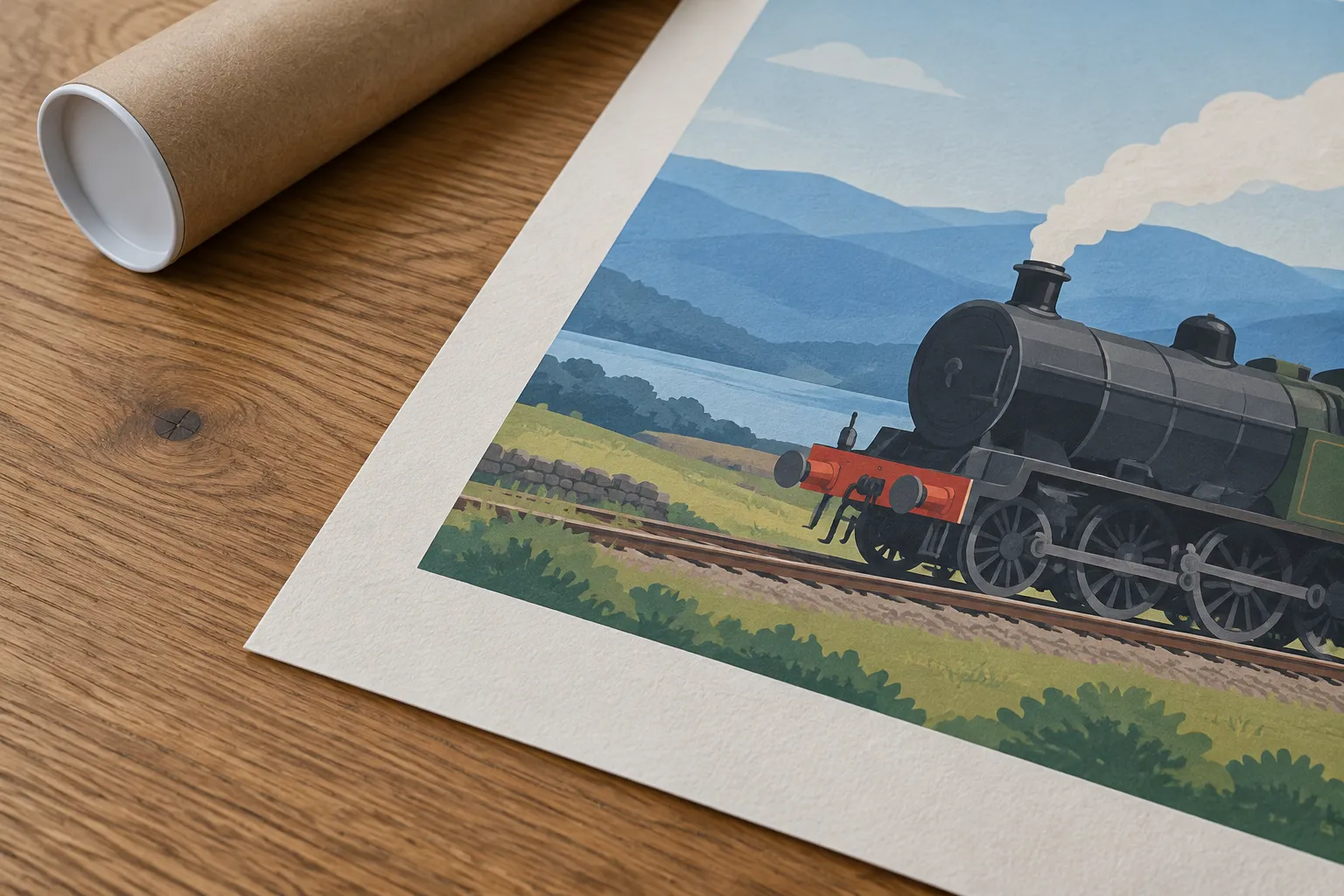
Where this format earns its place
Rooms change. Club rooms get rearranged, layouts get extended into the next alcove, and an exhibition stand has to go back in a car on Sunday evening, so a picture that commits to one wall and one fixing is the wrong picture for any of them. A poster can be blu-tacked, clipped, pinned or dropped into a standard frame two years later, and not one of those decisions has to be made today.
It is also the sensible answer to a big picture on a small budget. The paper is the same stock the framed prints use. You are not buying a lesser print; you are buying it without the moulding.
Framing it yourself
Three of the five sizes are A sizes, so off-the-shelf frames fit without anything being cut to size. If you would rather we did it, the framed print comes ready to hang at A3 and A2. For something with a bit more presence and no glass at all, canvas is the other direction to go, and the format pages lay out the rest.
