
What it physically is
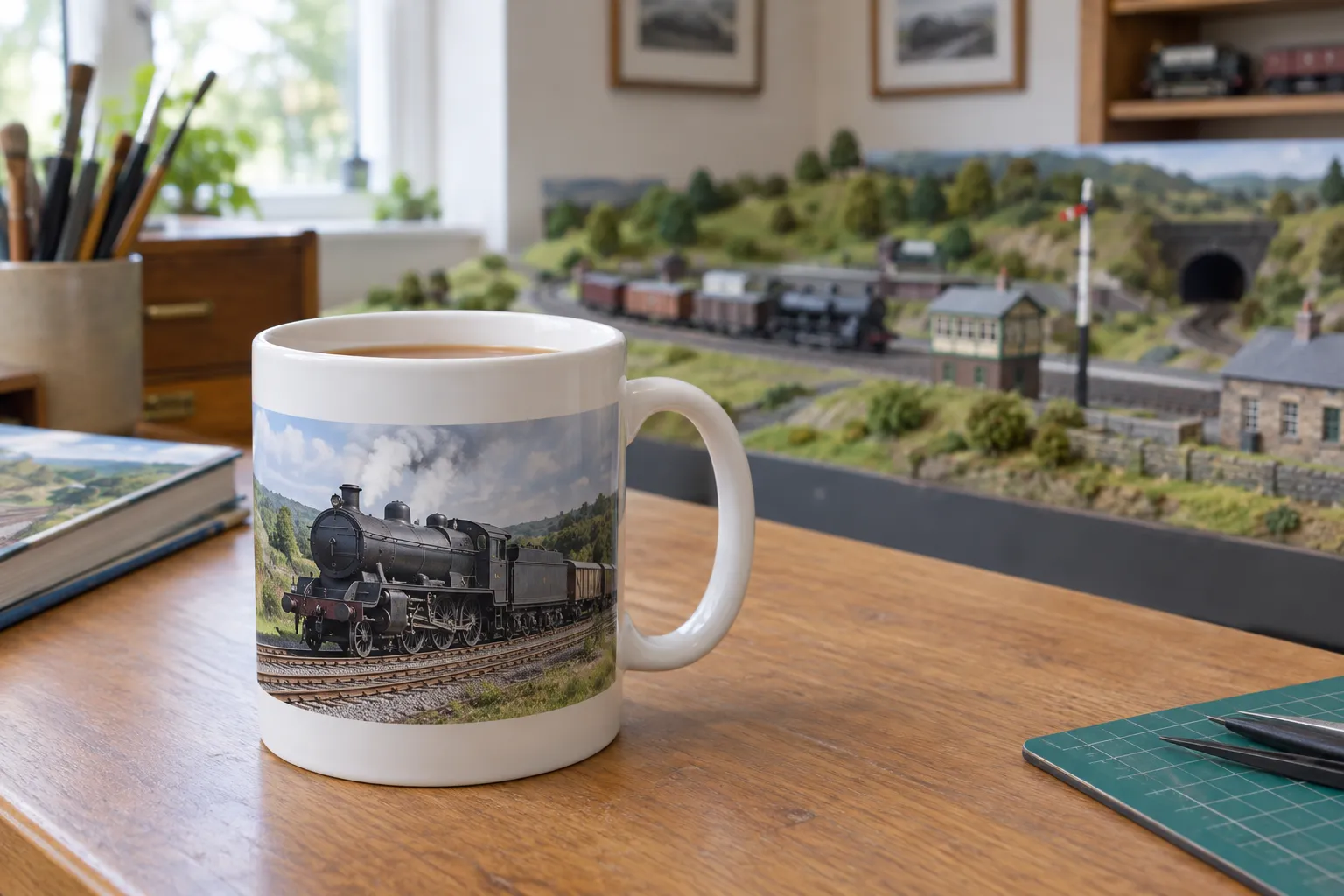
An 11oz white ceramic mug, printed with the picture you upload. One size, because the 15oz was withdrawn: it cost meaningfully more to make and sold at the same price, which is not a trade worth passing on to anybody.
Which photographs suit it
The print area on a mug is a long, shallow band that curves away from the eye, so a picture works best when one clear subject sits in the middle of it. A front-three-quarter view of a locomotive is close to ideal. A wide scenic composition is not: by the time it is wrapped round a cylinder, half of it is facing the wall.
It also needs far less resolution than a wall print, so a photograph that the size guide rules out at A2 is very often perfectly good here.
Testing the picture first
Because the band is narrow, it pays to see the crop before buying. Upload two or three candidates and compare their free watermarked previews; three a day is enough to compare a close-up against a wider shot of the same train. A restyle can rescue a picture with a messy background, since the poster style turns everything behind the locomotive into flat colour.
Night shots and dark tunnel mouths are the hardest case on a white mug. Choose a picture with some light in it, a bright exhaust plume or a lit cab, so it still reads from across a table.
Why it lands as a gift
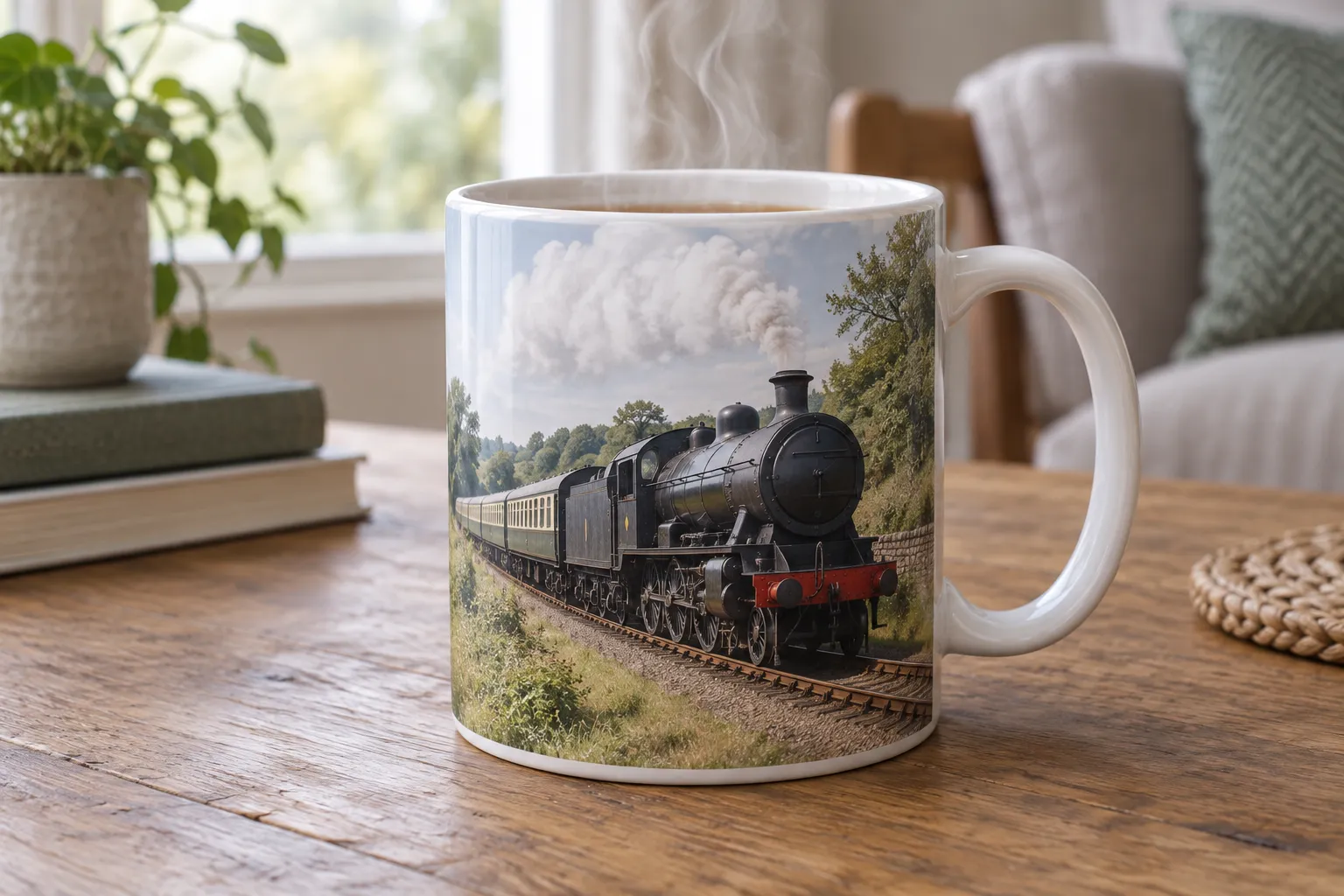
Wall art is a decision about somebody's house. A mug isn't, which makes it the low-risk version of the same gift, and it is the one that gets noticed by everybody else in the office or the club. The spotter page makes that argument at length.
The alternatives
For the same idea away from a desk, the bottle travels. The stage page holds every format.
