
What it physically is
A rigid printed panel, three millimetres thick, ready to hang as it comes. We don't describe the surface finish beyond that, because our supplier's own product data does not, and a material adjective that cannot be substantiated is worse than none.
What is true is what it does: blacks go deep, and strong colour holds its intensity in a way it does not on uncoated paper.
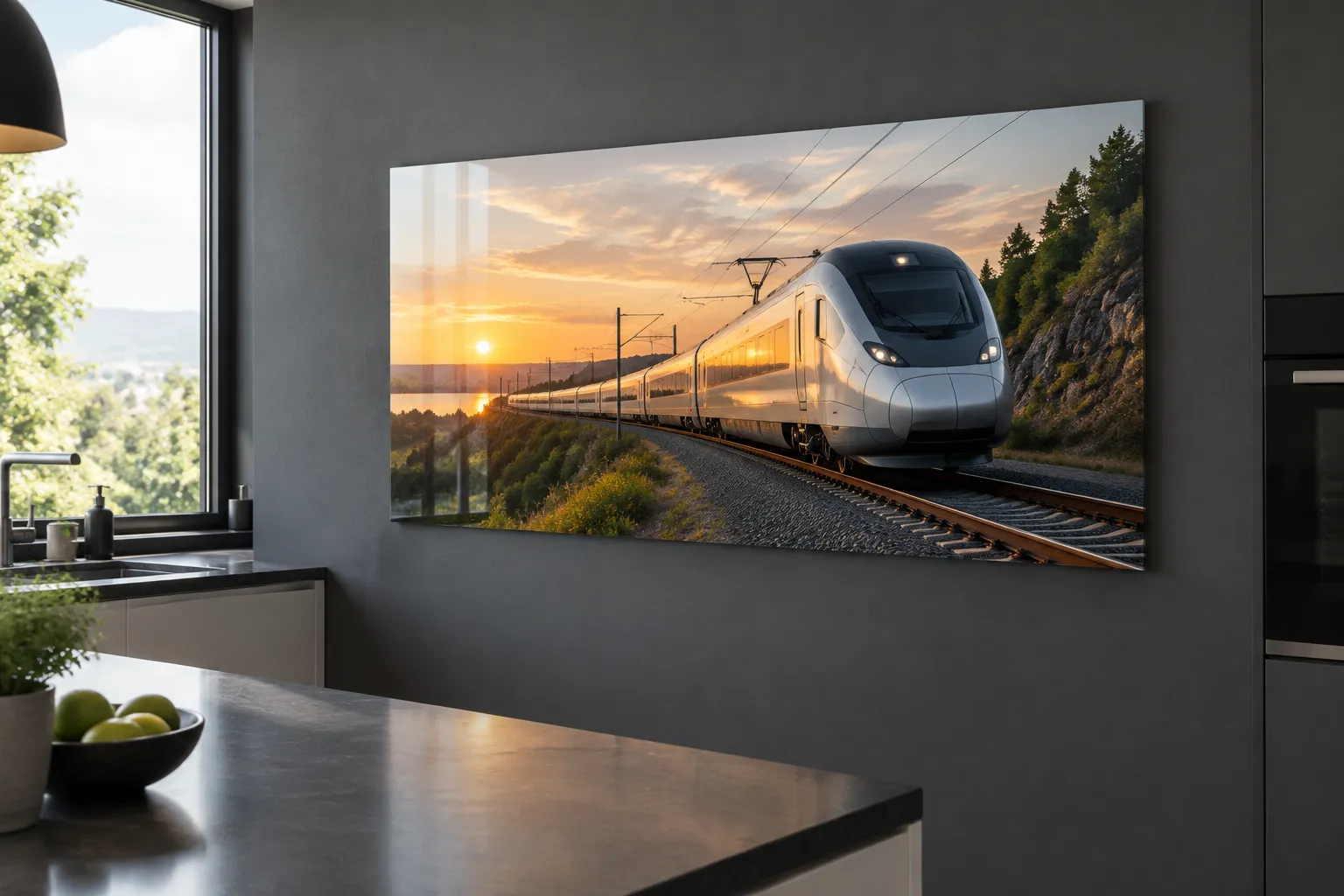
The sizes
30x40, 40x50 and 50x70 cm. All three are frameless, which means they take up exactly the space they measure. That matters in a room where a moulding and glass would not fit.
Which photographs suit it
Contrast and colour. Liveried traction in daylight, a floodlit depot at night, anything with a strong graphic shape. Night photography in particular is better here than anywhere else in the range, because there is no glazing to bounce a room light back into the shadows.
It is also the format for a garage, a workshop or a layout room. Nothing to shatter, nothing to condensate behind, and a wipe cleans it.
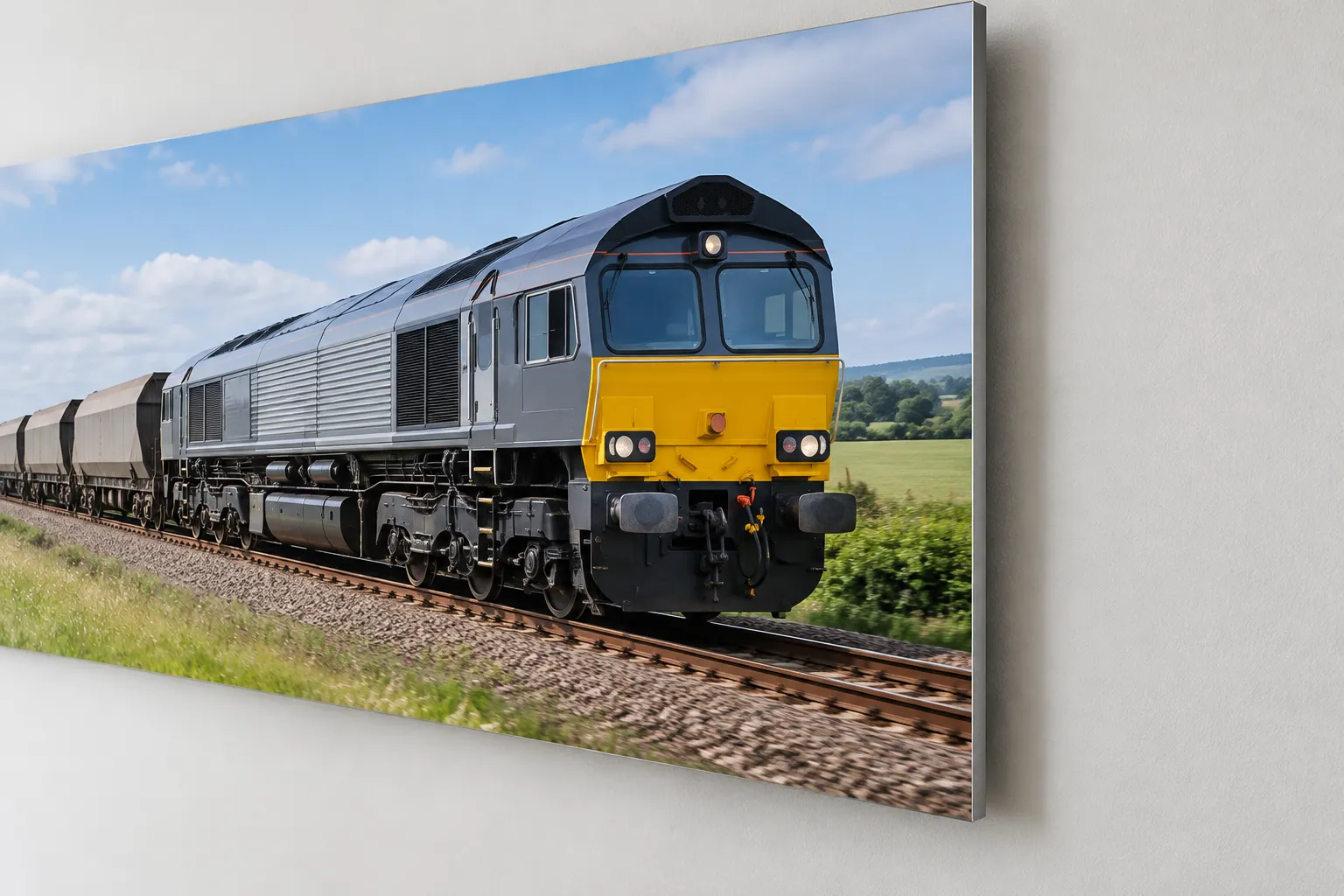
Restyled or as it was taken
Metal treats the two routes differently. Left as it was taken, a photograph keeps every edge crisp, which flatters a sharp modern shot and exposes a soft one, so check the file against the size guide before choosing 50x70. A studio restyle in flat poster colour is the strongest match of all: large fields of a single colour come out dense and even, and the bright surface makes them look like enamel signwork.
The painted styles print well on it too, but their brushwork loses the texture that canvas or wood would add. If the picture is meant to look painted, preview it on canvas as well and compare the two.
The alternatives
For warmth over punch, wood takes the picture in the opposite direction. For a documentary picture, framed paper holds fine detail best. The stage page covers the lot.
