

Cold air, and why it matters
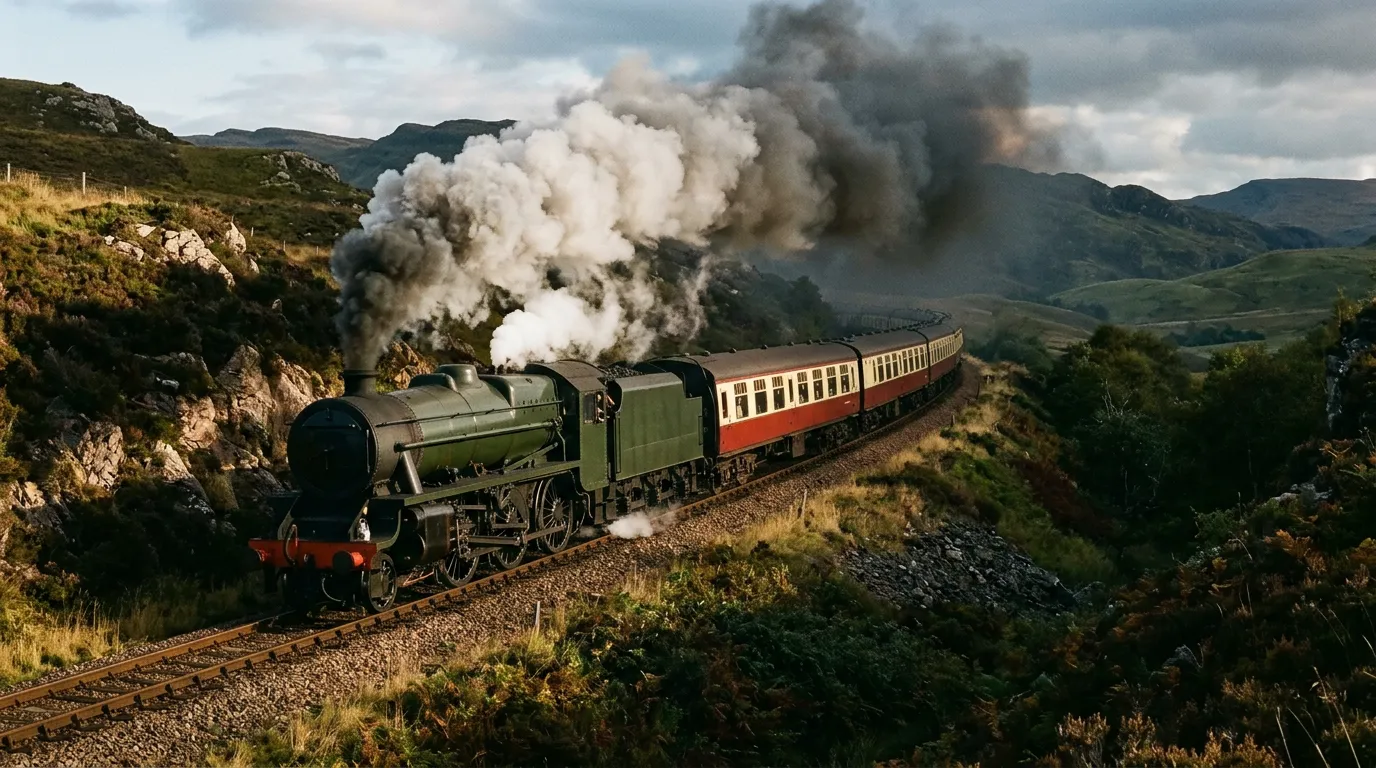
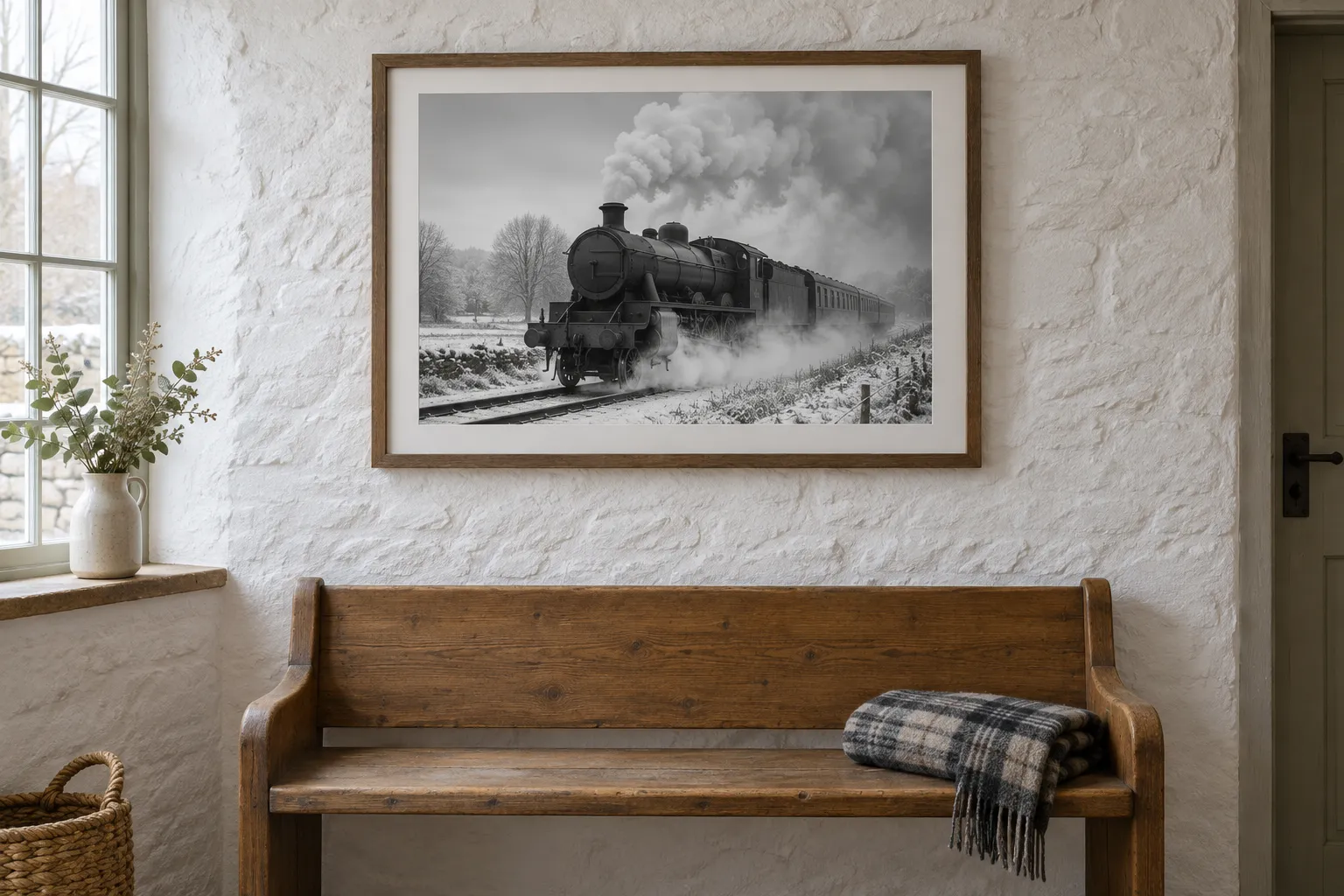
Ask anybody who chases preserved steam and they will tell you the same thing: the pictures come out in winter. Exhaust that hangs in cold air reads as shape, and shape is what survives printing. The same locomotive on a warm afternoon produces a thin haze that disappears the moment the picture is on paper at any size.
So when a folder is in front of you, look at the steam before you look at the engine. If it has body to it, the frame will carry a large print. If it doesn't, the picture is better small, or better on a mug.
Why monochrome is not a fallback here
The studio's ink and wash treatment is strictly monochrome: black, white and greys, with loose washes over a paper texture. On most railway subjects that is a stylistic choice. On steam it is often the more faithful one, because a preserved locomotive in the rain is already close to monochrome, and the colour that survives is usually a wet platform and a yellow high-visibility jacket somebody forgot to crop out.
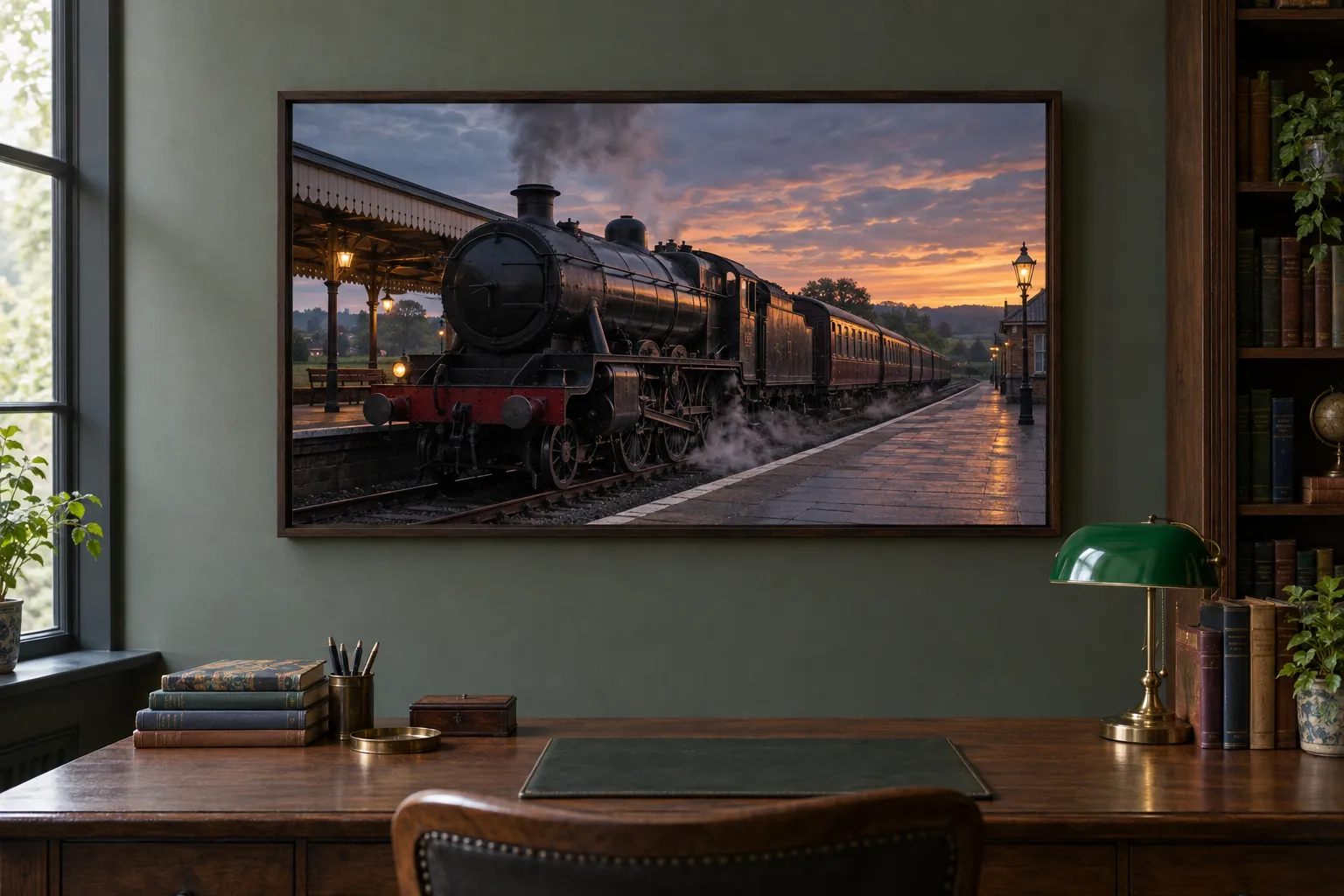
The oil treatment goes the other way: it gives mass and depth, and steam under a shed roof is exactly the sort of subject it flatters. The studio styles covers both, and you get three free previews a day, which is enough to try the same frame two ways.
The pictures that make gifts, not prints
Galas, footplate days and last runs produce a particular sort of photograph: not always technically the best in the folder, but attached to a day that somebody will tell you about for twenty minutes. Those are the ones worth printing, especially if you were there too.
Where you were both present, the gift changes character completely. It stops being a picture of a locomotive and becomes a record of a day out, which is a different and better present.
What to put it on
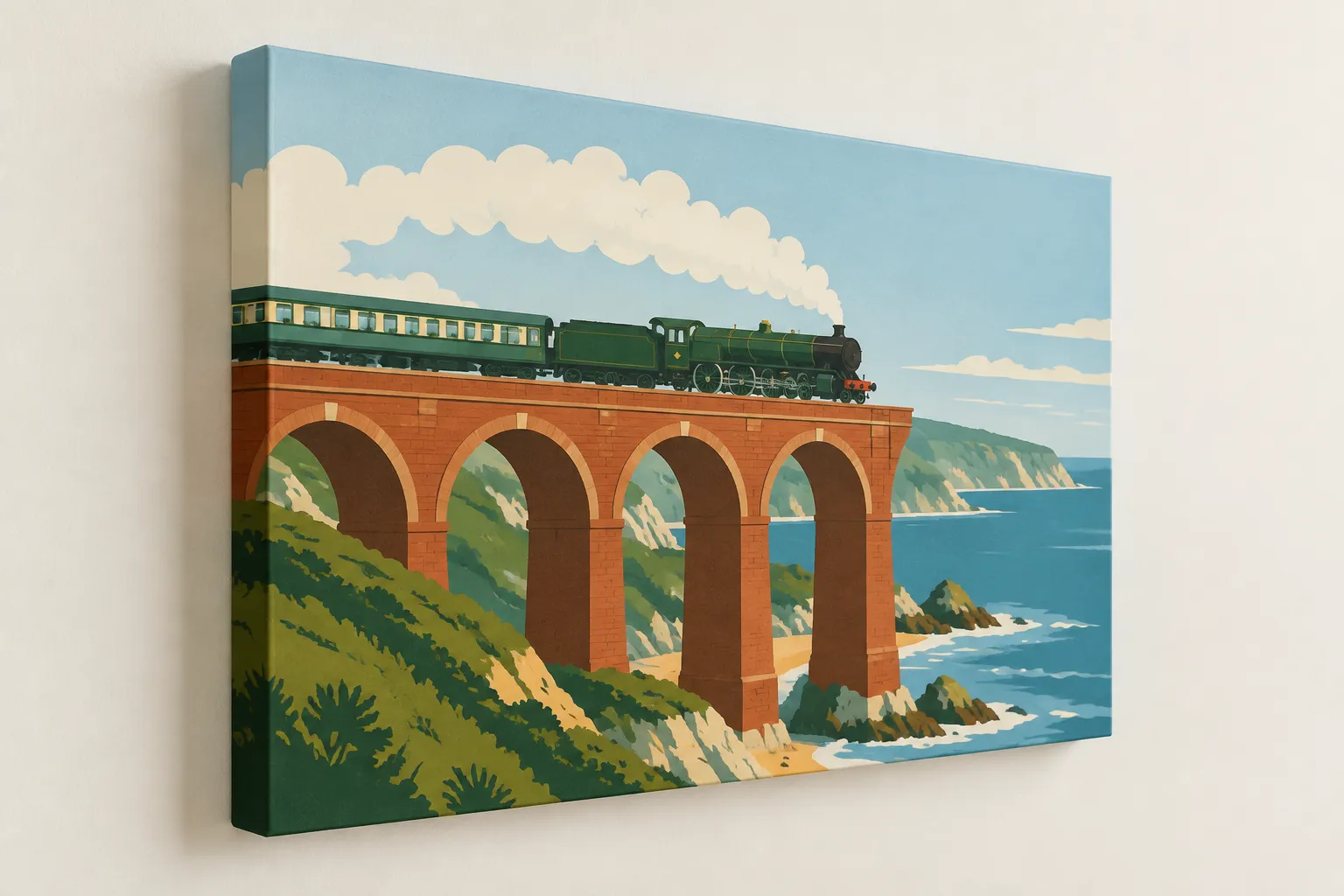
Canvas suits steam more than it suits most railway subjects, because the wrap and the texture agree with atmosphere rather than fighting it, and it comes stretched at 30x40 up to 60x80 cm. Framed paper at A3 or A2 is the sharper, quieter option, in black or natural wood. Wood is the odd one that works: a 10mm lined plywood panel with the grain showing through the lighter tones, which suits a sepia or an ink and wash rather well.
The format pages describe each of them properly, and the size guide works out which sizes the file can reach without going soft.
Elsewhere in this stage
Modern traction, not steam? The spotter page argues from a different starting point entirely. The stage itself holds every recipient, and the opening page covers the general case.
Shopping in December? Train Christmas gifts sets out the formats and how long each order takes.