
What it physically is
The artwork is printed onto canvas and stretched over a wooden frame 2cm deep, then finished so the canvas wraps the sides rather than stopping at the face. That wrap is why the file we render for a canvas is larger than the panel: the sides carry a soft, blurred band taken from your picture's colours, never seen from the front.
It hangs straight from the box. There is no separate frame to buy and nothing to glaze.
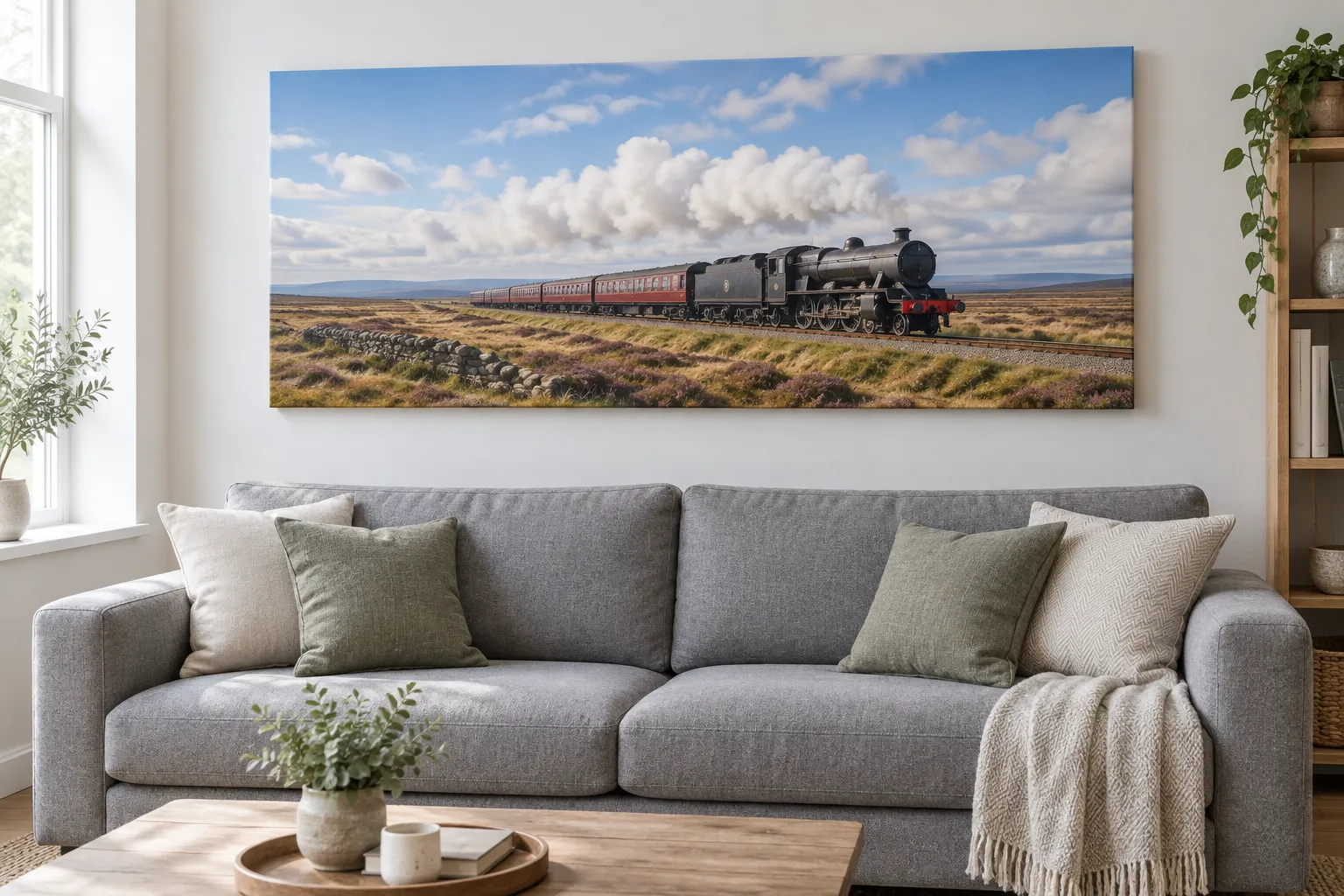
The sizes
30x40, 40x50, 50x70 and 60x80 cm. The two smaller ones suit an alcove or the space above a desk. The two larger ones are wall pieces in the proper sense, seen from across a room, and they ask a lot of the file, so check the size guide before setting your heart on 60x80.
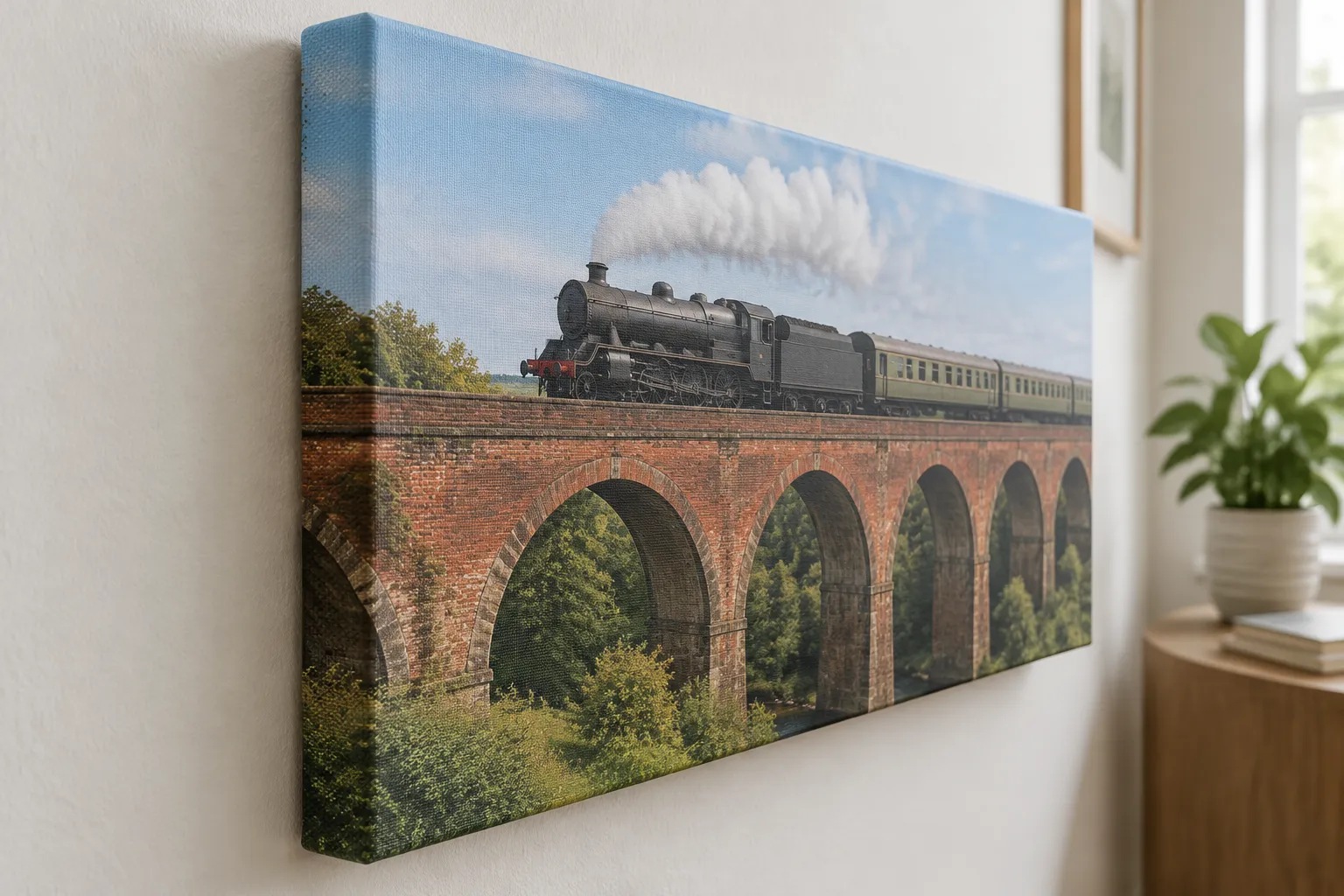
Which photographs suit it
Wide, scenic compositions, because the wrap wants an image that already fills its frame: a viaduct, a coastal run, a full-length line-up, steam standing in cold air. It flatters atmosphere.
What it does not flatter is a picture whose whole point is small print on the side of a locomotive. The weave softens fine detail slightly, and the wrap takes a band off every edge, so a documentary shot is better on framed paper.
The alternatives
With a frame around it, framed canvas in black, dark wood or natural wood. Frameless and hard-wearing, metal. The stage page holds every format side by side.
