

Print the thing they built
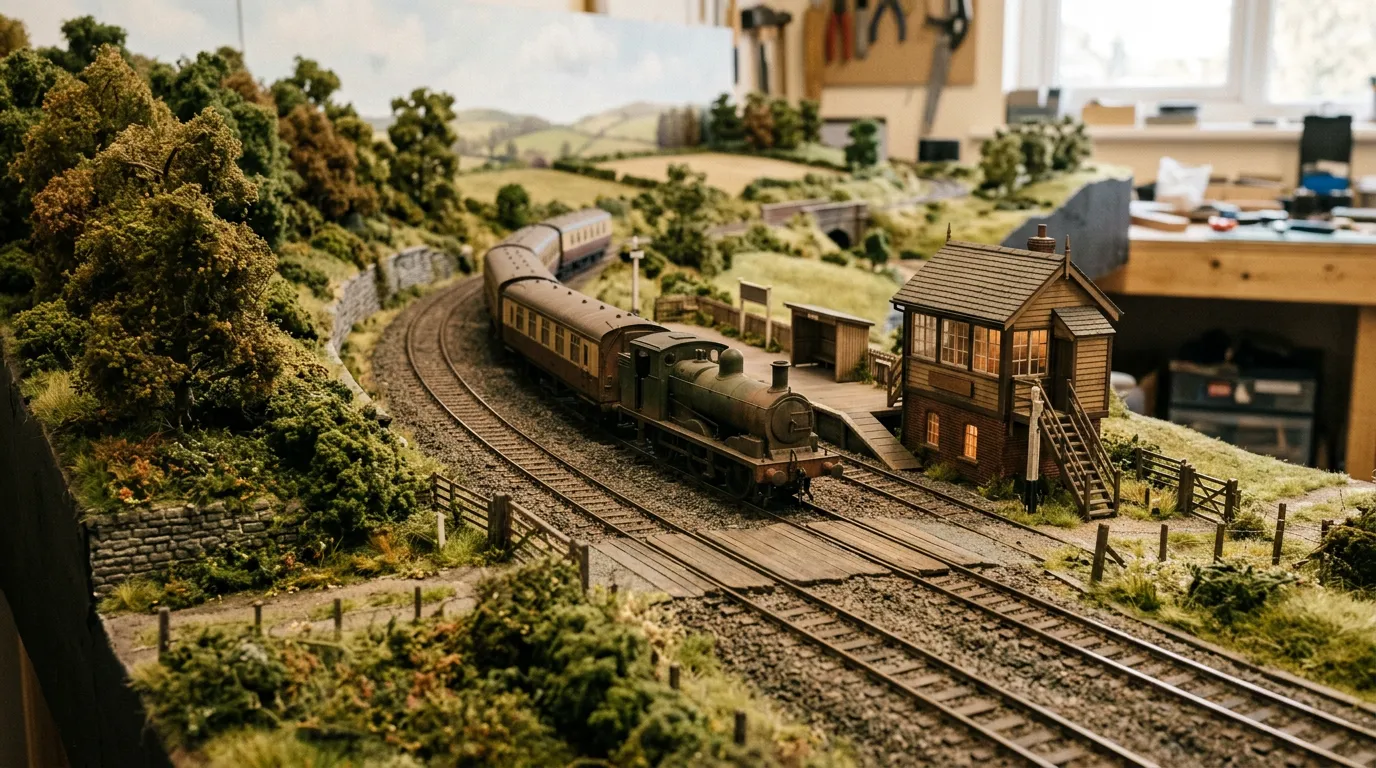
A hobbyist recognises their own viaduct, their own station throat, their own weathering on a wagon, in about half a second. That is a much stronger reaction than any photograph of a real locomotive can produce, because they can see the hours in it.
It also means you can buy this gift without knowing anything about railways. You don't need to identify the class. You need to find the corner of the layout they keep showing people.
Layout photographs are harder than they look
The catch is one most gift guides leave out. Photographing a model up close gives you very little depth of field, so the front of the scene is sharp and the back is a blur, and printing it large makes that obvious rather than atmospheric.
Three things help. Shoot from further back and crop in; do not put the lens against the platform. Get light onto the whole scene, not just one corner. And if the picture already exists and is soft at the back, print it smaller, where the eye reads the blur as depth instead of as a mistake. Preparing the photograph covers the rest of the mechanics.
Where it goes matters more here than anywhere
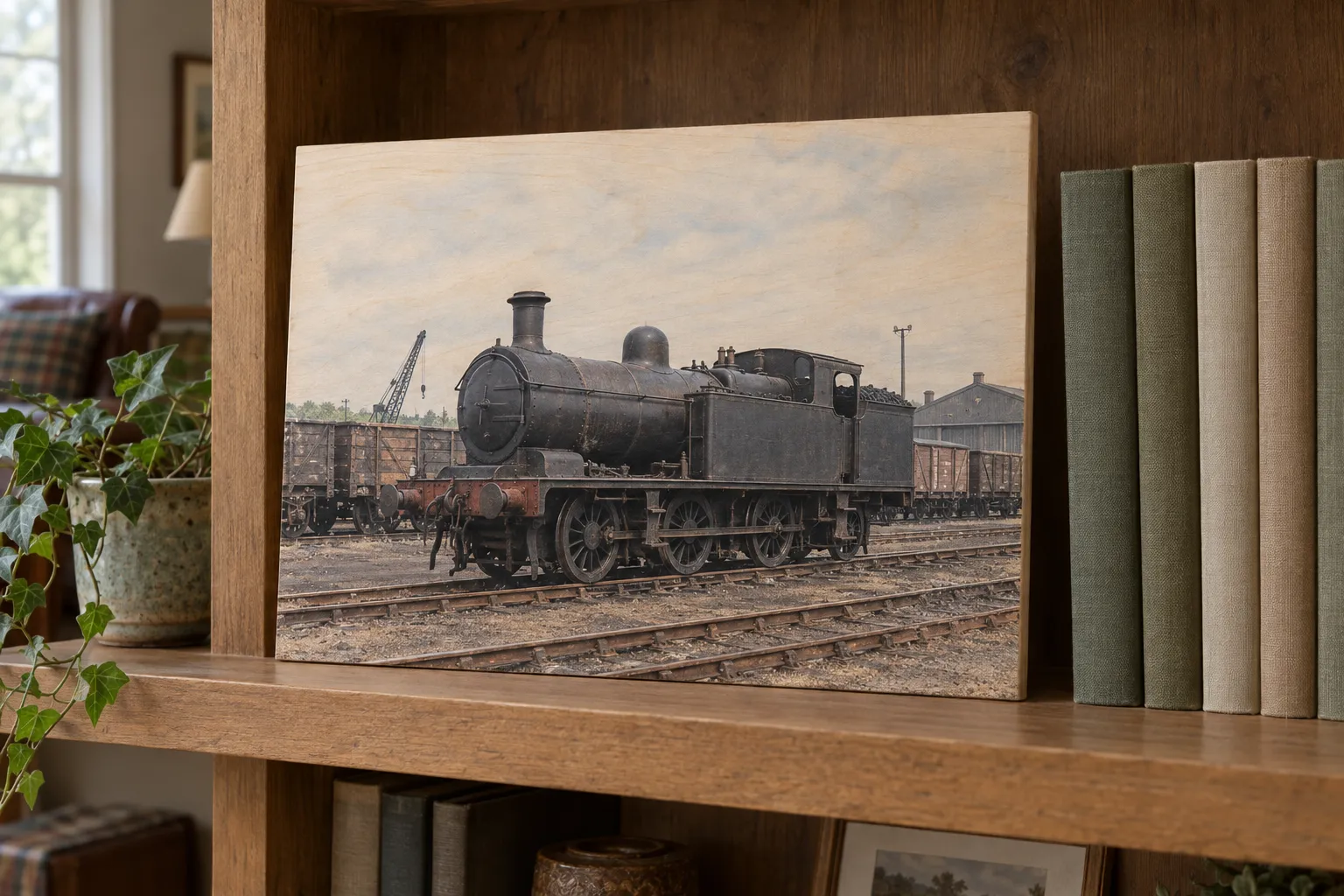
Layout photographs almost always end up in the room the layout is in, which is usually a loft, a garage, a spare bedroom or a shed. That is a practical constraint, not an aesthetic one: those rooms have poor light, awkward walls and often no space at eye level.
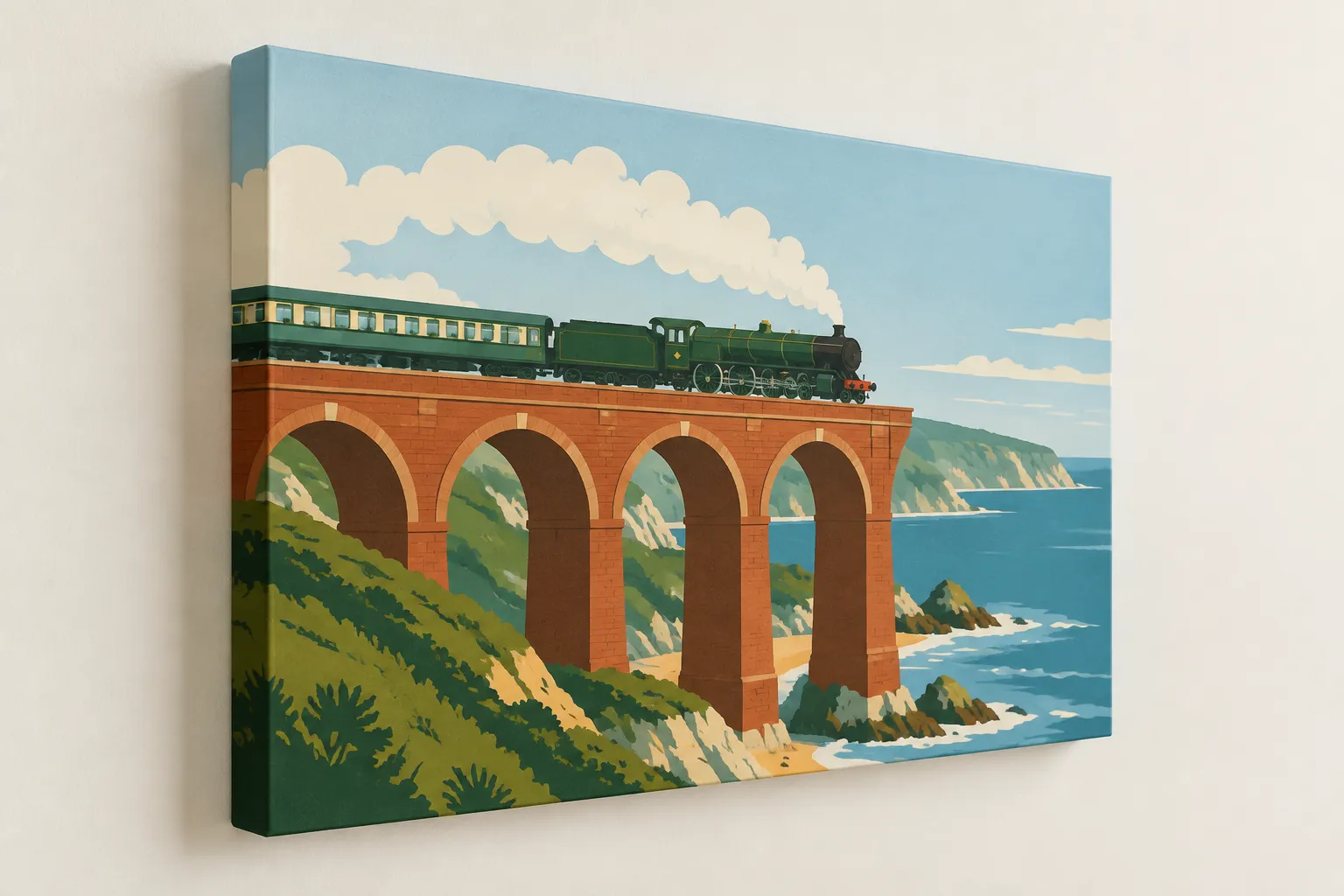
A large paper print at 50x70 or 70x100 cm works as a backdrop on a club stand or above a workbench. Framed A3 sits above a bench without dominating it. Metal, a 3mm printed panel with no glass, is the one that shrugs at a workshop, and it comes at 30x40, 40x50 and 50x70. The format pages have the details, and the size guide checks the file will carry the size.
Small things for clubs
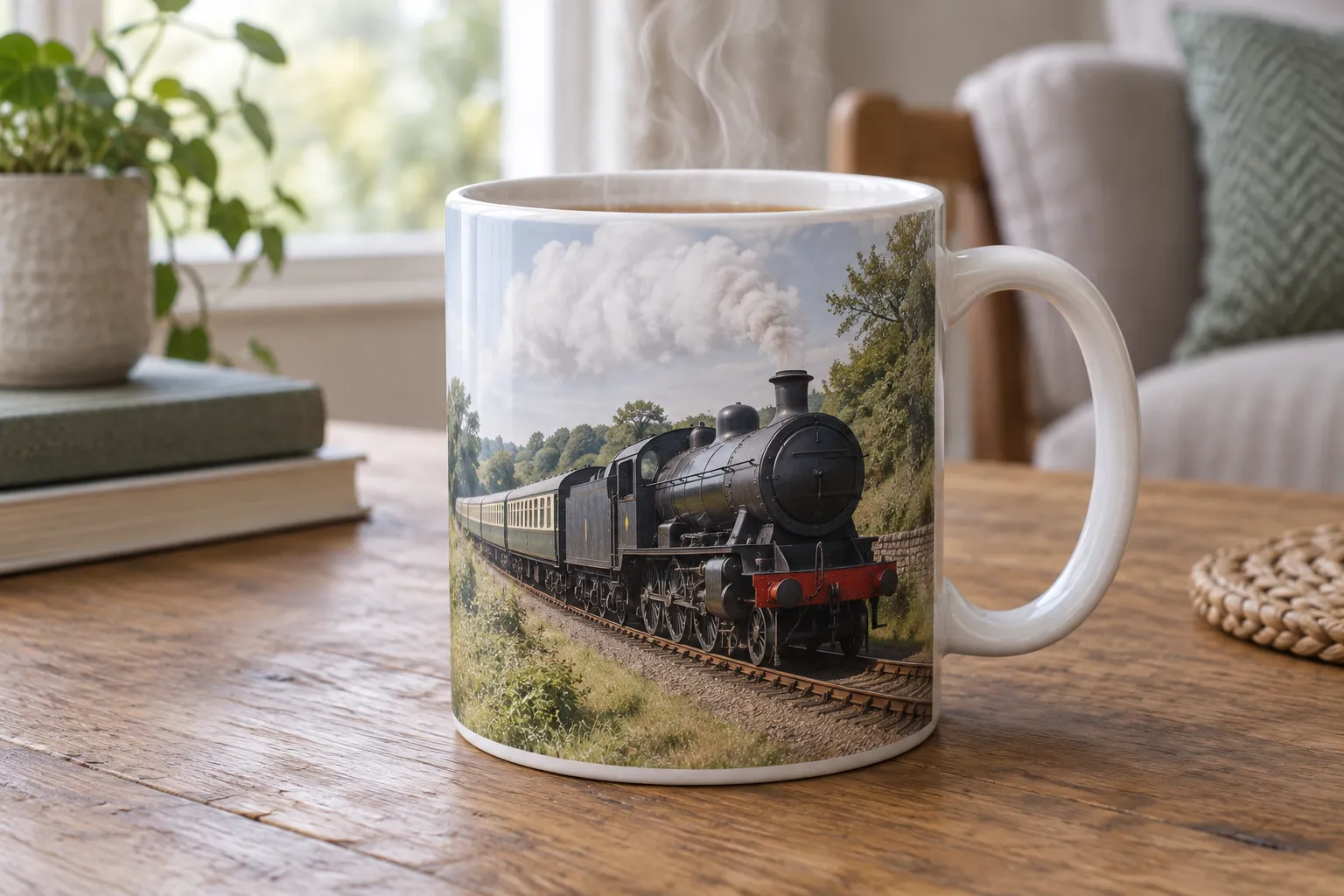
Model railway life is sociable in a way the rest of this stage is not. A mug suits an open day: a small thank-you for a visiting exhibitor, or something to keep on a workbench. It is printed from the same upload as a wall piece would be.
Elsewhere in this stage
If they photograph the real railway as well as building it, the spotter page may fit better, and the opening page makes the general case. The stage holds all seven.