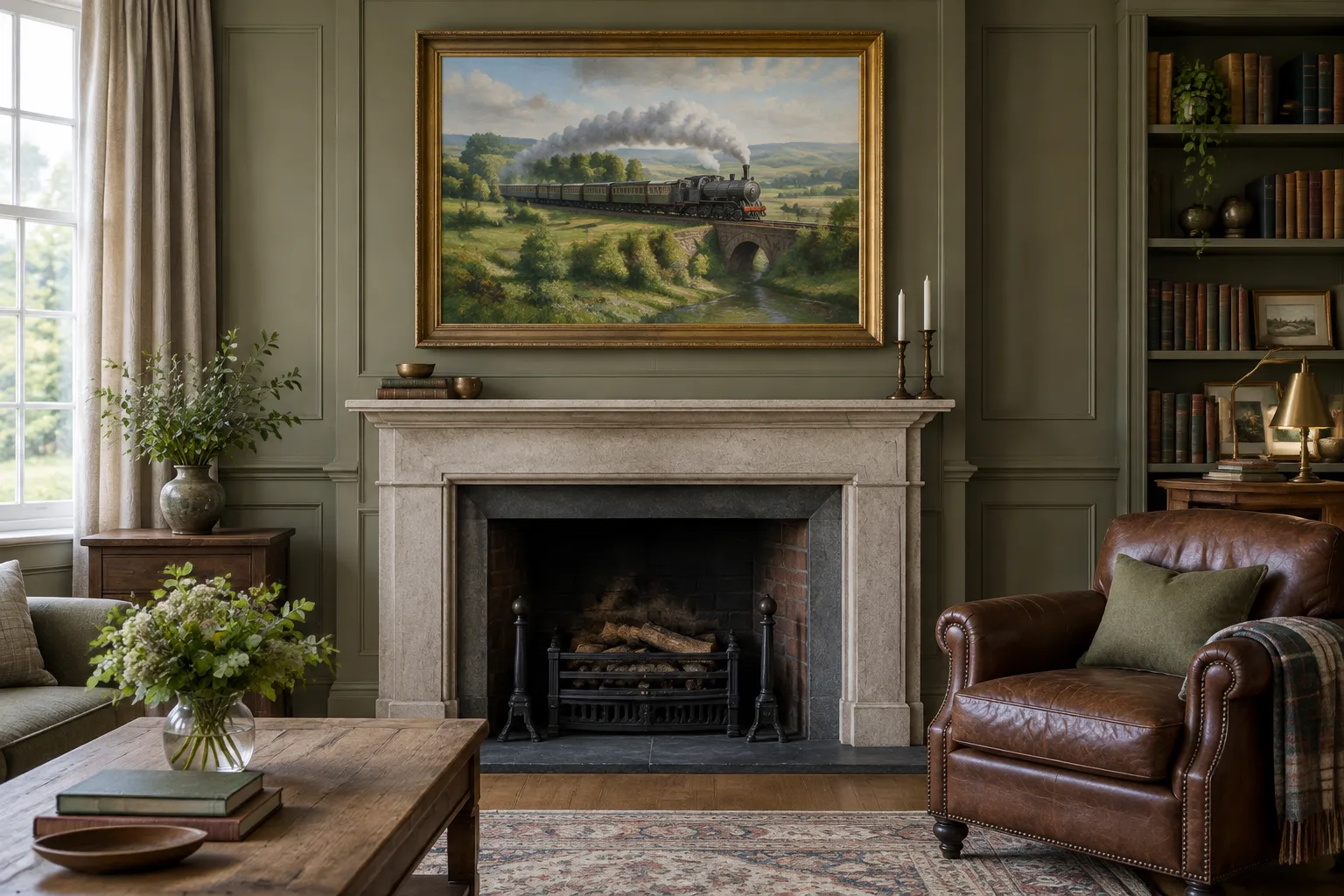
How the studio works
Upload a picture, verify your email and choose a style. What comes back is watermarked and free, and you get three of those a day. Nothing is charged until you have looked at your own photograph in the style and decided you want it, at which point we use the exact selected artwork without the watermark.
It's worth saying plainly what this isn't. There is no painter. The treatment is applied by a model, and it is applied to your file rather than to an idea you describe, so the composition that comes back is the composition you sent.
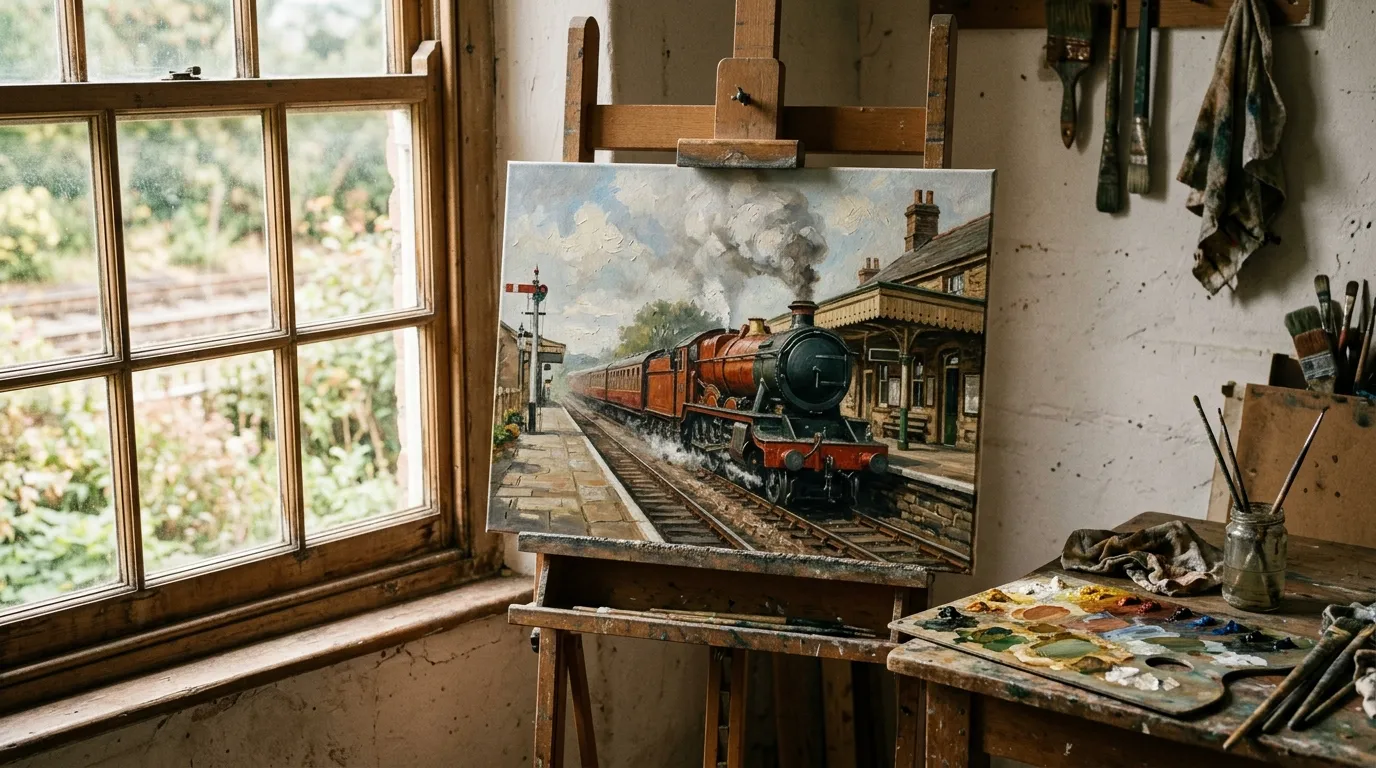
The oil-painting style
The oil treatment is the one people mean when they talk about turning a photo into a painting. Visible brushwork, layered pigment, canvas texture, and light that behaves like gallery light, not daylight. It flatters a subject with mass and shadow, which describes most locomotives rather well.
It suits a picture that already has weight to it: a three-quarter view on a bright morning, steam standing in cold air, an engine under a shed roof. Where it struggles is with fine, uniform detail spread across the whole frame, because the brushwork simplifies as it goes.
Vintage poster
Flat blocks of colour, simplified shapes, hard edges and a warm period palette. This is the treatment that turns a photograph into something in the spirit of the old railway travel posters, and the poster stage covers where that look came from.
It wants a clean subject and an uncluttered background, because it works by throwing detail away. A side-on locomotive against sky is close to ideal. A crowded platform end is not.
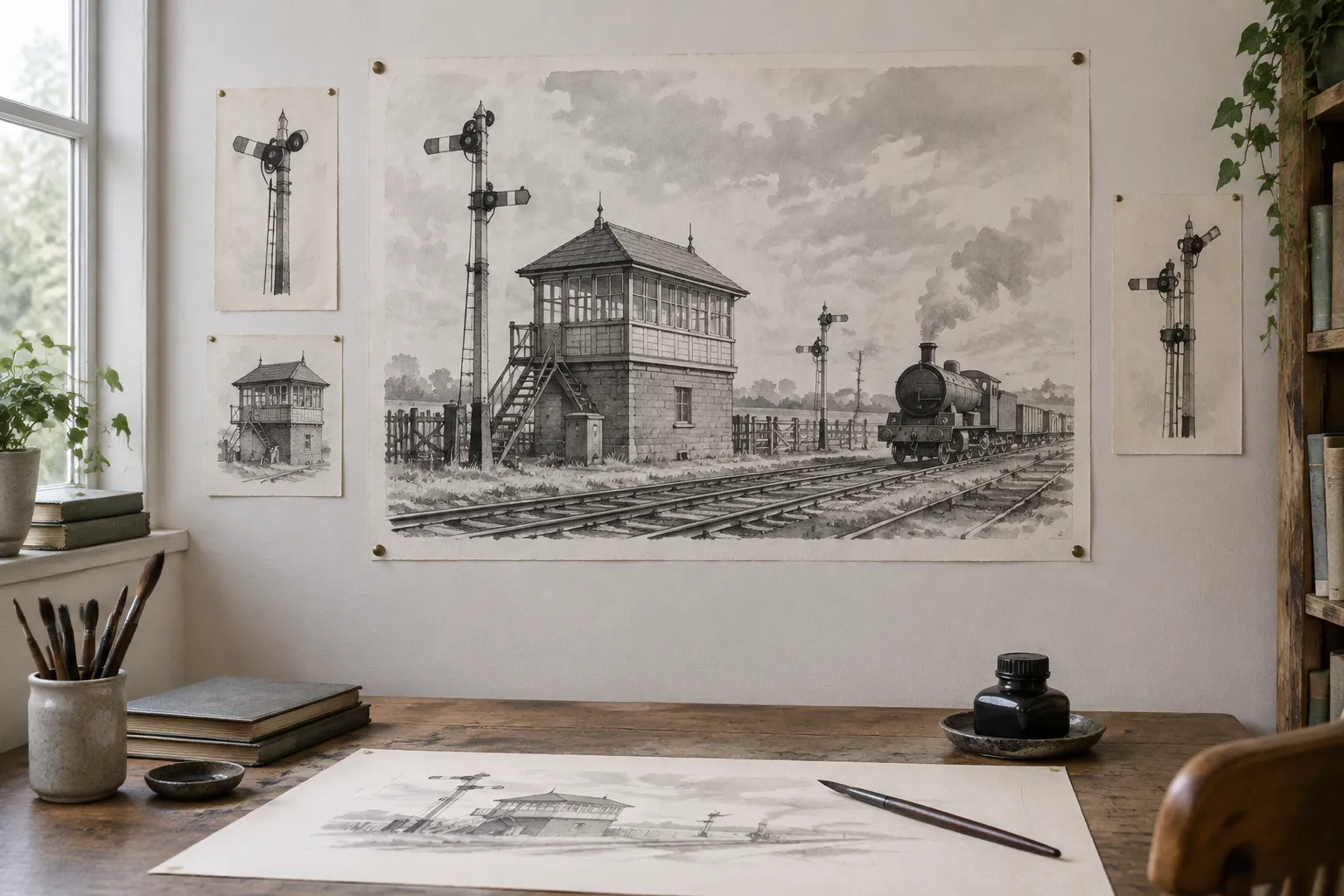
Ink and wash
Monochrome only: black, white and greys, with confident line work and loose translucent washes over a paper texture. It reads as an engineering sketch that somebody took their time over, and it is the quietest of the five by a distance.
Because it drops colour entirely, it's the treatment that doesn't care what livery anything is in. Signal boxes, viaducts, bridgework and detail shots all do well. If the whole point of your picture is a colour, pick something else.
The two that leave it a photograph
Not everybody wants the painterly look. Two of the five refine the photograph instead of restyling it: one aims at an archival fine-art print, with a lifted tonal range, gentle contrast and a little grain, and the other is a straight clean-up, correcting exposure and white balance, opening the shadows and keeping livery colour faithful.
Both leave the picture recognisably your photograph, which for many railway subjects is the entire point. If you want no intervention, you don't need the studio: printing it as it is skips this step completely.
Which one for which picture
- Mass, shadow and a strong subject: oil.
- One clean shape against a plain background: vintage poster.
- Structure, detail and no reliance on colour: ink and wash.
- A good photograph you want to look its best: one of the two photographic treatments.
You don't have to choose from a list, though. Three free previews a day means you can try the shortlist on your own picture and let the file decide.
What to read next
Once you know the treatment, the remaining question is size, and that is a property of your file, not of your taste. The size guide works it out. If you have not prepared the photograph yet, start there instead, and the stage page holds all three in order.