Why steam takes a style so well
A steam locomotive hands any treatment more to work with than a modern unit, and it's easy to see why. There is a moving cloud of exhaust, a heavy body of black or painted metal, rods and wheels with hard highlights, and, in the best photographs, low sun. Each of the five styles handles those four things differently, and that difference is the whole choice.
Two of the styles leave your picture a photograph and tidy it. Three redraw it, as a flat-colour design, a monochrome ink study or an oil. If you came looking for a train painting or a piece of train art for a wall, the last three are the painted ones. The scenes below are studio examples made to show each look on steam. They aren't customer photographs, and your own result follows your own composition, not ours.

Archival print: the morning platform
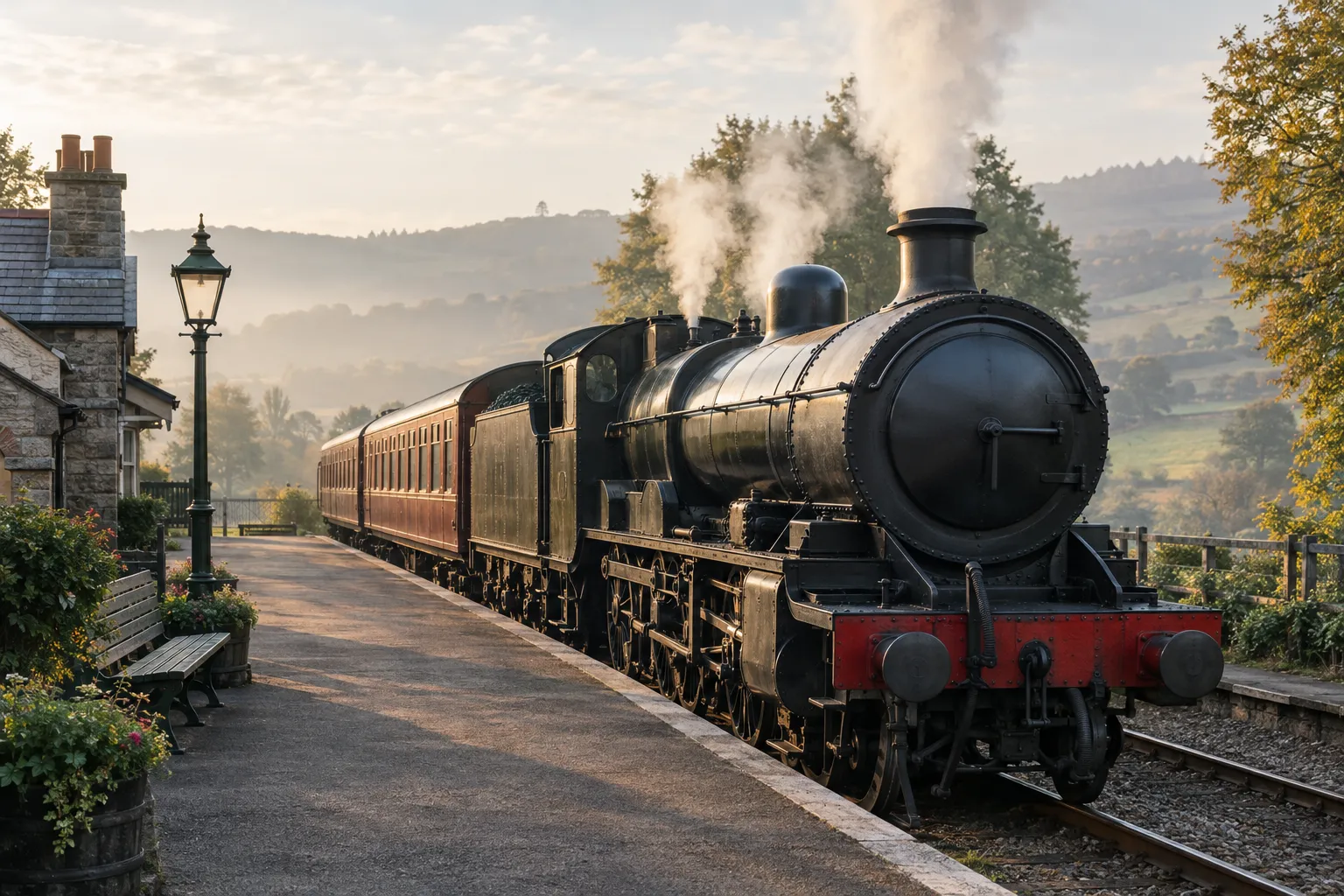
Archival lifts the tonal range, steadies the contrast and adds a fine grain, then stops. On steam its most useful trick is keeping the exhaust white without letting it burn out to a blank patch, while the shadowed side of the boiler keeps its detail. It suits a calm picture: an engine simmering at a platform, a train in mist, a scan of an older print that has gone flat with age.
Collector grade: the record shot
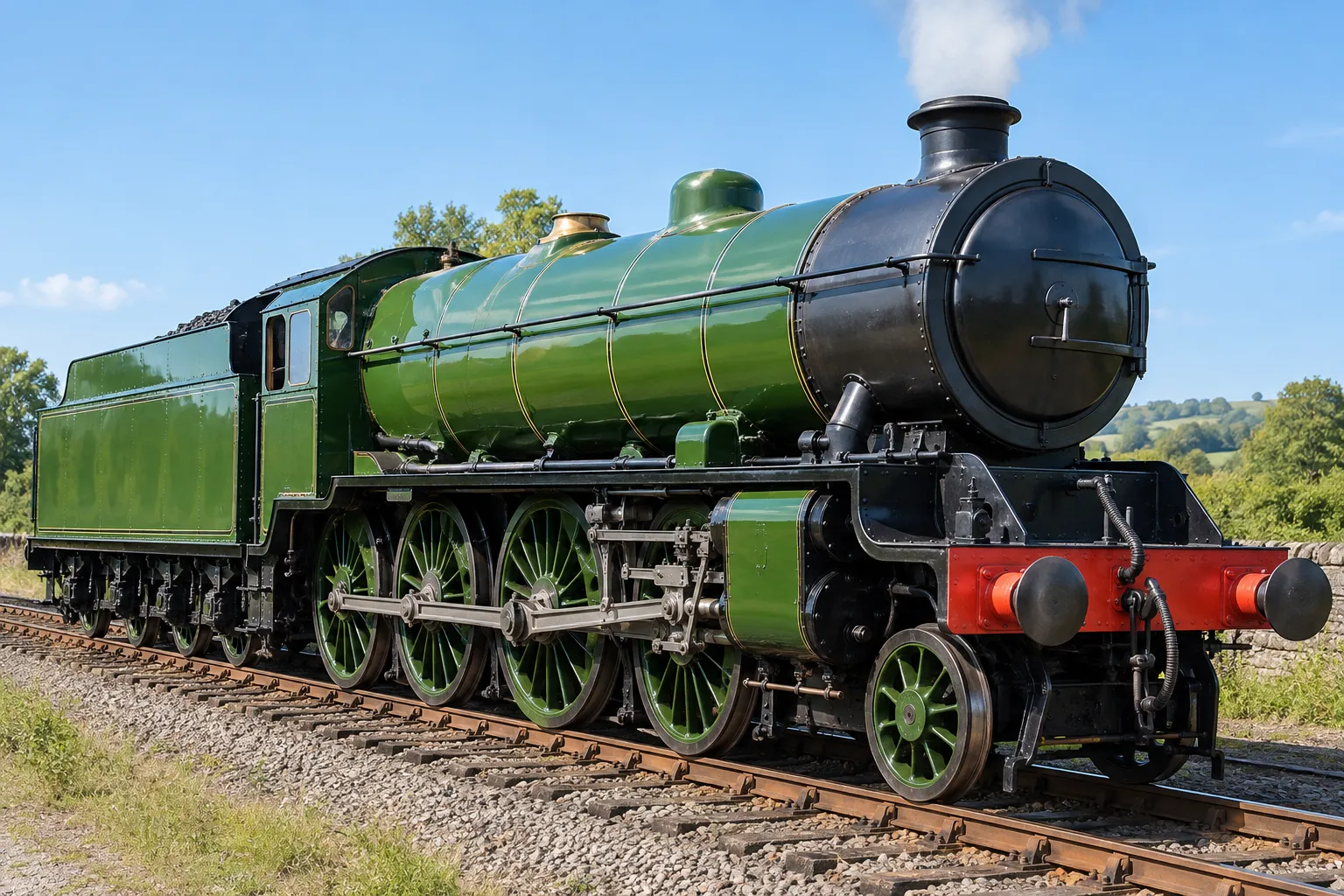
Collector grade sharpens precisely, corrects exposure and white balance, opens the shadows under the running plate and keeps paint colour faithful to what was there. It is the style for a three-quarter view in full sun, the classic lineside record, where the enthusiast will look at the valve gear before anything else. If a livery shows in the result, it is because it was in your photograph: we add nothing.
Vintage poster style: steam as one shape
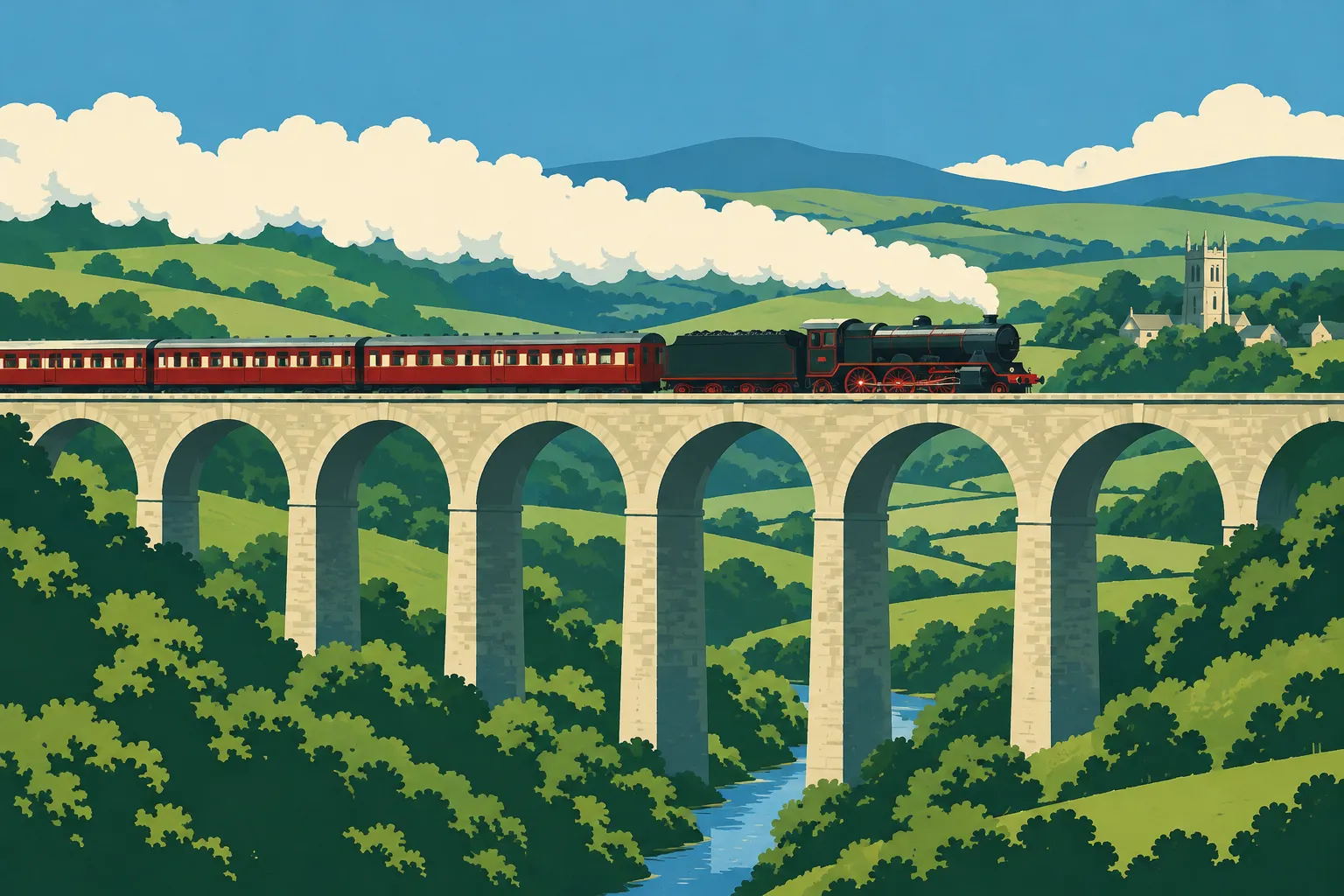
The vintage poster treatment throws detail away on purpose. Smoke turns into one clean ribbon, hills into bands of green, a viaduct into a row of pale arches. That makes it the strongest choice for a train small in a big landscape and the weakest for a crowded platform end, where there is too much to simplify. Where the look came from is a story of its own, told in the poster tradition guide.
Ink and wash: exhaust as a wash
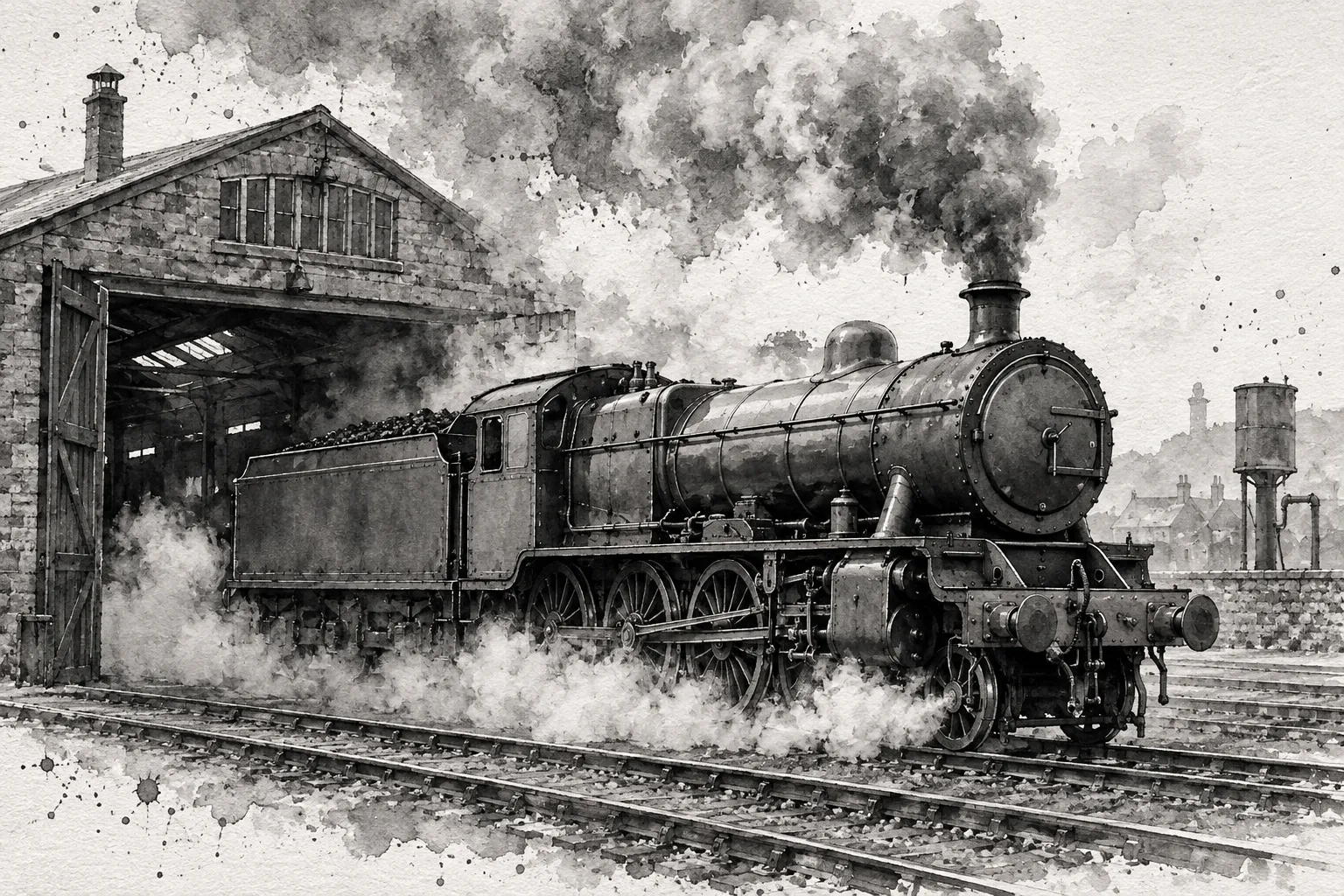
Ink and wash is black, white and greys only, with line work over loose translucent washes. Steam suits it better than almost any subject, because a cloud of exhaust is already a wash of grey. Shed scenes, coaling stages, water towers and yards come back looking drawn with care, and a black and white photograph loses nothing by going in. If the point of your picture is a colour, don't choose this one.
Oil-painting style: the sunset run
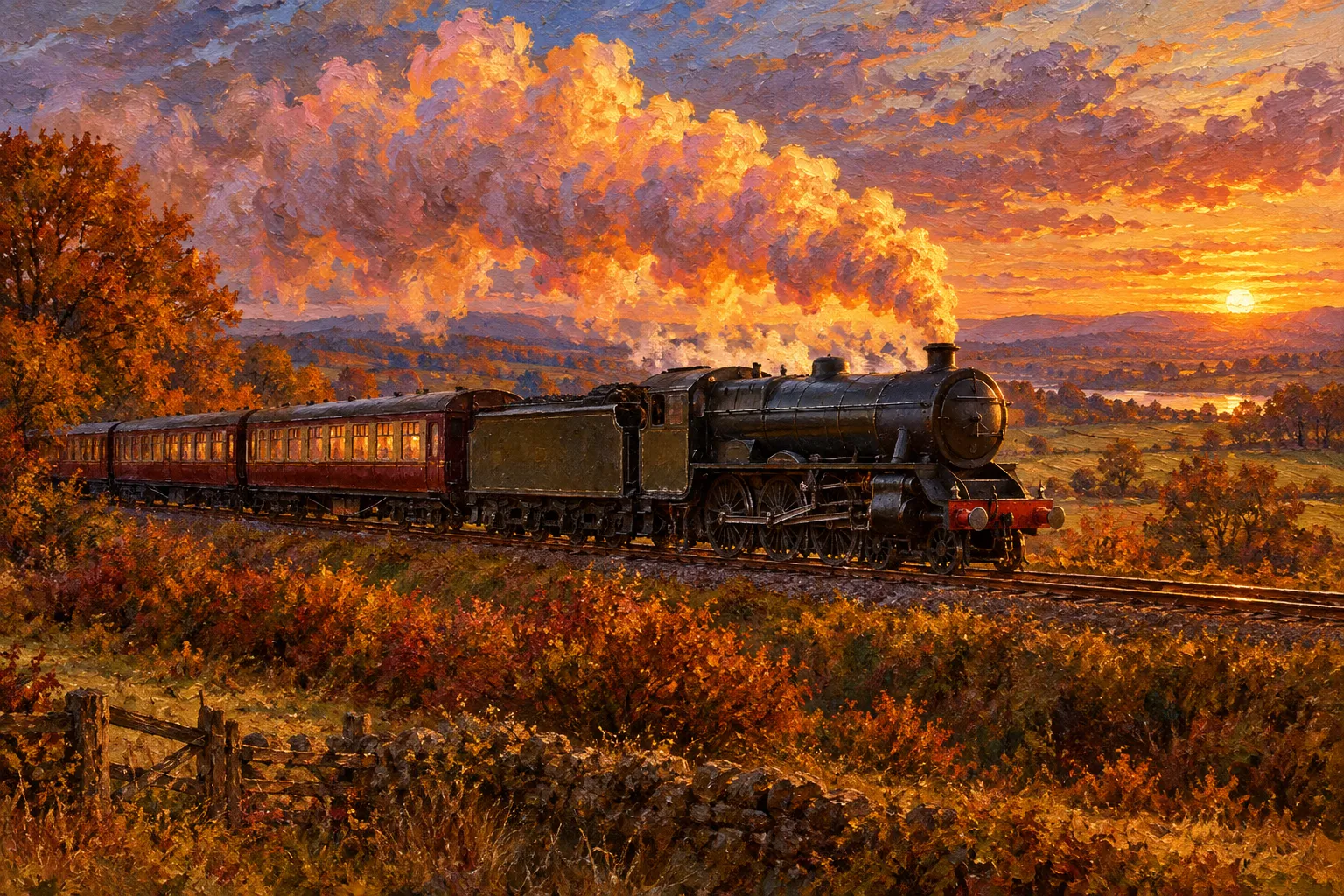
The oil-painting style adds visible brushwork, layered colour and a warm gallery light. Give it a train against a low sun and the exhaust picks up orange and pink in a way a photograph rarely holds. It wants mass and shadow, so a locomotive head-on or at three-quarters works far better than a distant side view. For more on this style alone, and on famous paintings of trains, read the studio styles guide.
Whose photograph it should be
The photograph needs to be yours, or one its owner has agreed you can use, and that responsibility sits with whoever uploads it. We will not add a company name, crest, nameplate or running number to any artwork, and we do not reproduce published paintings or posters.
Which style for which steam photograph
| Your photograph | Try first |
|---|---|
| Engine at a platform, soft light | Archival print |
| Sharp three-quarter view in sun | Collector grade |
| Train small in a wide landscape | Vintage poster style |
| Shed, yard or a black and white scan | Ink and wash |
| Sunset, autumn colour, heavy exhaust | Oil-painting style |
The table's a starting point, not a rule. Previews are free and watermarked, three a day, so the practical answer to a close call is to see your own photograph in both styles and pick.
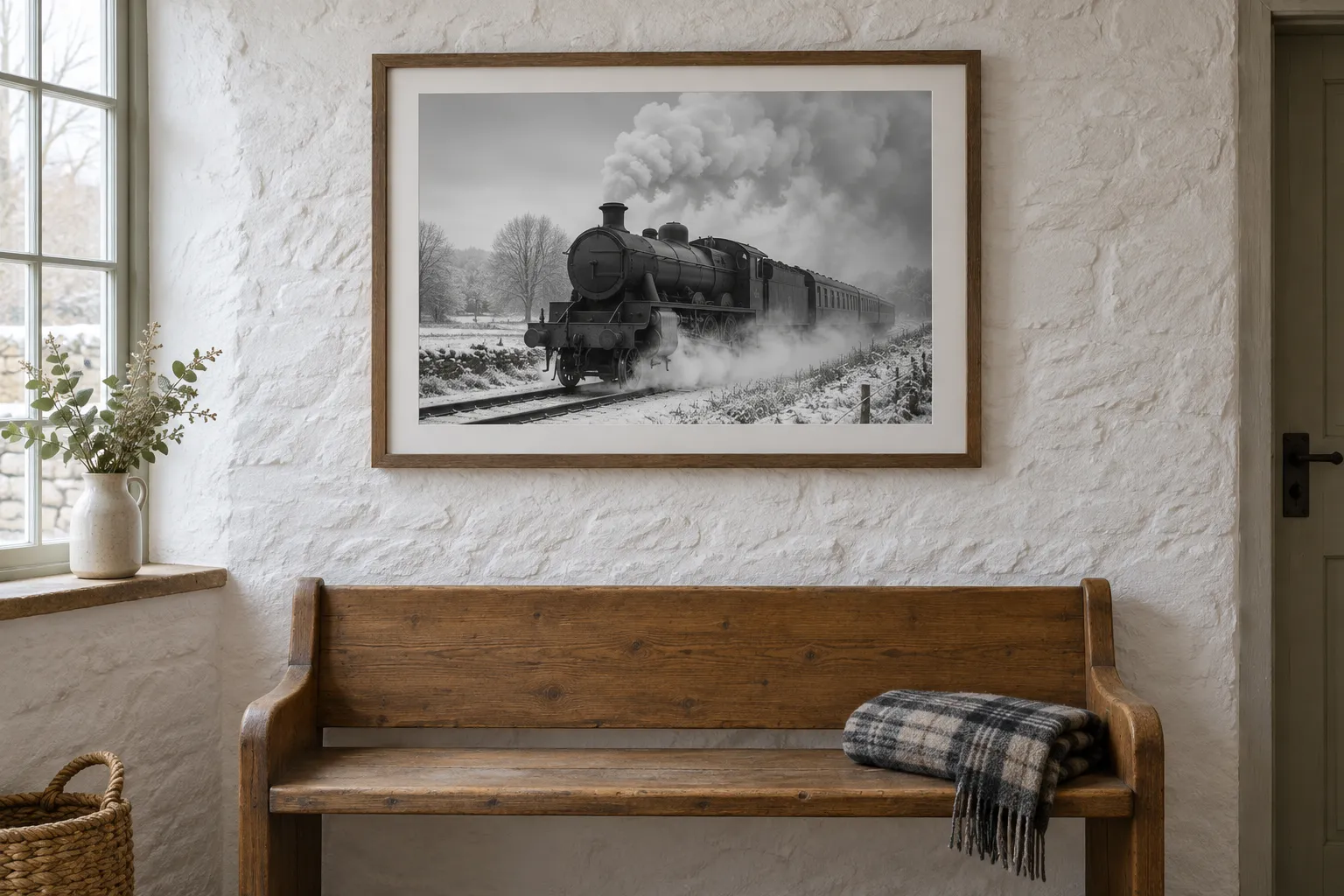
From your steam photograph to the wall
Upload the original file, confirm your email, choose a style and look at the watermarked result. Nothing is charged until you pick one, choose a format and size, and approve the framing. The finished file carries no watermark. The version you approve can go on paper anywhere from A4 up to 70x100 cm, behind glass in a frame at A3 or A2, on canvas between 30x40 and 60x80 cm, onto a metal or wood panel, or round a mug or a drinks bottle. It's made to order once you check out, and UK postage is free; allow 4 to 9 working days.
Before you upload, preparing the photograph explains why the camera original beats a copy sent by message, and the size guide says how large your file can go. Choosing for someone who follows preserved steam? Steam train gifts starts from the person instead of the picture.