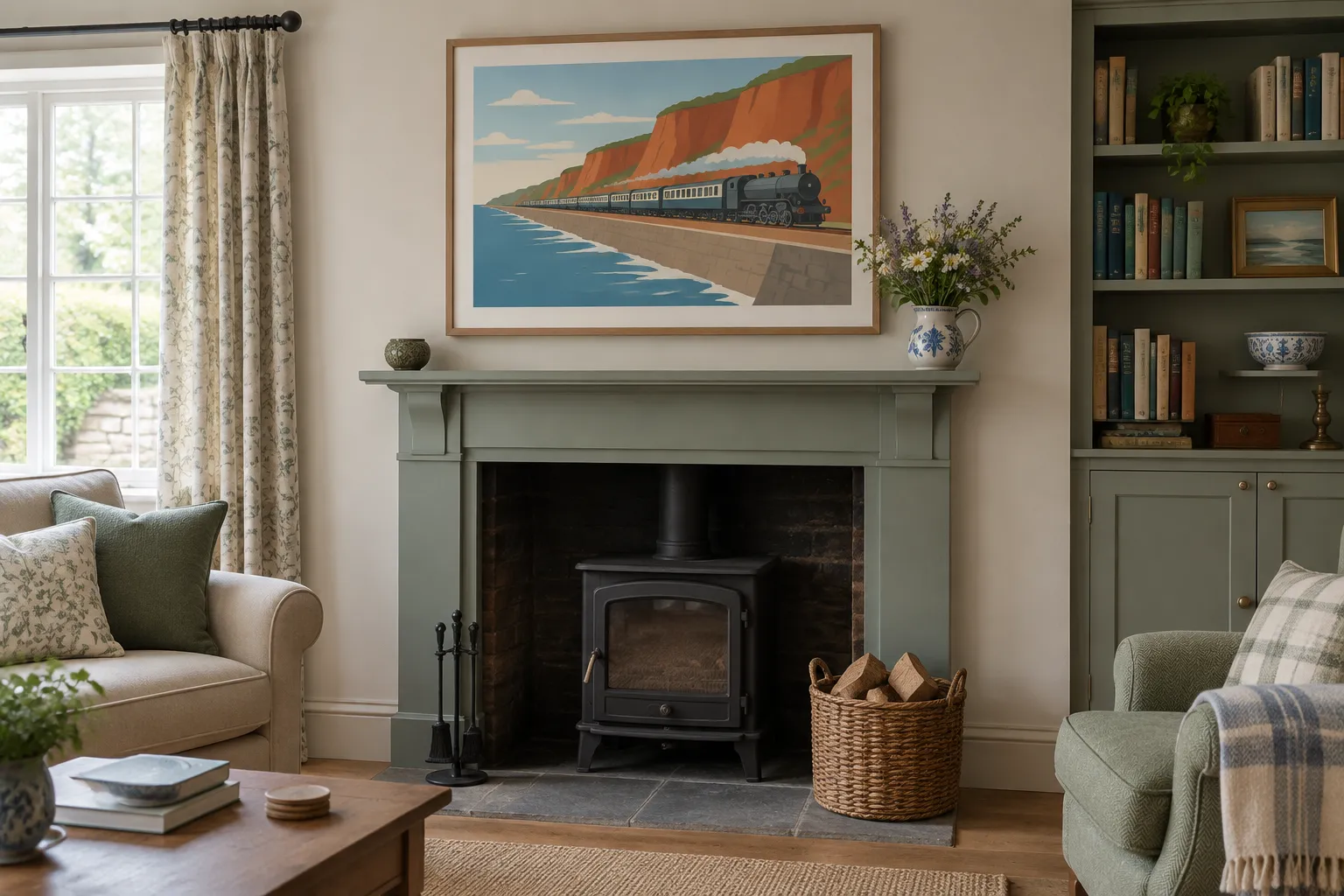
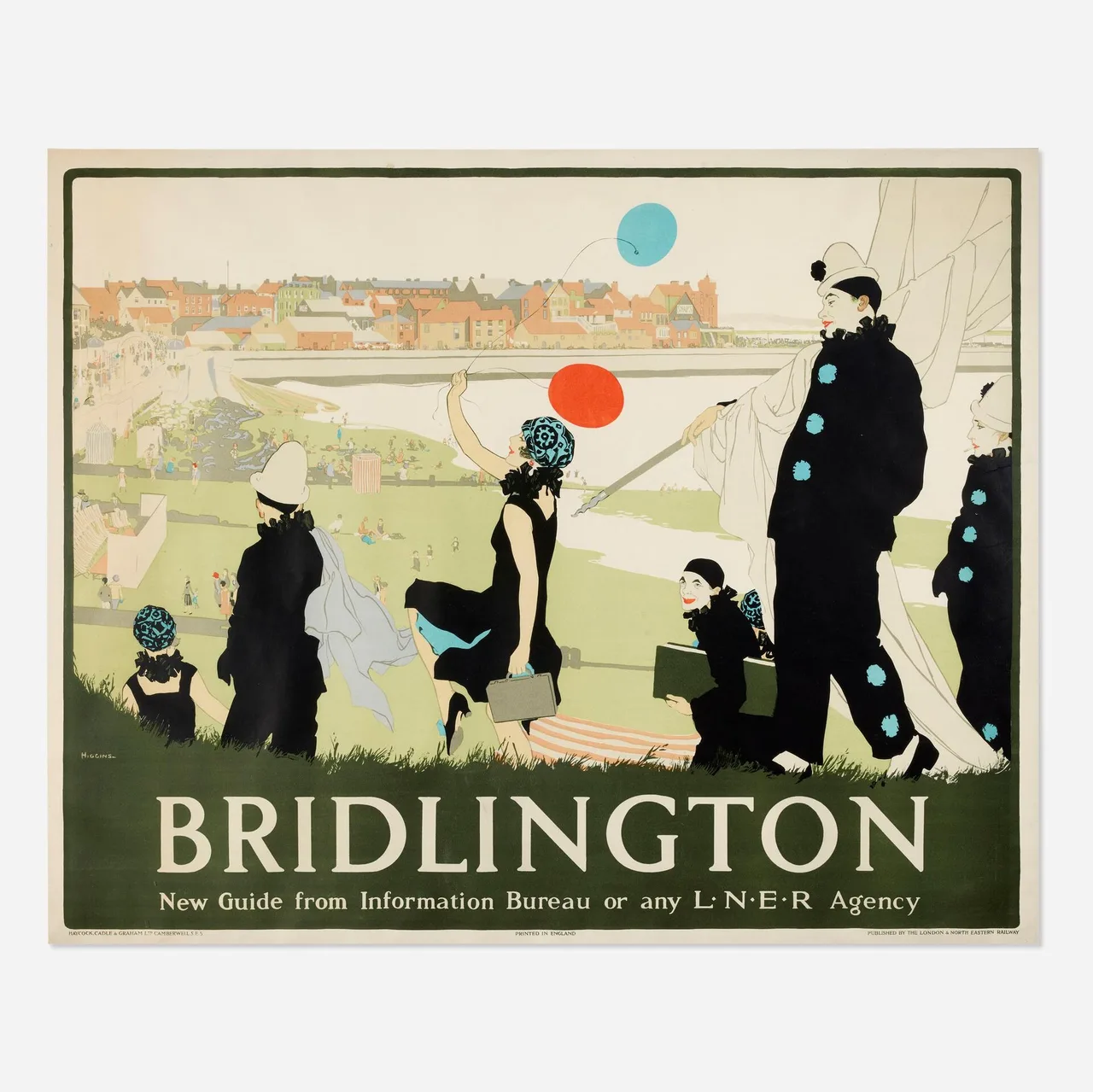
The company that kept its name
The Railways Act 1921 grouped Britain’s railways into four companies from 1923: the LMS, the LNER, the Southern and the Great Western. Three of those were brand new. The GWR wasn’t. The National Railway Museum’s own poster history puts it plainly: of the Big Four, the GWR alone had existed before 1923, and unlike the others “it did not suffer a major upheaval”. It took in the Cambrian and Taff Vale lines in Wales and the docks at Cardiff, Barry and Swansea, and carried on.
That cut both ways for its posters. The same history says the GWR “had never been noted for the quality of its posters”, leaned too hard on its printers and watched the pennies, and its early efforts after 1923 were “hardly inspiring”. The LNER, starting from scratch, overtook it fast. If you have only ever seen the famous GWR posters, that’s worth knowing: the good ones came later, and they came because the company decided to try (the National Railway Museum’s history of the British railway poster; Great Western Railway; Railways Act 1921, read 22 October 2026).
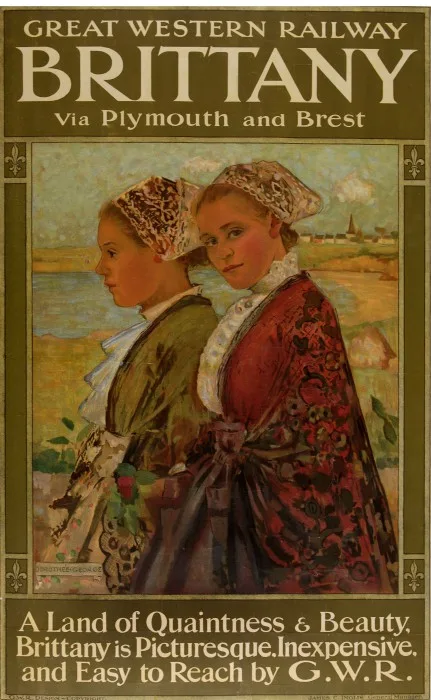
The Cornish Riviera, a name chosen by readers
The idea at the heart of GWR advertising is older than any of its famous posters. On 1 July 1904 the company started a fast summer express from Paddington to Penzance, leaving at 10.10 and reaching Plymouth in 4 hours 25 minutes. It needed a name, so the company ran a competition in the August 1904 Railway Magazine. There were 1,286 entries. Two of them, “The Cornish Riviera Limited” and “The Riviera Express”, were stitched together, and the prize was three guineas. Railwaymen still called it “The Limited”.
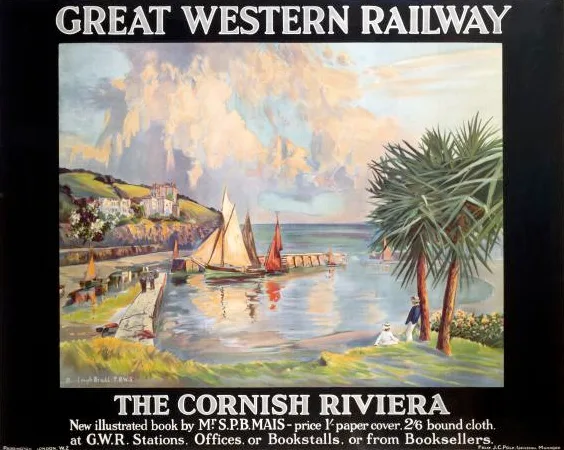
That one phrase did a huge amount of work. It told Londoners that Cornwall was their own Mediterranean, a day away by train, and the posters spent the next thirty years drawing exactly that: harbours, palms and blue water. Louis Burleigh Bruhl’s The Cornish Riviera, from about 1928, is a good example. Look closely and it isn’t even selling a ticket. It advertises a book of the same name by S. P. B. Mais, “price 1/- paper cover” from GWR stations and bookstalls (Cornish Riviera Express; The Cornish Riviera, Science Museum Group, read 22 October 2026).
A railway that sold books
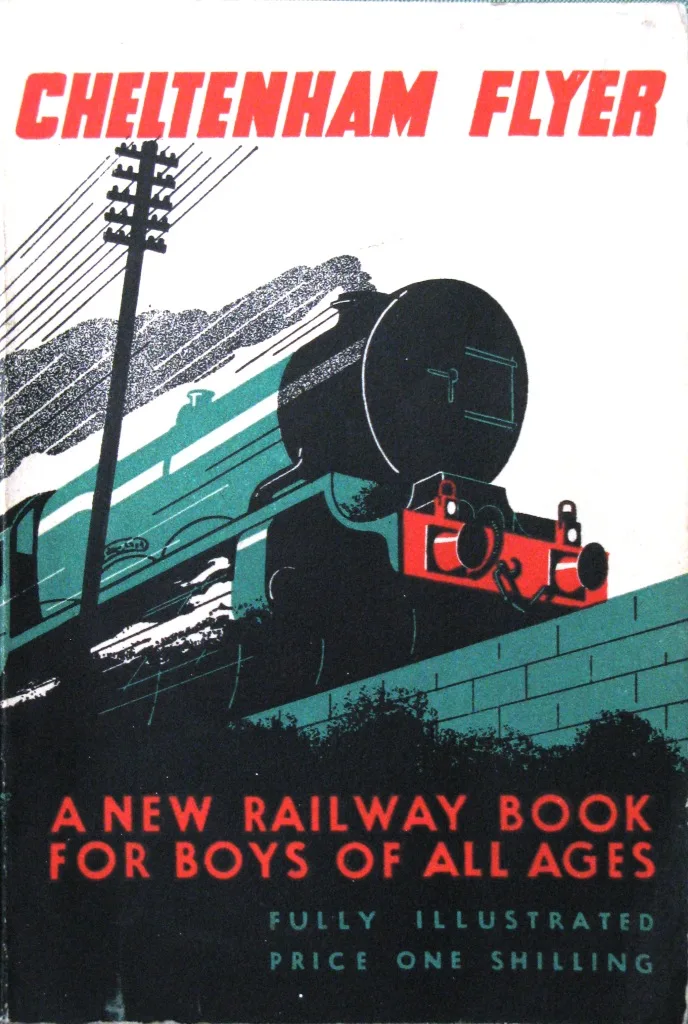
That is the other thing a GWR collector looks for. The company published its own books and sold them for a shilling, and some of them are as well designed as the posters. Cheltenham Flyer, the 1932 book on this page, was pitched as “a new railway book for boys of all ages”. The name was the popular nickname of the Cheltenham Spa Express. From July 1929 its run from Swindon to Paddington was timed at 70 minutes and the GWR’s publicity called it “the fastest train in the world”. On 6 June 1932, behind Castle class No. 5006 Tregenna Castle, it covered that stretch in 56 minutes 47 seconds, an average of 81.6mph. The cover does in three colours what a poster does: one engine, one embankment, a few telegraph wires, and nothing you have to squint at (Cheltenham Flyer, read 22 October 2026).
When the GWR got bold
The museum’s history picks out three moments when the Great Western stopped playing safe. In 1933 it commissioned six posters of Devon and Cornwall from the American designer Edward McKnight Kauffer, then the darling of the critics. They “caused much comment but were not to everyone’s taste”. In 1935 it celebrated its own centenary with Murray Secretan’s 100 Years of Progress, 1835–1935. And in 1936 Ronald Lampitt drew a series in an unusual mosaic style.
The one most people know came last. Speed to the West, from 1939, was drawn by Charles Mayo, who worked in the GWR’s own publicity department, and shows a King class engine at full tilt with a holiday train behind. The museum calls “Speed to the West” the company’s keynote. By then the war was months away, and the hoardings were about to be cleared (the National Railway Museum’s history of the British railway poster, read 22 October 2026).
After 1948, and where to see the originals
Nationalisation in 1948 turned the GWR into the Western Region of British Railways, and the seaside posters carried straight on. Frank Wootton’s Torquay in Glorious Devon, from 1950, is one of the first, and our British Rail posters guide follows the region on from there. Originals are in the national collection, held by the railway museum in York, and the Science Museum Group lets you browse its railway posters online at no cost. Search it for Bruhl, Kauffer or Mayo and you can see every poster on this page and plenty more (Torquay in Glorious Devon; Science Museum Group, railway posters, read 22 October 2026).
Your photograph in the western manner
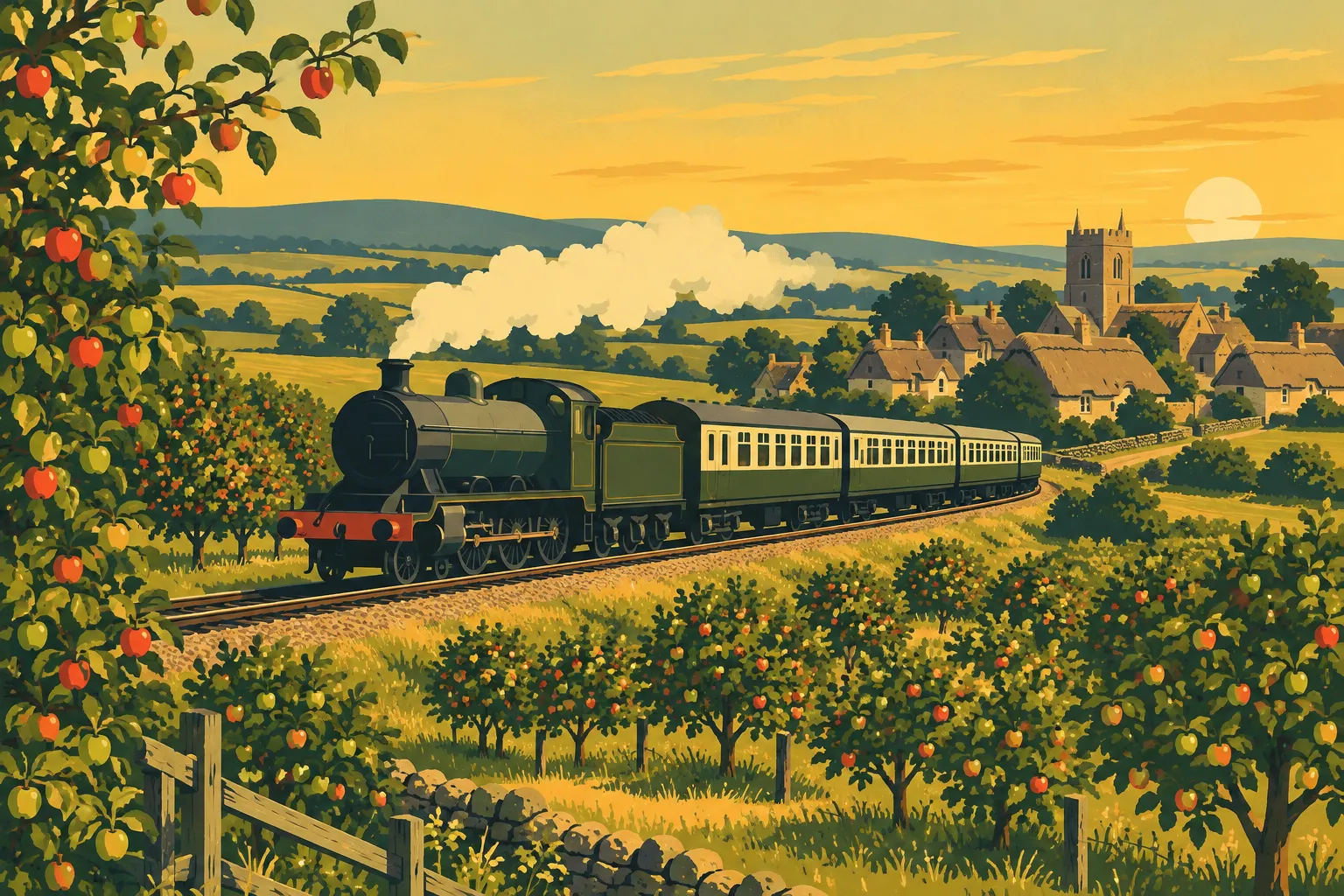
We don’t sell or copy GWR posters. Our part is to redraw a photograph of yours in that tradition. The western look wants space and light: a coast, a valley with the line running through it, a station sitting in its landscape. A photo from one of the preserved western lines, such as the Severn Valley or the West Somerset, suits it well, and so does a holiday snap that happens to catch a train. The restyle flattens the colour, simplifies the detail and gives the sky its share of the sheet. Nothing is printed until you have seen the preview. Before you upload, preparing the photograph sets out what the file has to have.