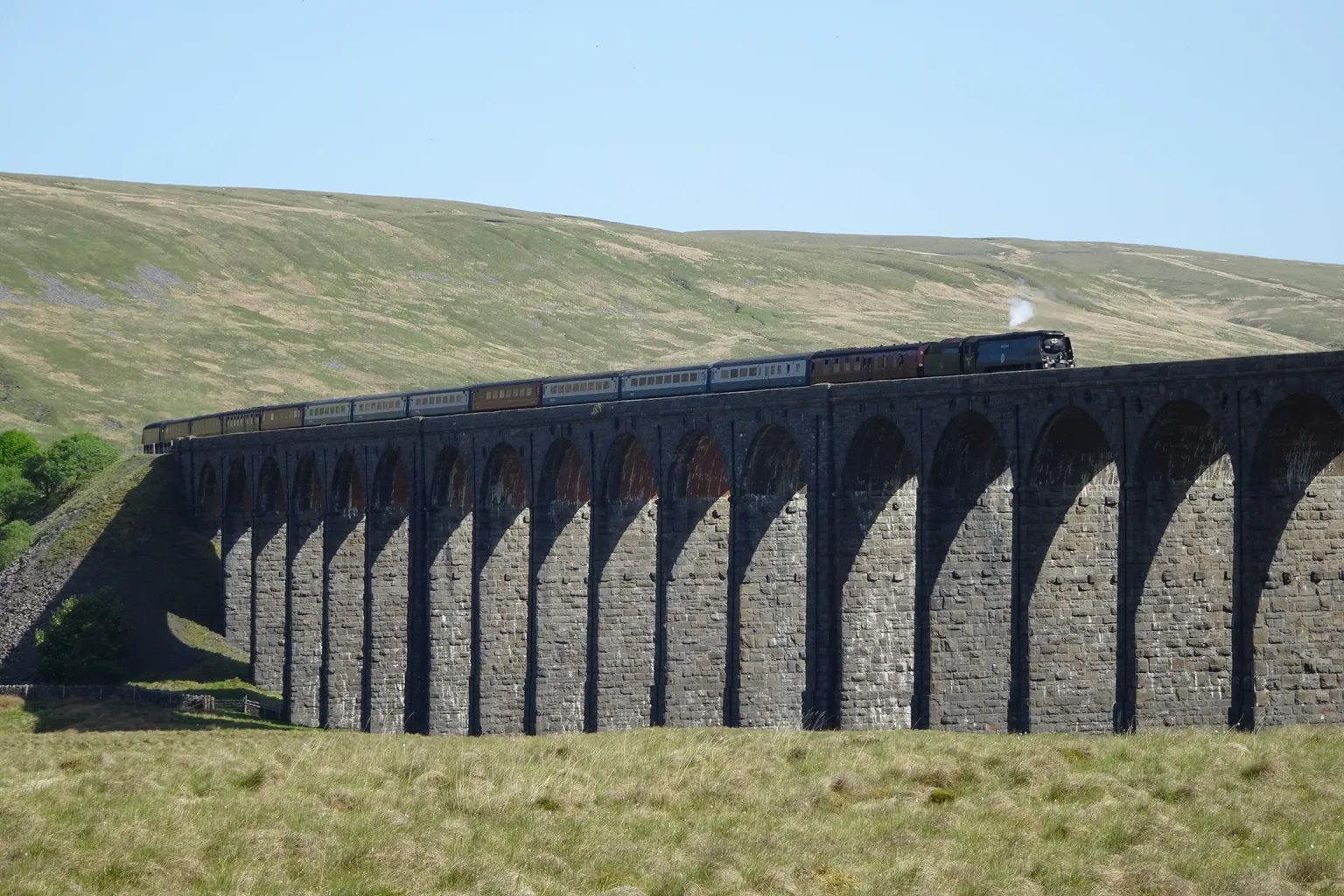
The route and the 2026 season
The operator's figures: Fort William to Mallaig return, 84 miles, with a morning train from Monday 1 June to Friday 23 October 2026, seven days a week, and an afternoon train from Wednesday 10 June to Friday 25 September 2026 (West Coast Railways, read 21 October 2026). The morning train leaves Fort William at 10:15 and reaches Mallaig at 12:25; the return leaves Mallaig at 14:10 and is back at 16:03 (timetables). Tickets are returns only. On the way it threads the villages of Lochailort, Arisaig and Morar, and at Mallaig “there is an hour and a half here”.
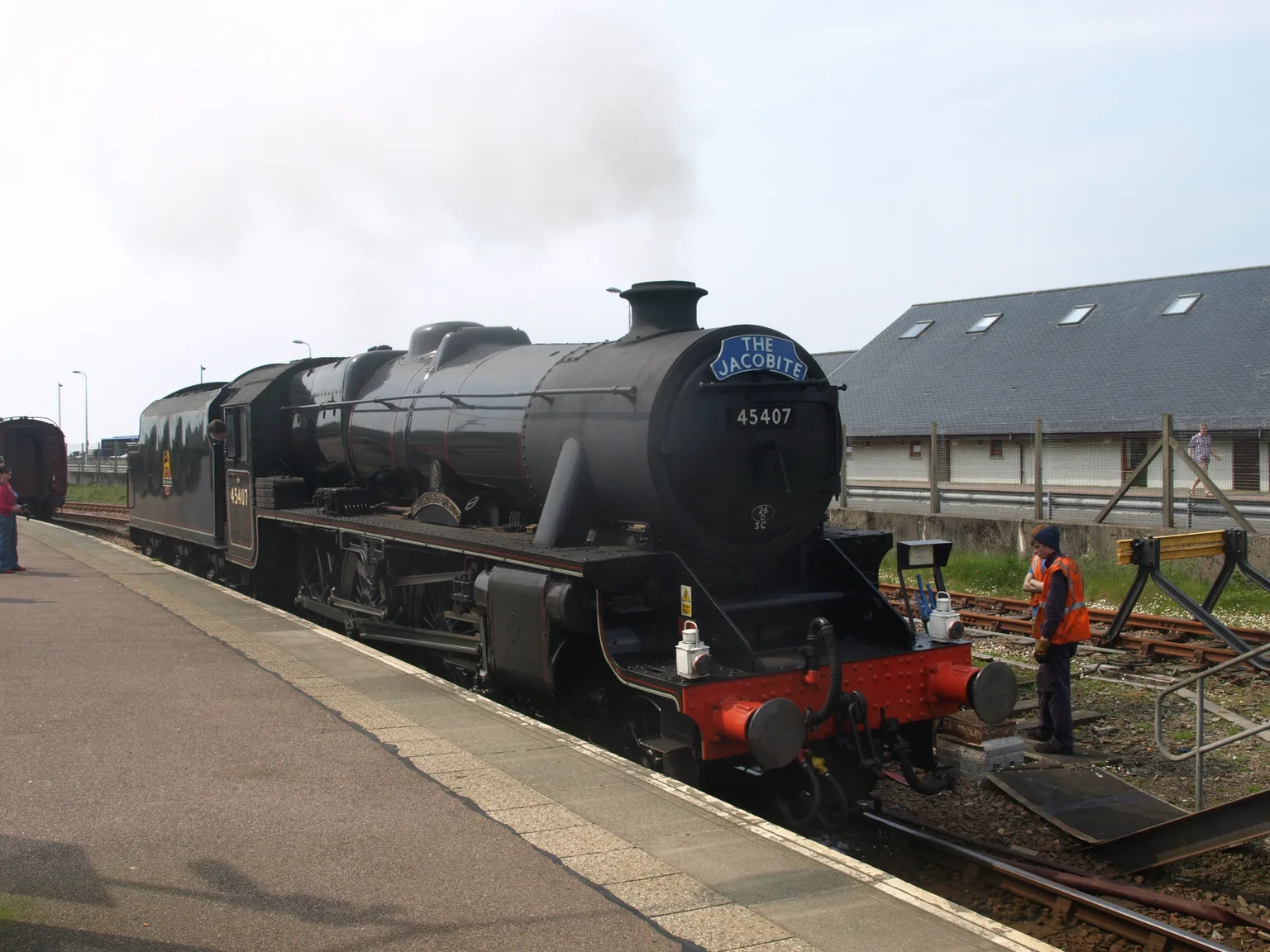
The engine is often a Stanier Black Five: the operator names No. 45407, The Lancashire Fusilier, as a regular (West Coast Railways). The journey starts beside Ben Nevis, and the operator quotes Wanderlust magazine naming it the greatest railway journey (WCR).
The Glenfinnan Viaduct
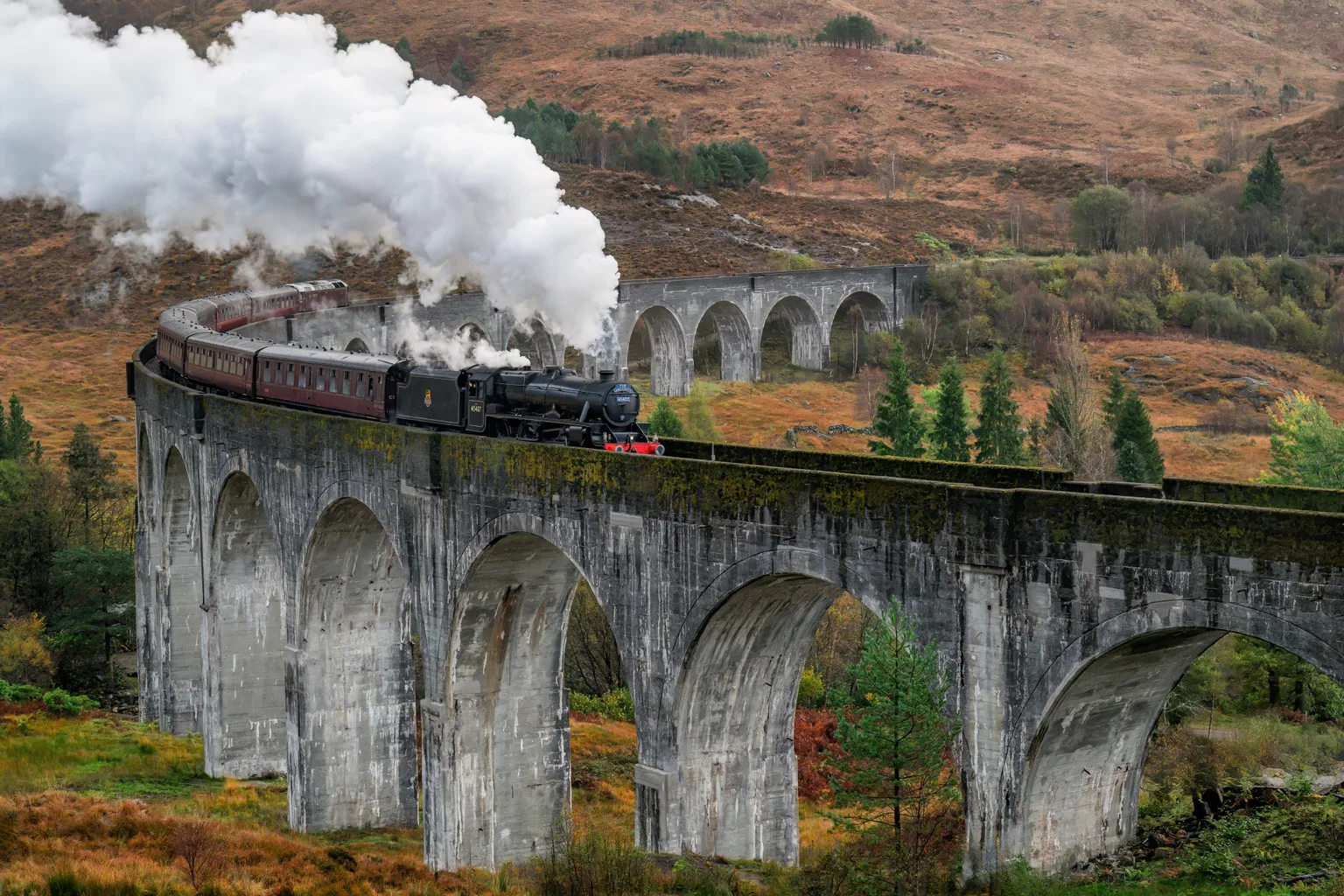
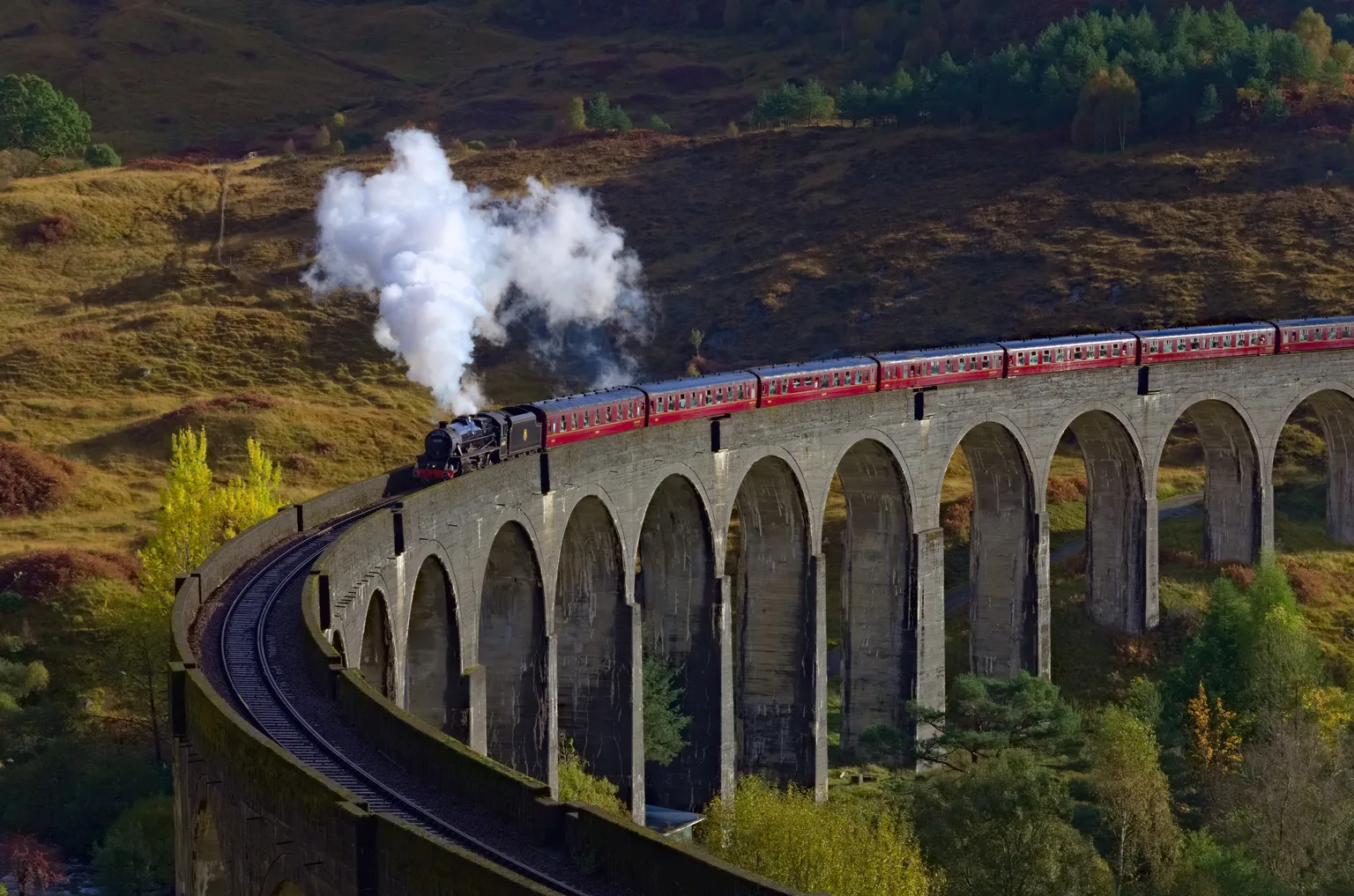
Historic Environment Scotland lists the viaduct at Category A and describes a “long 21 arched concrete viaduct built on curve”, 416 yards (380m) long (listing LB310, read 21 October 2026). The Highland Historic Environment Record dates the line's opening to 1 April 1901, says the viaduct was built by Robert McAlpine & Sons of Glasgow with pioneering concrete construction, and calls it the longest concrete railway bridge in Scotland (Highland HER). The operator adds that the arches curve “a hundred feet above the River Finnan” (WCR).
Glenfinnan station and its museum
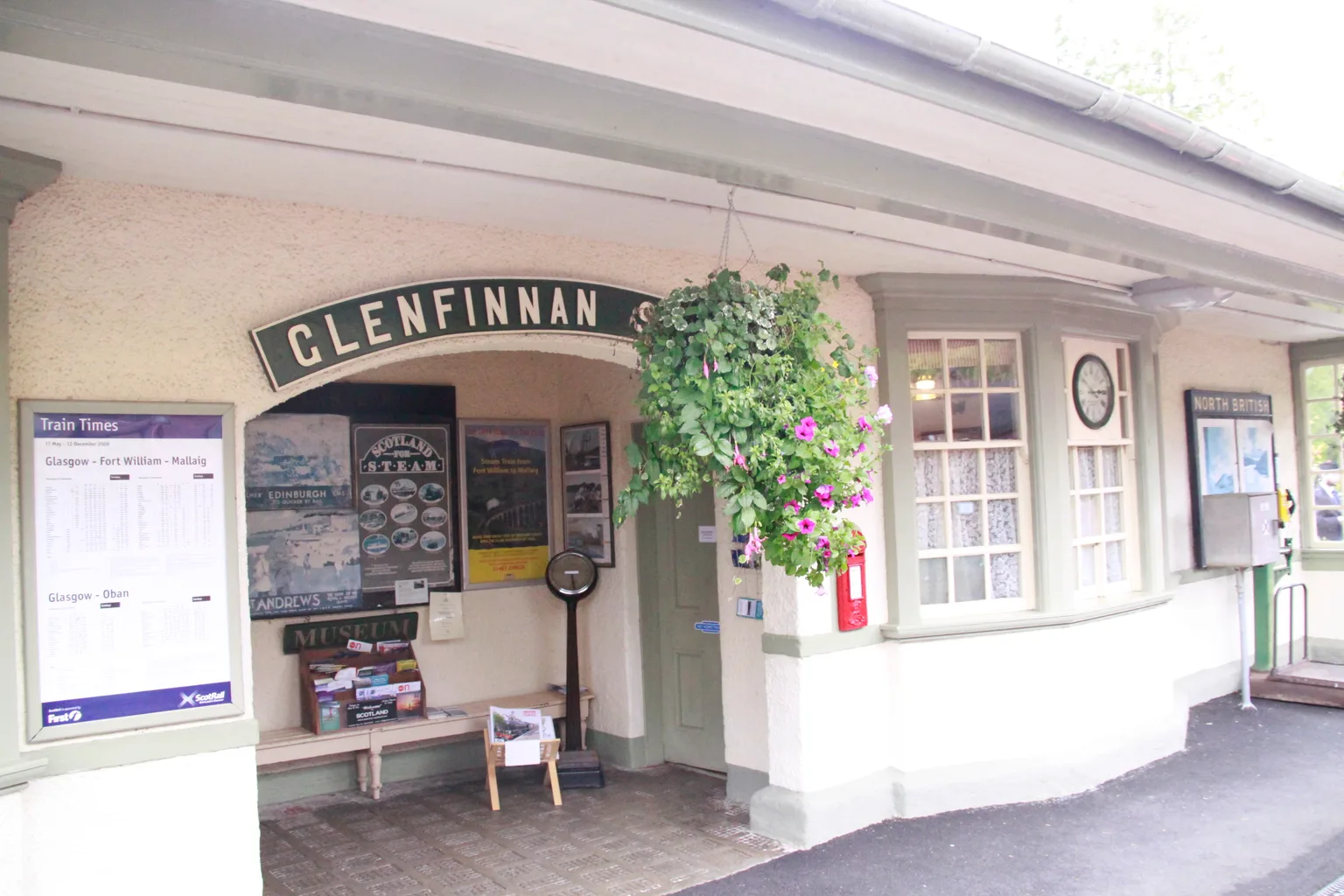
The train calls at Glenfinnan, time permitting. In the station building, Glenfinnan Station Museum was set up in 1991 and is run by a local charitable trust with volunteers from the Friends of Glenfinnan Station (museum history, read 21 October 2026). It's worth a visit in its own right if you come by road and watch the train cross.
Morar and Mallaig
Past Arisaig the line reaches Morar, and the operator points out that Loch Morar is “the deepest freshwater loch” in the country and its river among the shortest (WCR). Mallaig is the end of the line, and the ninety minutes there leave time for lunch in the village before the engine takes you back.
The other viaducts
Glenfinnan is not the only concrete landmark on the extension. Borrodale viaduct, also Category A, has a centre span of 127 feet 6 inches, and Historic Environment Scotland notes that “in 1901 this viaduct was the longest concrete span in the world” (listing LB302, read 21 October 2026). The Highland HER describes the Loch nan Uamh viaduct as mass concrete, built with the extension's standard 50 ft spans (Highland HER). Beyond them, the operator says Arisaig is “the most westerly mainland railway station in Britain”, and that steam returned to the line in 1984 (West Coast Railways).
Tickets and classes
Adult day returns were listed at £116 in First Class and £76 in Standard (fare prices, read 21 October 2026). First Class includes a complimentary tea or coffee on each part of the journey; in Standard and compartments no food or drinks are included, though there is a buffet carriage (classes and carriages). The Glenfinnan stop isn't guaranteed: if the timetable allows, there is a pause long enough to stretch your legs (WCR).
Photographing the line
At Glenfinnan, use the Glenfinnan Viaduct Trail: Network Rail says its paths give dedicated viewing spots, and that anyone caught on the line can be removed, fined and prosecuted. The train itself slows on the crossing, time permitting, which helps if you’re on board with a camera.
Sources: Network Rail, Glenfinnan safety; West Coast Railways (read 21 October 2026).
Got a favourite frame from the day? Print it untouched, or see it first in one of our studio styles.