An A4 from Doncaster
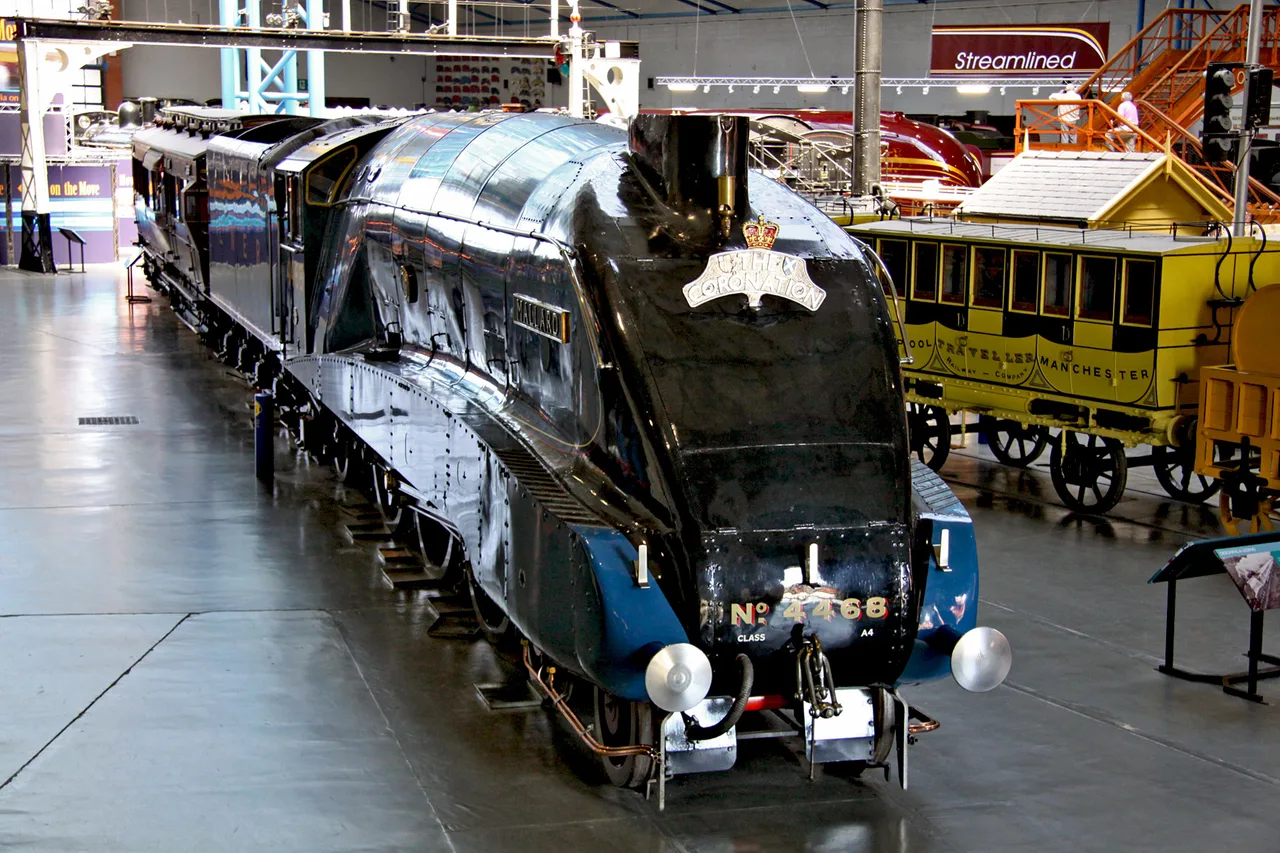
Mallard is an LNER Class A4 Pacific, No. 4468, built at Doncaster Railway Works in 1938 to Gresley’s design (Science Museum Group collection, read 23 October 2026). It was the first A4 fitted with a double Kylchap blastpipe and chimney. (NRM blog). Our Gresley guide covers the class and its designer.

A brake test, officially
On 3 July 1938 Mallard ran from King’s Cross to Grantham on what was officially a brake test (NRM blog). With Driver Joe Duddington, Fireman Tommy Bray and Inspector Sam Jenkins on board, it raced down Stoke Bank at 126mph to set a new world speed record (Science Museum blog). A dynamometer car went with it; the museum says one was needed to provide the accuracy for the record (NRM blog).
The LNER first claimed 125mph, and later analysis showed 126. Either figure beat the 124.5mph held by the German locomotive 05 002. Duddington believed the engine could reach 130mph, and a further attempt planned for September 1939 was stopped by the war (collection record).

After the record
Mallard was retired in 1963 and preserved in 1964 by the British Transport Commission. It joined the National Railway Museum’s collection in 1975, was restored to working order at York between 1982 and 1988, and made a few runs until 1989 (collection record). It has been at the museum since it opened in 1975 (Mallard 75). For the record’s 75th year in 2013 the museum brought all six surviving A4s together, and the Great Gathering at York that July drew 140,000 visitors.
Gresley built 35 A4s (Science Museum blog). If you want to travel behind one, 60007 Sir Nigel Gresley still runs tours from Crewe on the dates its owners list.
Seeing Mallard
The museum’s top ten says that as you enter the Great Hall you can “Feast your eyes on Mallard” (NRM top 10). The National Railway Museum is on Leeman Road, York, YO26 4XJ, open every day from 10:00 to 17:00 with last entry at 16:30, closed from 24 to 26 December. Entry is free; you can book a free ticket online or walk up on the day (visit). The Great Hall has the shop and takes cash and card, and a new Central Hall is being built between Station Hall and the Great Hall. The museum notes that objects can move, so check before a long trip. Its collection also holds photographs of the record run by Max Hoather, dated 3 July 1938 (Science Museum Group).

Photographing Mallard
The museum invites you to stand face to face with the world’s fastest steam locomotive (visit), and the nose is the shot: low, central, the curve filling the frame. Indoor light is soft, so hold the phone steady. A head-on Mallard prints strikingly in our ink and wash style.
Sources: Science Museum Group collection, Mallard; Science Museum blog (both read 23 October 2026).