The prototype of 1972
The prototype power car 41001 was built in 1972, along with 41002, by British Rail Engineering Limited at Crewe (Science Museum Group, 41001, read 23 October 2026). In 1973 the prototype train reached 143.2mph between York and Darlington, a UK rail record and a world diesel record (125 Group). 41001 entered the National Collection in 1988.
It had been a static exhibit for over 25 years when the 125 Group restored it to working order under Project Miller. It then ran for almost five years on the Great Central Railway (Nottingham), and went back to the museum in early November 2019 when the agreement ended (125 Group). Today it sits in the Main Hall at Locomotion in Shildon.
Into service at 125mph
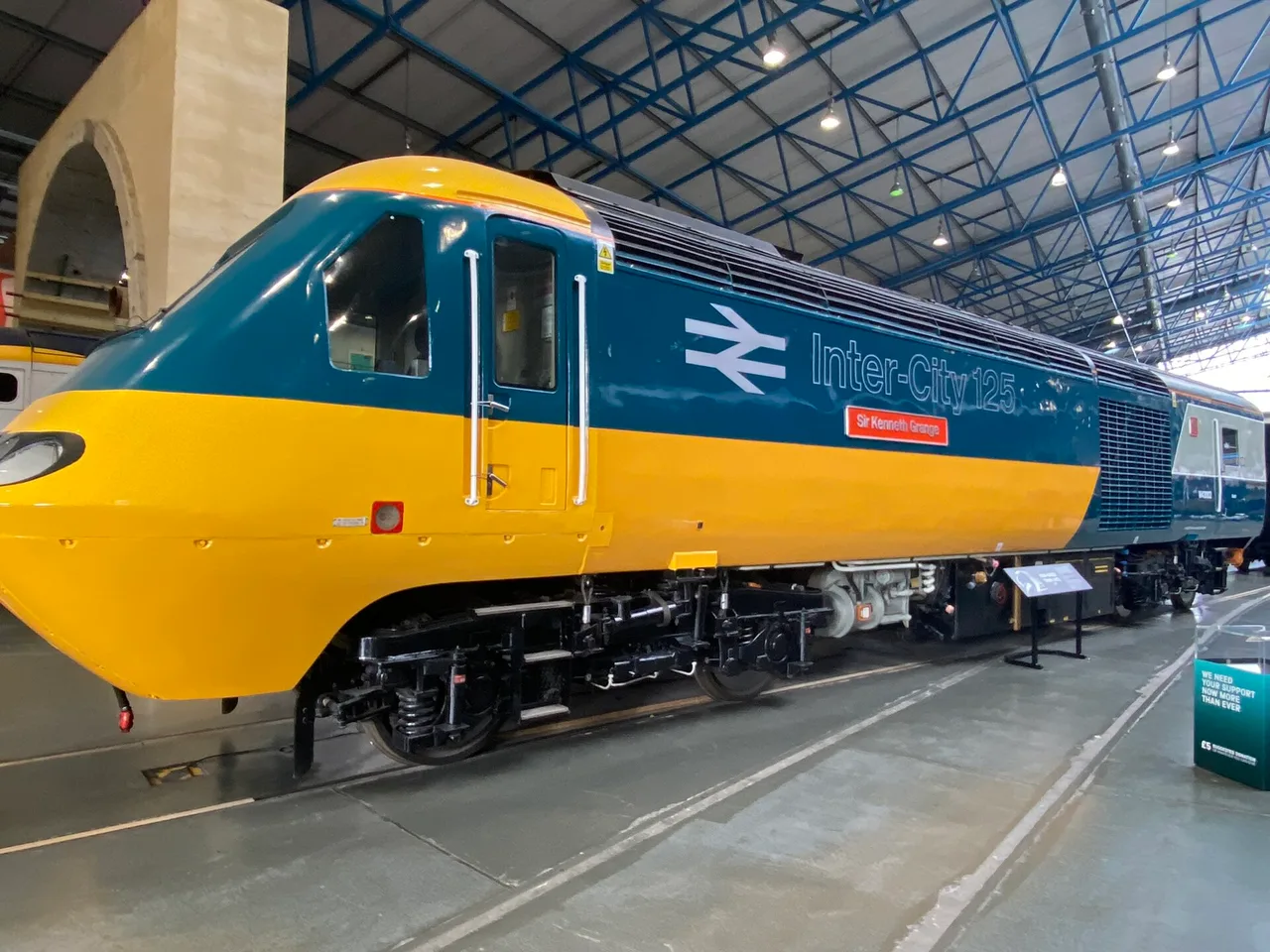
43002, the first production power car, was built by BREL at Crewe in 1976, the year the HST was introduced in its original yellow and blue; people called it the Flying Banana (Science Museum Group, 43002). The first public trains at 125mph ran on 4 October 1976 (125 Group). Sir Kenneth Grange designed the wedge-shaped nose, and in 2016 43002 was named after him. On 1 November 1987 an HST set a world diesel speed record of 148mph.
Where one still runs
In England the long run ended in December 2025. Railnews reported that GWR’s Castle HSTs made their last trips on Saturday 13 December, finishing between Plymouth and Penzance, and were replaced mainly by Class 175s from Wales (Railnews, 15 December 2025). In Scotland the 125 Group says HSTs are still used on selected ScotRail passenger services (125 Group). ScotRail has ordered 22 five-car Class 222 trains to replace them, the first due in service later in 2027 and all 22 by the end of 2028 (Railnews, 19 March 2026).
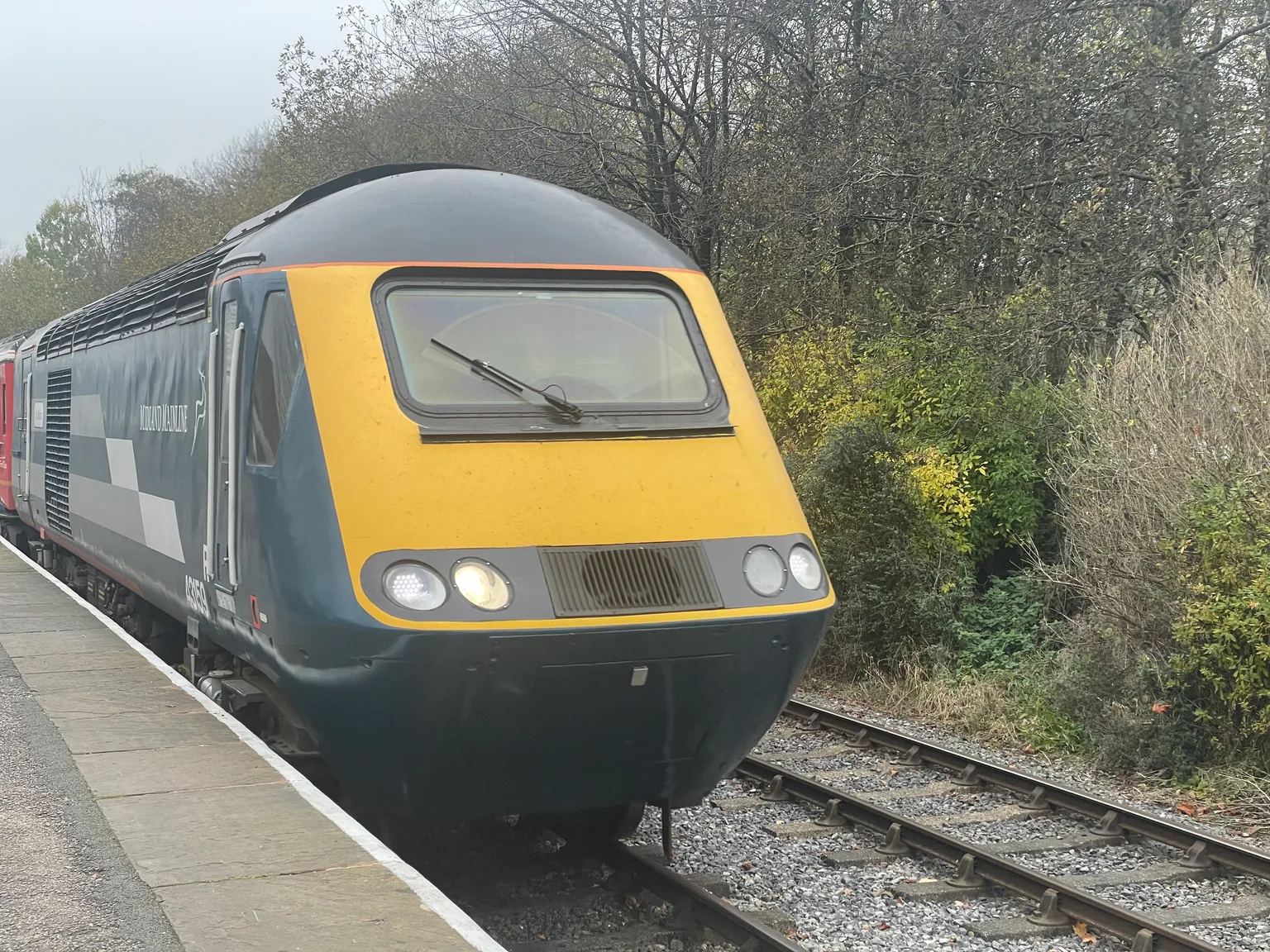
Charter firms still run HST sets, among them Locomotive Services Limited for the Midland Pullman. The 125 Group keeps power cars 43025, 43044, 43048, 43089 and 43159, based mainly on the East Lancashire Railway (about the 125 Group). For the 50th anniversary 43159 was repainted in its world-record-breaker livery, and in October 2026 the group ran two anniversary tours, one of them through Box Tunnel to retrace the first day of 125mph running (125 Group).
Seeing one in a museum
43002 Sir Kenneth Grange is in the Great Hall of the National Railway Museum in York, listed among its top ten (NRM top 10). The museum is on Leeman Road, YO26 4XJ, open daily from 10:00 to 17:00, and free to enter (visit). The prototype 41001 is at Locomotion in Shildon. Both collection records ask visitors to check before travelling.
Photographing an HST
The Grange nose is the part people know, so take it from a low three-quarter angle. A yellow nose against a dark sky looks great on our photo bottle or a framed print.
Sources: Science Museum Group, power car 43002; 125 Group, prototype HST (both read 23 October 2026).