A round trip from Cranmore
“Our line is 2.5 miles long and meanders through the Mendip countryside” (ESR FAQs, read 23 October 2026). Trains leave Cranmore towards Shepton Mallet and reach the Mendip Vale platform, where there is no station and nothing to visit, then come back. The railway puts the round trip at 35 to 40 minutes. East of Cranmore the track carries on to the main line near Witham, but Cranmore is as far as the heritage trains go.
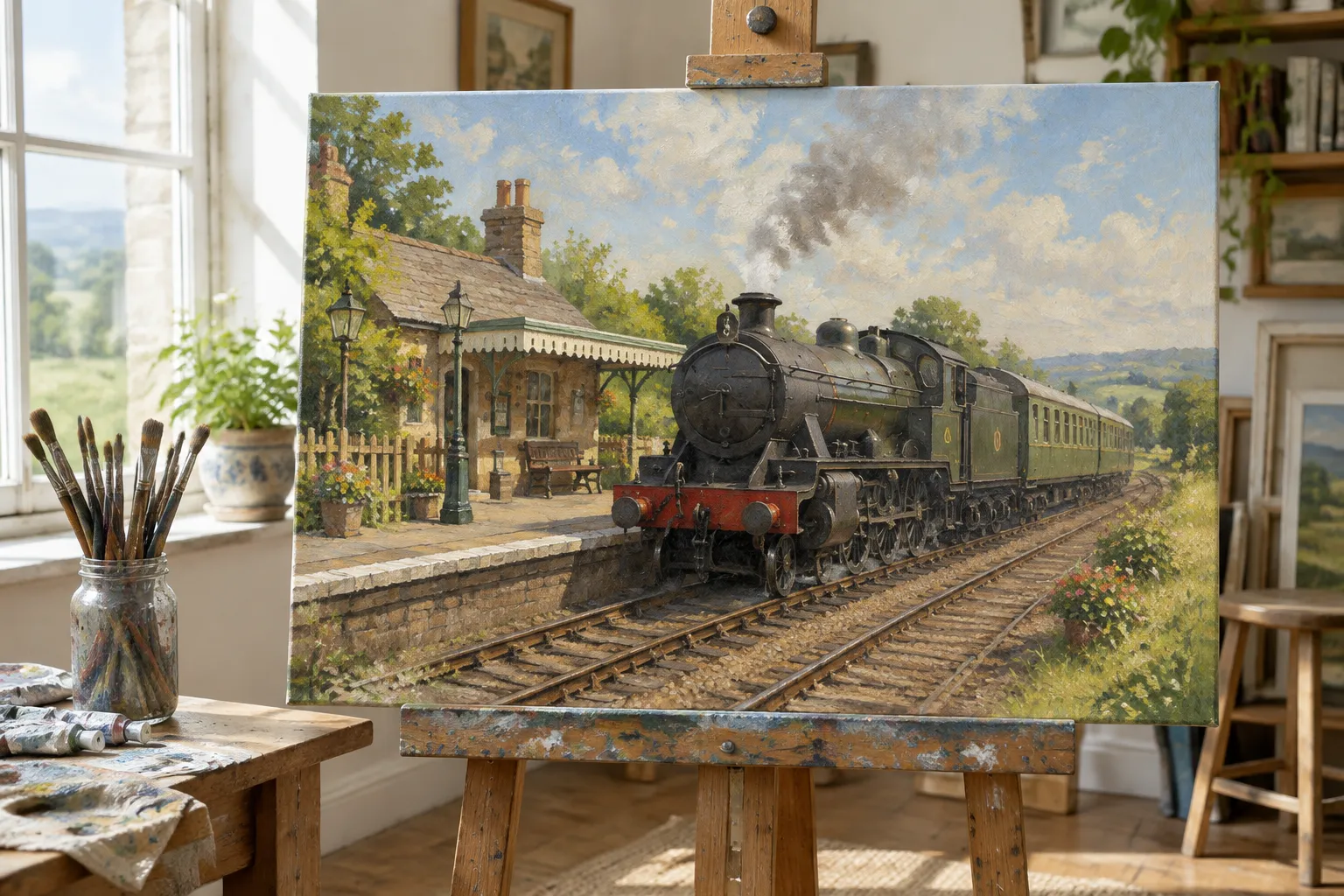
The painter who found a station
The railway owes its existence to David Shepherd, who was looking for a home for two engines he had acquired, Black Prince and The Green Knight. He found it at Cranmore and bought it (ESR history). The heritage railway officially opened to the public on 1 August 1974, and the railway marked its 160th birthday on 9 November 2018. An exhibition on a restored carriage at the cattle dock shows his work, and the railway notes that his subjects went well beyond elephants and steam trains (David Shepherd exhibition).
Brunel surveyed it
The original line opened in 1858, running from Witham to Shepton Mallet under an 1856 Act of Parliament, with Isambard Kingdom Brunel as surveyor. The first train was hauled by an engine called Homer. The line was later extended to Wells, converted to standard gauge in 1874, and closed in July 1964, a year after the last passengers; after that only stone trains ran from Dulcote (history). One small wrinkle: the railway’s About page gives 1855 for the start, while its history page gives the 1858 opening.
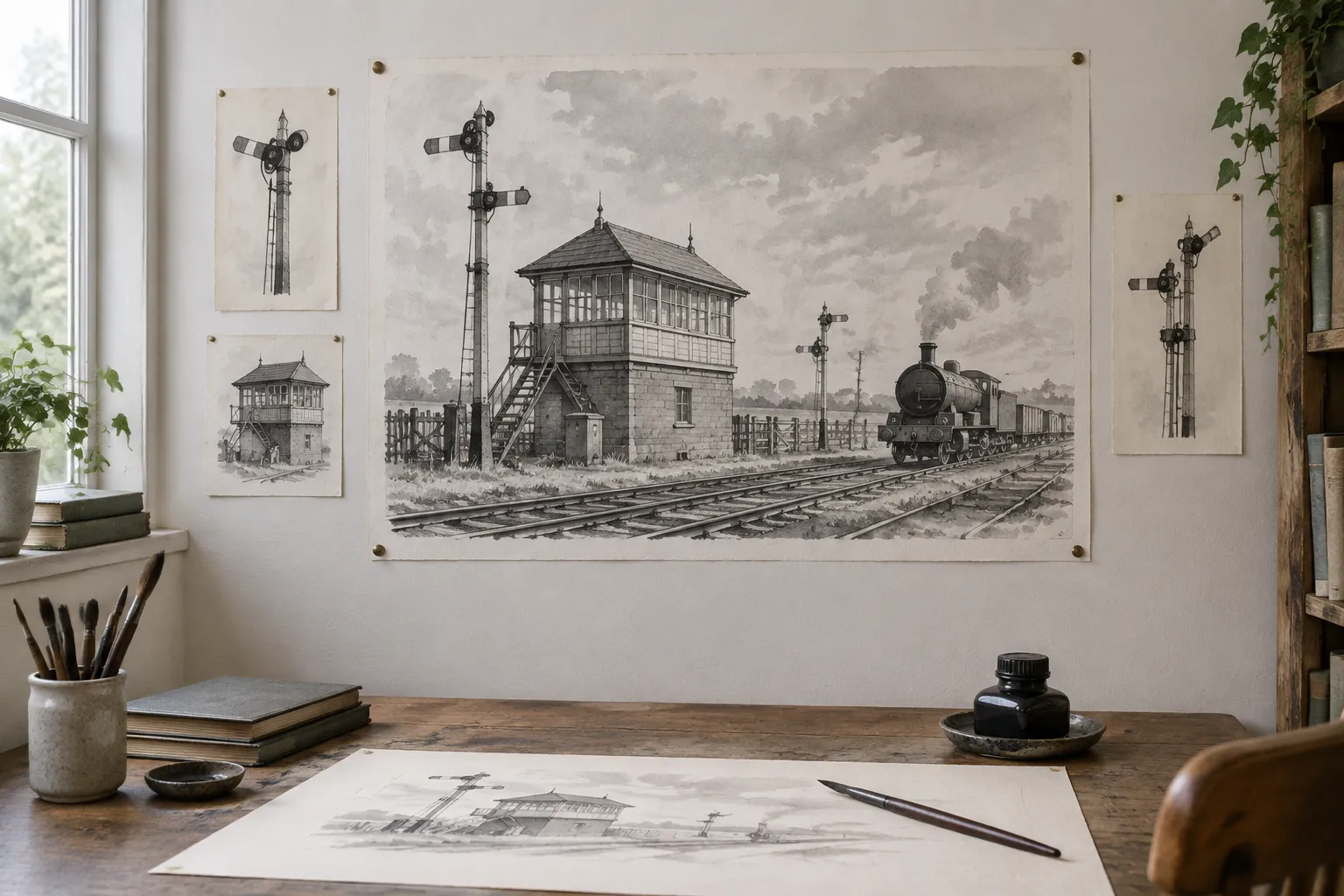
The engines
The two main engines running the trains through the season are 4555 and Ivatt 46447, and the smaller 1719 Lady Nan usually works the Steaming for Fifteen days (locomotives and stock). 46447 had a successful first steam test on 17 May 2026 after its overhaul (news).
Planning the day
Steam trains run from the middle of March until October at weekends, with Wednesdays and then Thursdays added as the season goes on. On days in steam the ticket office, shop and café open from 9.30am to 3.30pm (opening times). There is a large free car park with no height limit, and dogs travel free on leads but not on all dining trains (FAQs). Cranmore is 3 miles from Shepton Mallet and 6 from Frome, signed off the A361; the nearest main line stations, Frome and Castle Cary, are both around 9 miles away (find us).
In the same county, the West Somerset Railway runs from Bishops Lydeard to Minehead.
Photographing the line
The refurbished signal box is open every running day, and you can visit the engine shed to see restoration under way (visits). On the Ride and Ramble walk back there are good views across the Somerset countryside. For a line founded by a painter, our oil painting style seems the fitting way to print your photograph.
Sources: East Somerset Railway history; ESR FAQs (both read 23 October 2026).
