
How to use it
Tick what the signal is showing. The answer gives its name, what it means and what the driver should expect at the next signal. For the four main colours you also see where it sits in the run of signals leading up to a red.
Four colours, in order
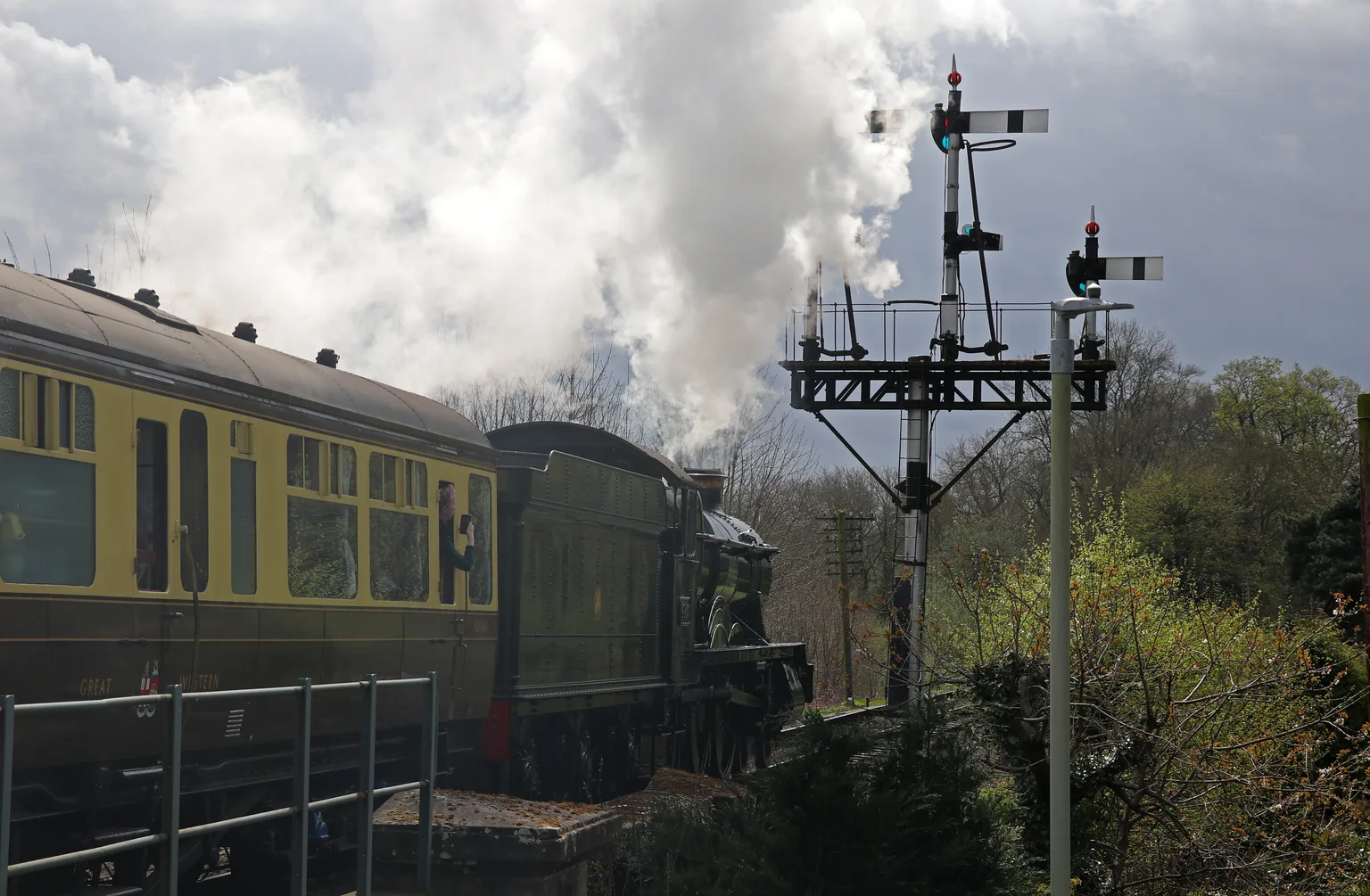
The line at Stafford in the report below has four-aspect signals. A red tells the driver to stop. A single yellow means the next signal should be red, so be ready to stop. A double yellow means the next one should be a single yellow and the one after that red, which gives extra time. A green means the next signal is green too, or possibly a double yellow (RAIB report 05/2024, paragraph 19).
So a driver coming up to a red sees green, then double yellow, then yellow, then red. The same report says the signals are spaced so that drivers do not need to brake before the first one showing a warning.

Flashing yellows
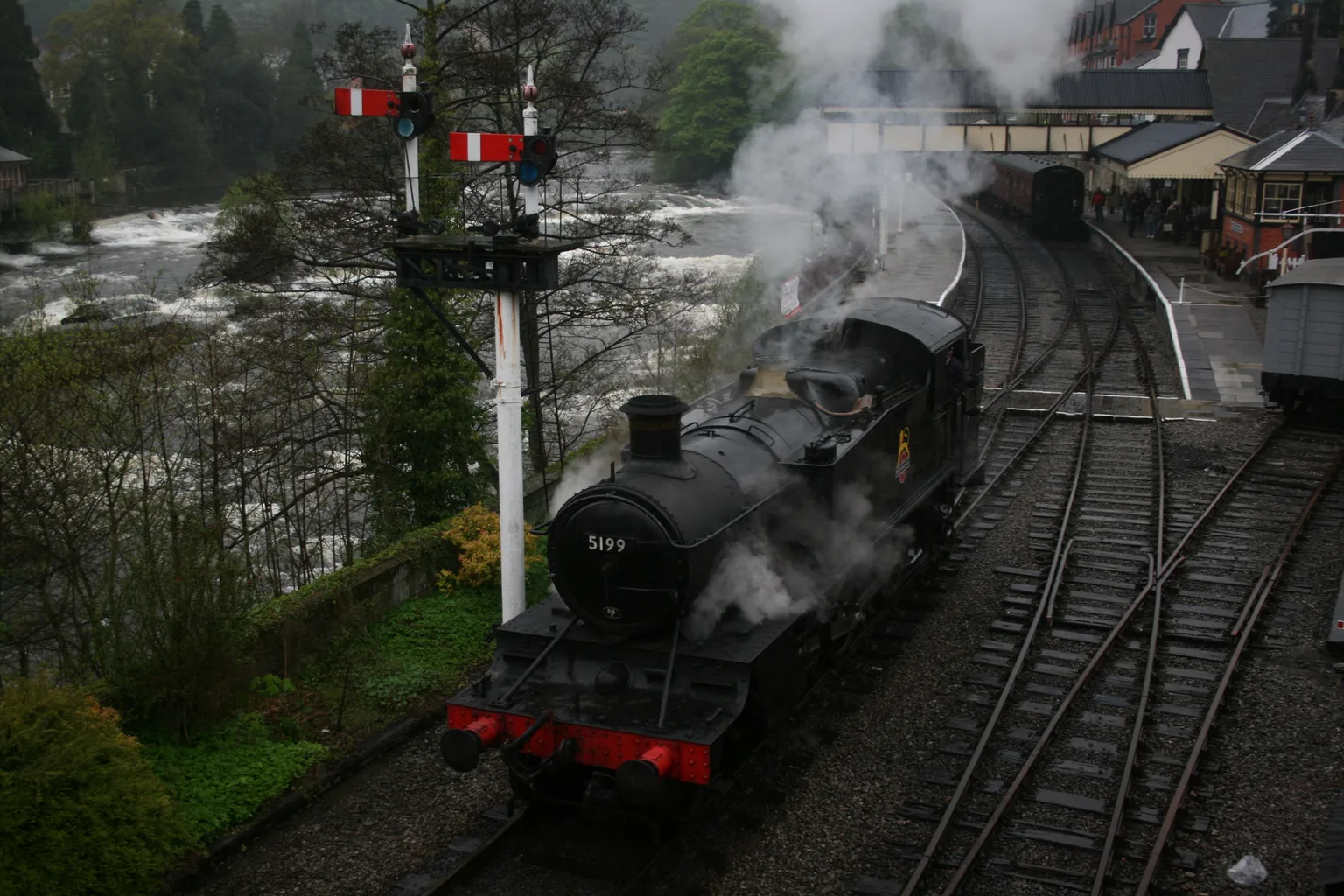
Flashing yellows warn that the train is about to be turned off its line at a junction. At Loversall Carr, near Doncaster, a flashing double yellow comes first, then a flashing single yellow, then a steady single yellow with the junction indicator lit at the junction signal (RAIB report 08/2023, paragraph 10). The same report says flashing yellows came in during the mid-1970s.
They have to be read with care. The report recalls a collision at Colwich in 1986, one death and 75 injured, where the driver took flashing yellows to mean the whole way across the junction was clear, when it was not (paragraph 169).
White lights next to a red
Some signals have two white lights beside the red. When they light, the train may pass the red with caution, for example into a platform that already has a train in it, and the driver must be ready to stop short of anything in the way (RAIB report 02/2017, paragraphs 16 and 33).
The bell and the horn
As a train nears a signal, the Automatic Warning System sounds in the cab: a bell for a green, a horn for anything else. If the driver does not acknowledge a warning within 2.5 seconds, the emergency brakes go on (RAIB report 08/2023, paragraph 112).
Sources: Rail Accident Investigation Branch reports 05/2024 (Stafford), 08/2023 (Loversall Carr), 10/2024 (Peterborough), 02/2017 (Plymouth) and Safety digest 05/2026 (Grantham South Junction), Crown copyright, read 30 October 2026. The railway's own rule for signals is RSSB Rule Book module GERT8000-S1, which needs an RSSB login, so we have not quoted it.