Trackside Prints

Model railway scale converter

Type a size and pick a scale. You get the model size in millimetres, the same thing in every other common scale, or, the other way round, how big your model would be in real life.

Convert a size

I know the

262.5 mm in OO (4 mm to the foot)

A real 20 metres is 262.5 mm long at 1:76.2: the real size divided by 76.2.

ScaleRatioModelInches
Z1:22090.9 mm3.58 in
N1:160125 mm4.92 in
British N1:148135.1 mm5.32 in
2 mm to the foot1:152.4131.2 mm5.17 in
TT1:120166.7 mm6.56 in
H0 (HO)1:87229.9 mm9.05 in
OO (4 mm to the foot)1:76.2262.5 mm10.33 in
S1:64312.5 mm12.3 in
01:45444.4 mm17.5 in
7 mm scale1:43.5459.8 mm18.1 in
I1:32625 mm24.61 in
II1:22.5888.9 mm35 in
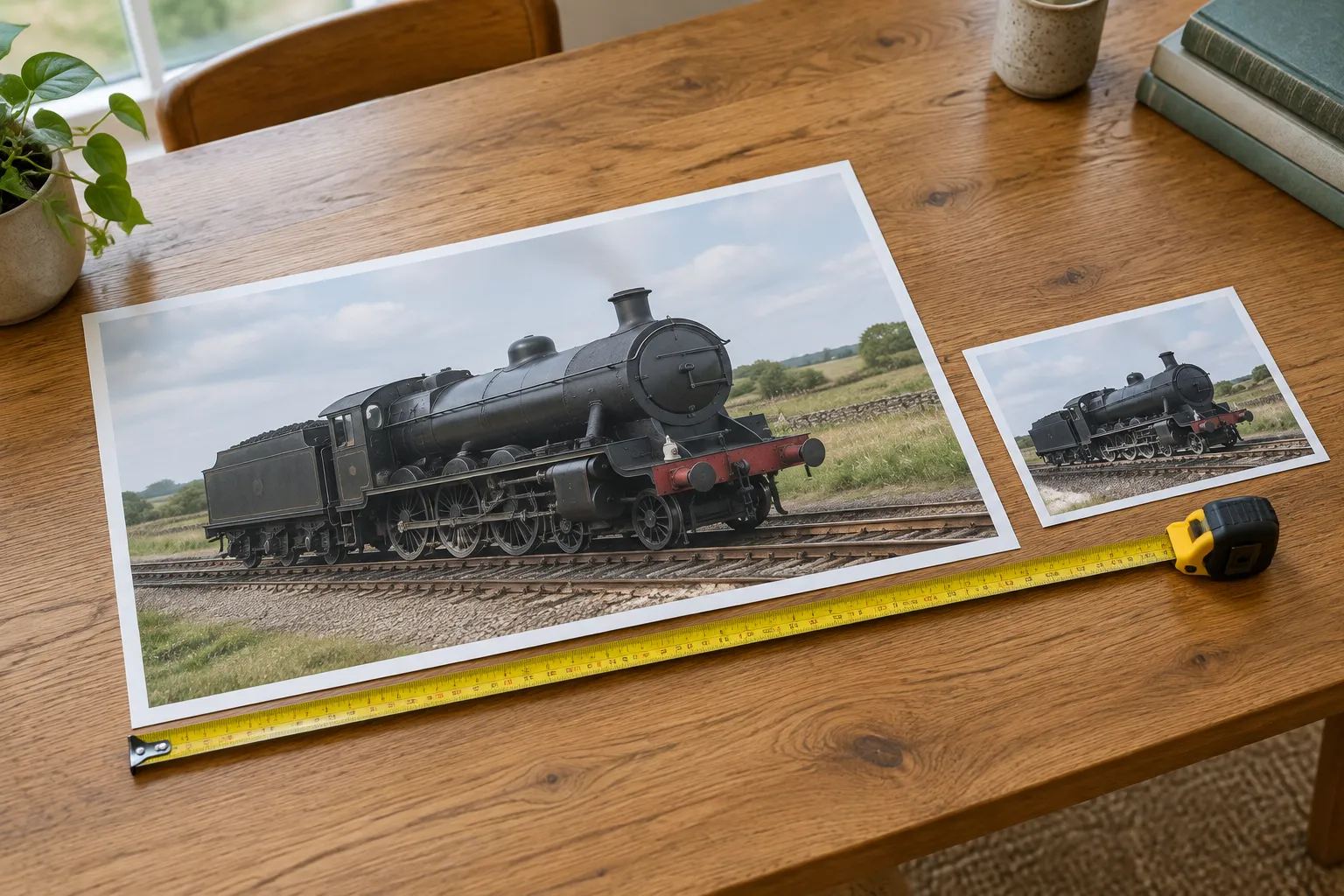
A large and a small print of the same black steam engine laid on a wooden table beside an open yellow tape measure
The same engine at two sizes: scale is only ever a division.

Nothing you type is saved. Your settings sit in the link in your address bar, so you can bookmark them or send them to a friend.

Got a railway photograph you love? Print it as it is, or turn it into railway art.

How to use it

Pick whether you know the real size or the model size. Type the number, choose the unit, then the scale. A real 20 metre coach in OO comes out at about 262 mm. The table under the answer shows the same coach in every scale on the list, so you can compare N with OO before you buy.

Going the other way is handy for buildings and figures. Measure a model with a ruler and type it in as a model size. You'll see what it stands for on a real railway.
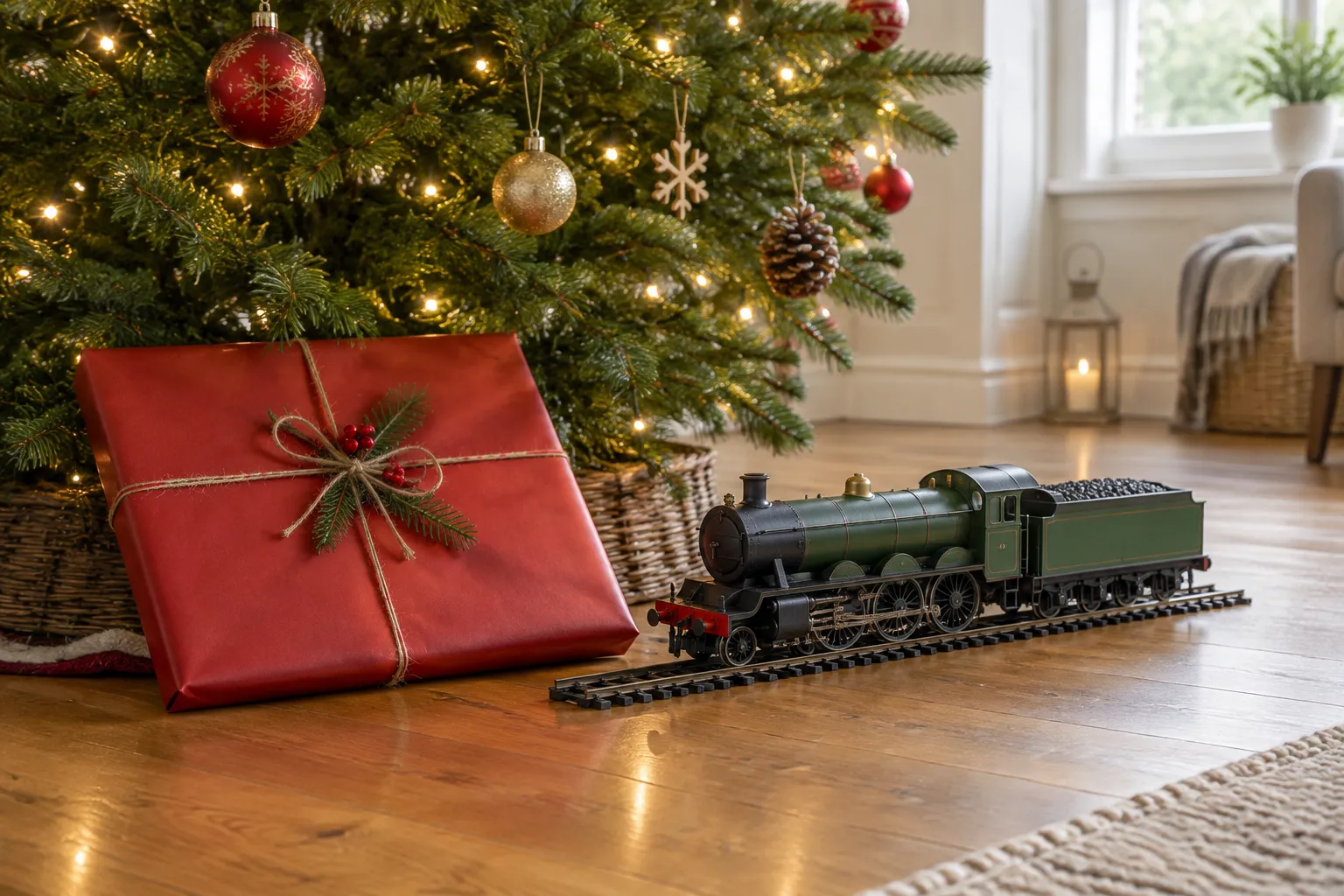
A red parcel tied with ribbon under a Christmas tree, a green model steam engine on a short length of track beside it
A model engine is a real one, divided.

How it is worked out

A scale is a ratio. 1:87 means the model is one eighty-seventh of the real thing, so the tool divides the real size by 87, or multiplies a model size by 87. It's one sum, whichever way you go.

The scales and track gauges come from the European standard NEM 010, published by MOROP: Z is 1:220, N 1:160, TT 1:120, H0 1:87, S 1:64, 0 1:45, I 1:32 and II 1:22.5. The same standard says 7 mm scale is 1:43.5 and 4 mm scale, the one OO uses, is 1:76.

British modellers often give a scale as millimetres to the foot. A foot is a third of a yard and a yard is 0.9144 metres in law (Weights and Measures Act 1985), so a foot is 304.8 mm. That makes 4 mm to the foot exactly 1:76.2 and 2 mm to the foot 1:152.4. PECO, which makes British track, labels its OO track "Scale 1:76, OO gauge" and its N track "Scale 1:148, N gauge", so British N is on the list too.

Sources: MOROP NEM 010 (2011 edition); PECO product pages; Weights and Measures Act 1985, Schedule 1. All read 30 October 2026.

Questions, answered

What scale is OO gauge?
OO is 4 mm to the foot, which works out at 1:76.2. NEM 010 and PECO both round it to 1:76.
Is N gauge the same in Britain and Europe?
Not quite. NEM 010 gives N as 1:160. PECO labels its British N track 1:148.
How do I convert a model from one scale to another?
Multiply by the first scale, then divide by the second. The tool does it for you in the table.