Trackside Prints

Locomotive wheel arrangements, decoded

Type a steam engine's Whyte notation, like 4-6-2, or a diesel or electric's UIC code, like Co'Co'. You get the wheels and axles spelled out, and the old type name where there is one.

Decode it

4-6-2: Pacific or St. Paul

  • 4 leading wheels, 6 driving wheels, 2 trailing wheels

12 wheels in all, on 6 axles, 3 of them driving. Colvin's 1906 table lists a 4-6-2 as Pacific or St. Paul.

Co'Co': 6 axles

  • Co': 3 driving axles, each with its own motor, on a bogie
  • Co': 3 driving axles, each with its own motor, on a bogie

6 axles are driven out of 6.

The 15 type names in Colvin's 1906 table
WhyteName, as printed
4-2-2Single Driver
4-4-0American
4-4-2Atlantic
4-6-0Ten Wheel
4-6-2Pacific or St. Paul
4-8-0Twelve Wheel
4-10-0Mastodon
2-4-2Columbia
2-6-0Mogul
2-6-2Prairie
2-8-0Consolidation
2-8-2Mikado or Calumet
2-10-0Decapod
2-10-2Santa Fe
2-12-0Centipede
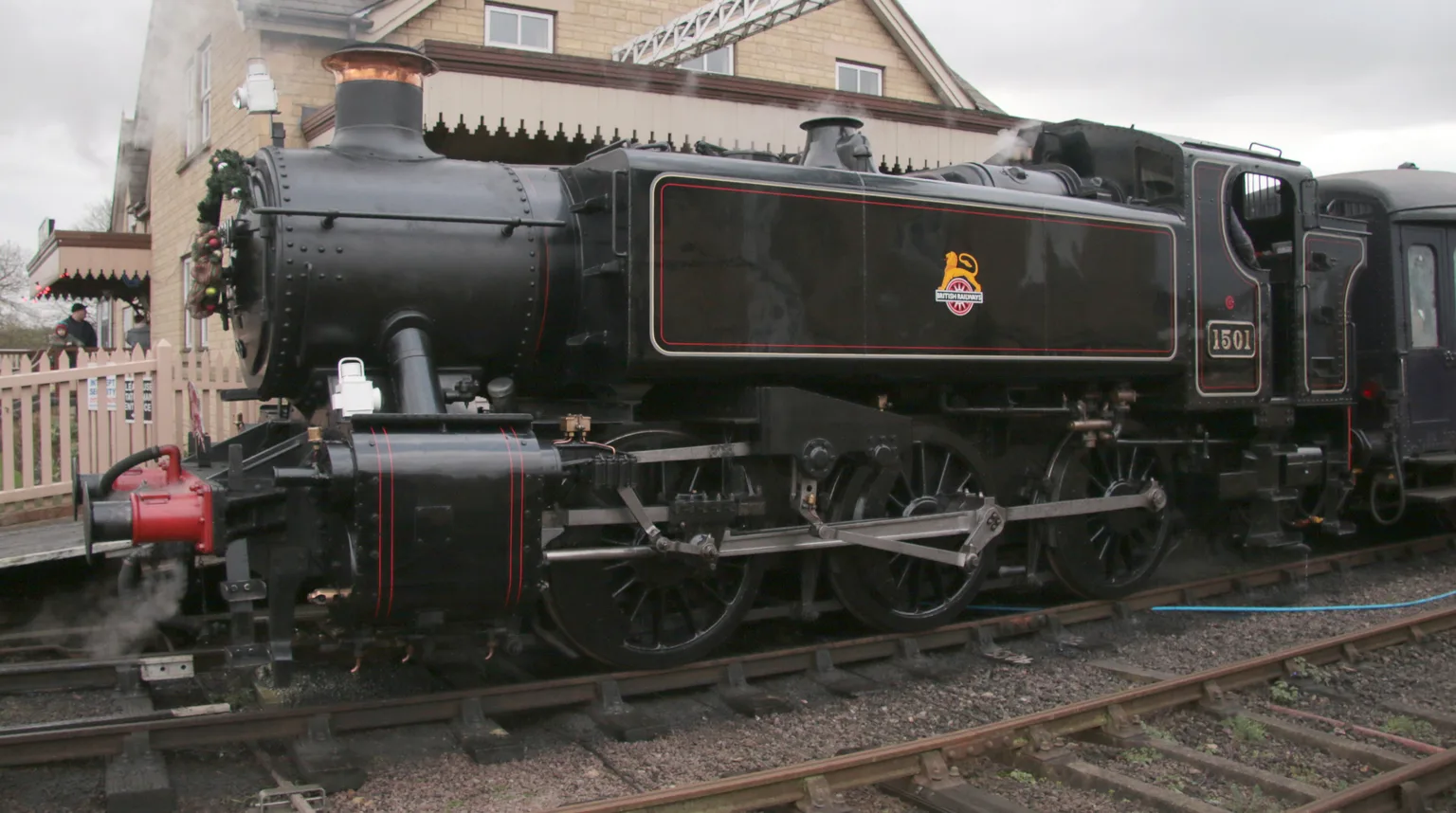
A black pannier tank engine numbered 1501 standing at Wansford station under a grey winter sky
1501 at Wansford, on the Nene Valley Railway. Photo: kitmasterbloke, CC BY 2.0

Got a railway photograph you love? Print it as it is, or turn it into railway art.

How to read Whyte notation

Whyte notation counts wheels, front to back, with dashes between the groups: leading wheels, driving wheels, then trailing wheels. A 4-6-2 has four wheels at the front, six driving wheels and two at the back (Whyte notation). An engine with two sets of driving wheels gets four numbers, like the 4-8-8-4 Big Boy (UIC classification). A Garratt, two engine units joined by one boiler, gets a plus sign between them.

Letters on the end mark a tank engine: T for tank, ST for saddle tank, WT for well tank and PT for pannier tank, as the Whyte notation page lists them. No letters means an engine with a tender.
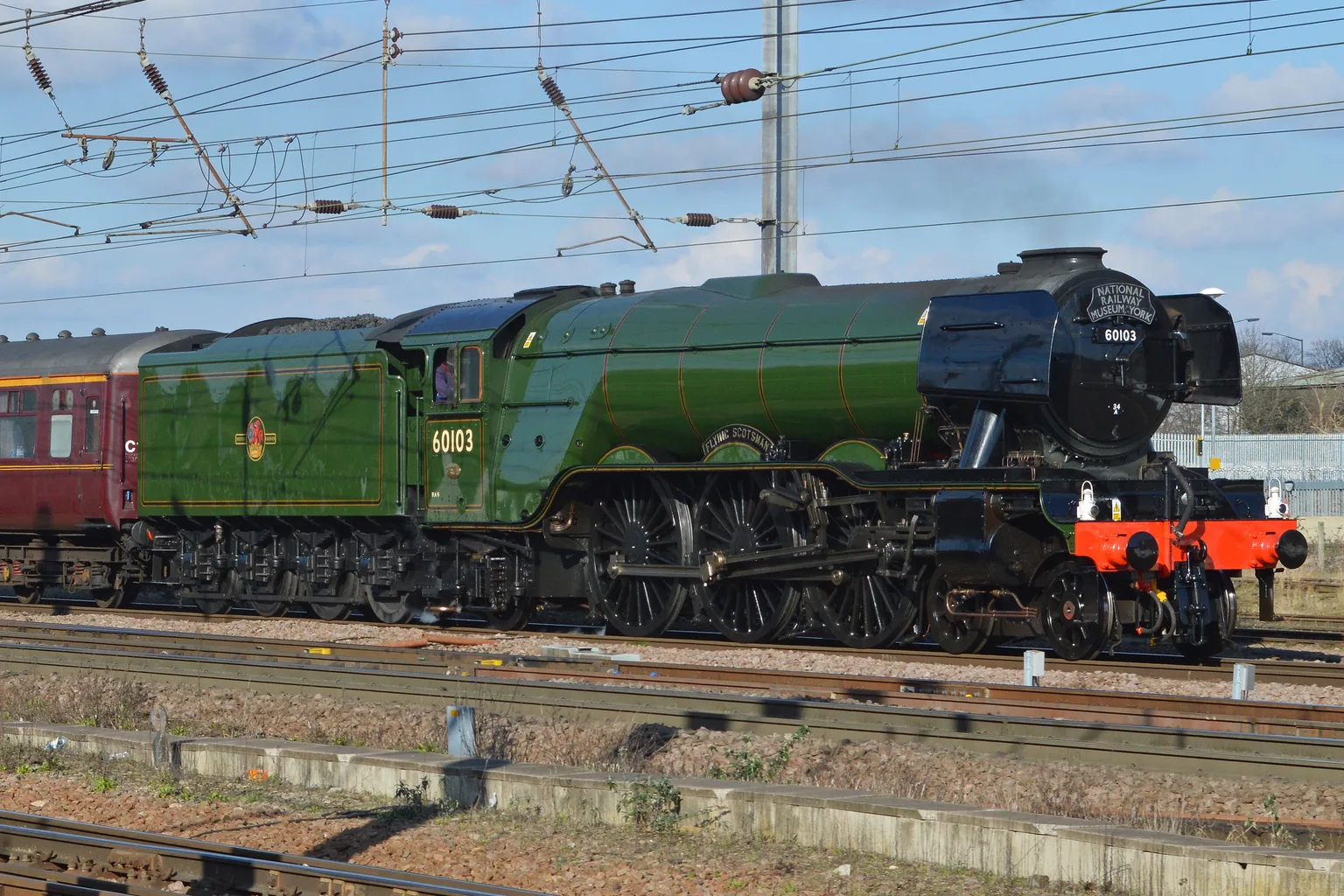
A green steam locomotive numbered 60103 with a long tender, standing on a main line under overhead wires
60103 Flying Scotsman, a 4-6-2: count the wheels from the front. Photo: HawkeyeUK, CC BY-SA 2.0

The type names

Many arrangements picked up names. The tool uses the fifteen in F. H. Colvin's Railroad Pocket-Book of 1906, page L-9, printed as he wrote them: Atlantic for 4-4-2, "Pacific or St. Paul" for 4-6-2, Mogul for 2-6-0, Prairie for 2-6-2 and the rest. We show only those, so we never guess a name.

How to read a UIC code

The UIC system counts axles, not wheels. A capital letter is a group of driving axles, A for one, B for two, C for three. A number is axles with no drive. A small o means each axle has its own motor, and a prime mark means the group is on a bogie. So Co'Co' is two bogies, each with three motored axles (UIC classification).

Sources: Wikipedia, "Whyte notation" and "UIC classification of locomotive axle arrangements" (CC BY-SA 4.0); F. H. Colvin, The Railroad Pocket-Book (1906), p. L-9. Read 30 October 2026.

Questions, answered

What does 4-6-2 mean?
Four leading wheels, six driving wheels and two trailing wheels. Colvin's 1906 table lists it as "Pacific or St. Paul".
What is the difference between Bo-Bo and Co-Co?
Bo-Bo is two bogies of two motored axles each, four in all. Co-Co is two bogies of three, six in all.
What does the PT in 0-6-0PT mean?
Pannier tank. Wikipedia's Whyte notation page lists PT for a pannier tank engine; no letters would mean an engine with a tender.